






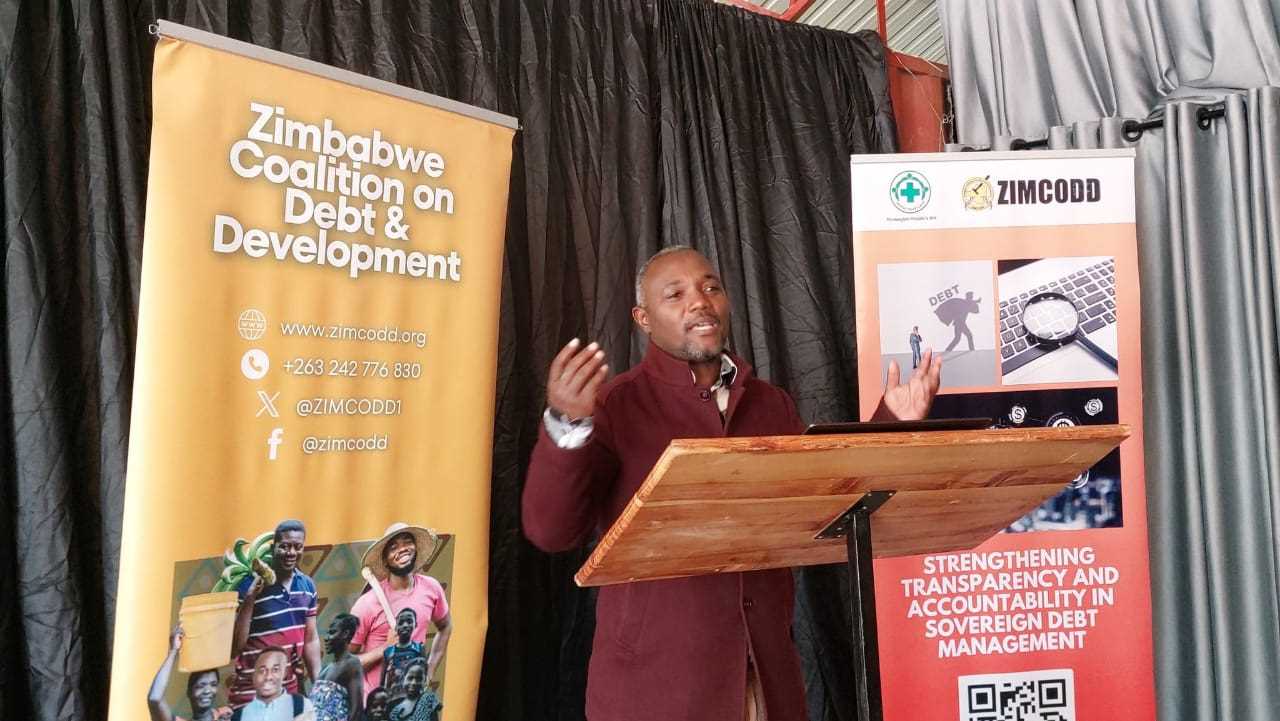
Stakeholders from local authorities, Parliament, government and civil society convened in Harare on Thursday to examine how Zimbabwe's public debt burden is affecting local governance, service delivery and community livelihoods, amid growing calls for greater transparency and accountability in debt management.
The dialogue, organised by Zimbabwe Coalition on Debt and Development, brought together representatives from local authorities including Harare City Council, Epworth Local Board, Marondera Municipality, Chitungwiza Municipality and Goromonzi Rural District Council, alongside officials from Parliament, the Ministry of Local Government, development partners and residents' groups.
“Today, ZIMCODD is convening the Harare Provincial Debt Accountability Indaba, bringing together representatives from Harare City Council, Epworth Local Board, Marondera Municipality, Chitungwiza Municipality, Goromonzi Rural District Council, Parliament of Zimbabwe, the Ministry of Local Government, civil society organisations, residents’ associations, development partners, Debt Justice Champions, and SEJAs.”
According to the organisation, the forum seeks to deepen understanding of the relationship between public debt and development outcomes at local level.
“The dialogue provides a platform for stakeholders to interrogate the impact of public debt on local governance, service delivery, and community livelihoods while advancing transparency, accountability, and citizen participation in debt governance processes.”
Public debt has emerged as a key development issue in Zimbabwe, where constrained fiscal space and limited access to international financing have increased pressure on public resources available for infrastructure, health, education and other essential services.
Related Stories
The discussions opened with a presentation by Vincent Chakunda, who examined trends in Zimbabwe's debt profile and their implications for local authorities and communities.
“The first presentation was delivered by Dr Vincent Chakunda of the Centre for Public Policy and Devolution, setting the stage for discussions on Zimbabwe’s evolving debt landscape and its implications at provincial and local authority levels.”
Participants also engaged in a panel discussion involving Parliament and local government representatives to explore mechanisms for improving fiscal governance and debt oversight.
“Participants are also engaging in a panel discussion featuring Dr Chakunda, representatives from the Association of Rural District Councils, and Parliament of Zimbabwe to explore practical pathways towards stronger debt accountability and sustainable fiscal governance.”
The engagement comes as Zimbabwe continues implementing debt resolution and arrears clearance efforts aimed at restoring access to international capital markets and development financing. While public borrowing can support development, weak accountability and limited public participation in debt governance can undermine service delivery and increase fiscal risks.
Civil society organisations have increasingly called for greater transparency around borrowing decisions, debt utilisation and repayment obligations, arguing that citizens ultimately bear the costs through taxation, reduced public spending or diminished service provision.





Leave Comments