








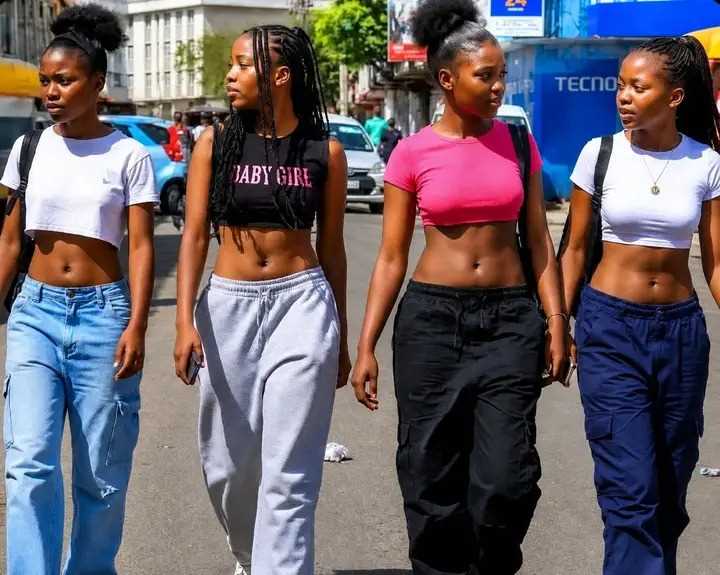
A crop top. A fitted dress. A pair of ripped jeans.
For many young women, they are simply fashion choices. Yet in today's Zimbabwe, they have become something much bigger—symbols in an ongoing conversation about confidence, culture, identity and the expectations society places on women.
Across urban centres, university campuses, shopping malls and entertainment venues, modern women's fashion has become increasingly visible. As styles evolve, so too have public reactions, turning clothing into one of the most debated aspects of contemporary womanhood.
The growing popularity of crop tops, body-hugging outfits and other modern styles reflects broader shifts in both local and global fashion trends.
"Crop tops and fitted outfits are part of a broader fashion trend among many women today. These styles have become common in streetwear, casual fashion, fitness wear, festival fashion and social media-inspired looks," said fashion designer Jephason Muranda.
For many women, fashion has become an extension of personality, confidence and self-expression rather than merely a way of dressing.
Ruvimbo Kasimbire said confidence plays a major role in how women choose to present themselves.
"Knowing your body is fit and comfortably wearing crop tops is top-tier confidence," she said.
Melord Maripita shared a similar view.
"If you think women wear revealing clothes to seek attention or attract men, then you are wrong. It's called being confident with your body," he said.
The rise of social media has further transformed the fashion landscape, exposing young Zimbabweans to styles, ideas and trends from across the globe.
Nadeen Majumbe believes digital platforms have expanded opportunities for self-expression.
"I think social media has a positive influence on fashion because it encourages many people to express themselves within their own story," he said.
Yet while many view modern fashion as a form of personal expression, others see it through a cultural lens.
National Arts Council of Zimbabwe chief executive Napoleon Nyanhi urged Zimbabweans to embrace styles that reflect local values.
"Dress in a way that goes with Zimbabwean culture and values," he said.
His remarks echo concerns among some Zimbabweans who believe rapid social change is challenging traditional expectations surrounding public appearance.
Sean Kunaka said modernity has significantly influenced the way women dress.
"Zimbabwean culture defines a certain dressing code for women that is compatible with the norms and values of African society in general, but modernity has crept in, causing changes in the way ladies dress," he said.
Related Stories
Others argue that clothing choices should not automatically become a measure of character.
Designer Colin Ratisai said fashion is ultimately about personal style.
"Fashion is really about style, and everyone can have it, on a high or low budget," he said.
Ratisai added that women are often judged according to their clothing choices rather than their abilities, achievements or character.
That tendency to associate appearance with morality continues to shape public attitudes.
"Some of these outfits are a bit too much for public spaces, especially crop tops and tiny mini skirts. People should wear respectable clothes because how you dress is actually how people see you," said fashion designer Jerald Mwale.
Knowledge Moyo expressed similar concerns.
"Fashion is important, but young women should remember that public dressing also speaks to family values and respect," he said.
However, Nyasha Sibanda believes society often places unfair expectations on women.
"Society should stop treating women's clothing like a moral test because fashion is also about self-expression," she said.
Tafadzwa Ncube agreed.
"A woman can be fashionable and still be respectful; the problem is that people often read too much into what they wear," she said.
Sharon Mutasa echoed the same sentiment.
"People should stop assuming that every woman in a crop top wants attention because, for many, it is simply confidence and comfort," she said.
According to therapist Tawanda Karise, the impact of constant public judgment extends beyond fashion itself.
"The psychological impact is not just about clothing. It is about whether a person is allowed to exist visually without being morally interpreted," he said.
Karise noted that repeated criticism can affect self-esteem and confidence, particularly when appearance becomes the basis upon which individuals are evaluated.
As Zimbabwe continues to navigate the intersection between tradition and modernity, women's fashion remains one of the most visible reflections of social change.
What one generation sees as confidence, another may view as provocation. What some regard as self-expression, others interpret as a challenge to cultural norms.
Yet beneath the conversations about crop tops, fitted outfits and modern trends lies a deeper story—one about identity, freedom, culture and society's enduring fascination with what women choose to wear.





Leave Comments