




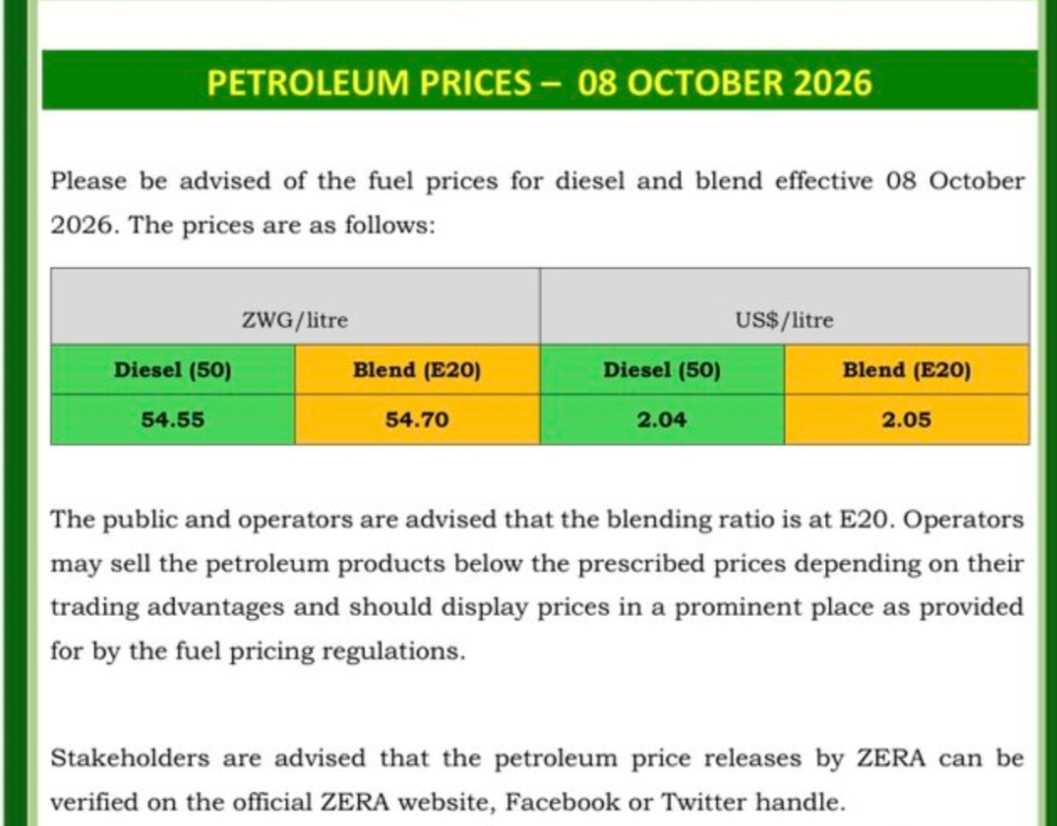




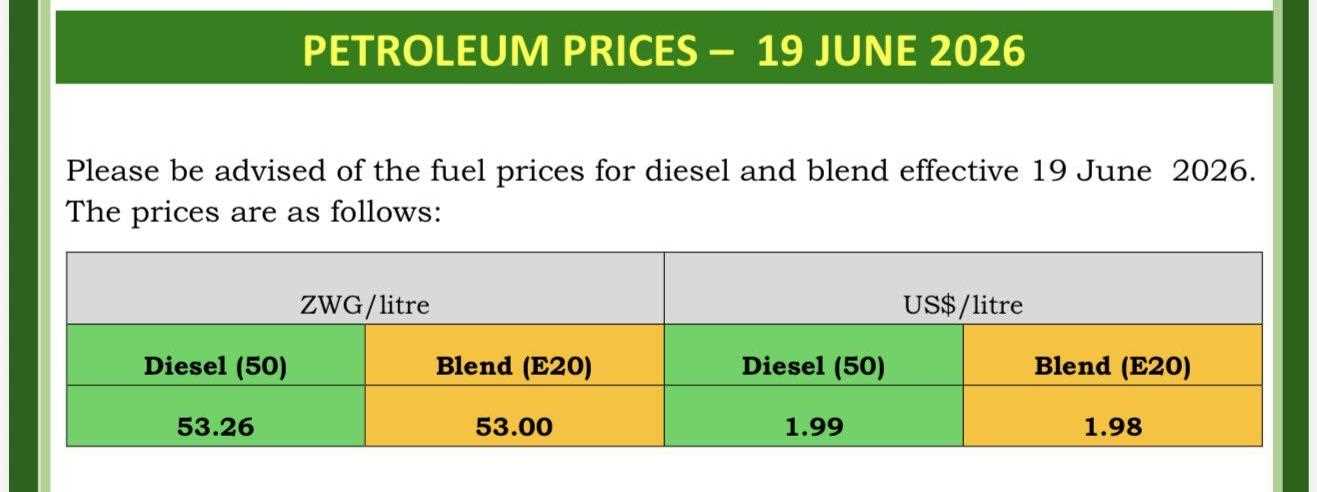
Zimbabwe has cut fuel prices by nearly five percent, with the reduction coming as easing geopolitical tensions in the Middle East and falling global crude oil prices begin filtering through to domestic markets.
The Zimbabwe Energy Regulatory Authority announced that, effective 19 June 2026, diesel 50 will retail at US$1.99 per litre, down from US$2.09, while Blend E20 petrol has fallen to US$1.98 per litre from US$2.08. The US$0.10 per litre reduction on both fuels represents a decline of approximately 4.8% and will remain in force for two weeks.
The latest adjustment follows a sharp decline in international oil prices after the United States and Iran reached a diplomatic breakthrough that eased fears of a wider regional conflict, reducing the risk of disruptions to global energy supplies.
At the centre of those concerns was the Strait of Hormuz, the narrow waterway between Iran and Oman through which around one-fifth of the world's oil and liquefied natural gas exports pass daily. During heightened tensions earlier this year, fears that the strait could be blocked or disrupted pushed Brent crude prices higher as traders anticipated supply shortages.
Related Stories
However, the easing of tensions and the reopening of the vital shipping route have restored confidence in global oil markets, allowing crude prices to retreat. The lower international prices are now feeding into fuel pricing in import-dependent countries such as Zimbabwe.
The development also aligns with observations made recently by the Reserve Bank of Zimbabwe, which said improving global oil market conditions following the US-Iran peace agreement were expected to help sustain Zimbabwe's low inflation environment.
In its latest Monetary Policy Committee statement, the central bank noted that "promising signals from the US-Iran peace deal, which precipitated a fall in Brent crude oil prices, would sustain the declining trend in prices, thereby supporting the country's low inflation environment."
Lower fuel prices are expected to ease transport and logistics costs across the economy, potentially slowing increases in food prices and other goods whose production and distribution depend heavily on diesel.
ZERA said the latest pricing also reflects government interventions aimed at cushioning consumers from the impact of global geopolitical developments, while allowing operators to sell below the prescribed prices where commercial conditions permit.










Leave Comments