









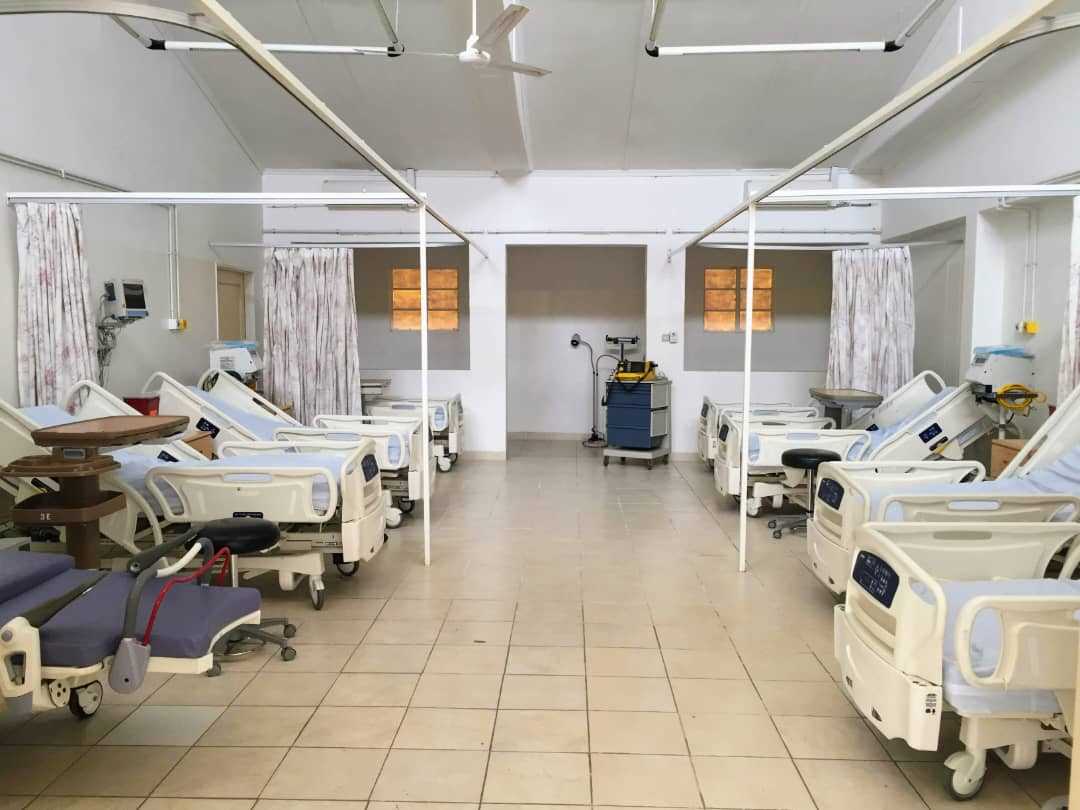
Zimbabwe is increasingly looking beyond Treasury funding to strengthen its struggling healthcare system, with policymakers, development partners and the private sector converging around a common message: the country cannot achieve universal health coverage without mobilising new sources of finance.
The debate took centre stage during the National Health Financing Dialogue in Harare, where government officials, business leaders, development partners and health experts examined how Zimbabwe can build a more resilient and sustainably financed health system amid constrained public finances.
Opening the discussions, Permanent Secretary for the Ministry of Health and Child Care Dr Aspect Maunganidze said Zimbabwe must adopt practical solutions to address persistent funding gaps.
"Various experts will talk about strengthening domestic resource mobilisation, prioritising investment in health, improving our public financial management systems, enhance efficiencies, leverage innovative financing mechanisms including blended financial engagements and strategic partnerships."
He urged delegates to move beyond diagnosing problems.
"Our citizens expect us to move beyond identifying problems. They expect us to move towards delivering solutions, to build health systems that are resilient, equitable and sustainably financed."
The discussions come against the backdrop of chronic underfunding of Zimbabwe's health sector.
According to the Southern African Development Community Parliamentary Forum, no Southern African Development Community member state currently meets the Abuja Declaration target of allocating 15 percent of national budgets to health, a benchmark adopted by African leaders in 2001 to strengthen domestic health financing.
Speaking at the dialogue, Southern African Development Community Parliamentary Forum representative Maxwell Parakokwa called for governments to expand domestic resource mobilisation.
"No Southern African Development Community Member State currently fulfils the Abuja Declaration target of allocating 15% of the national budget to health."
He said countries should explore innovative financing mechanisms, including health-promoting taxes and debt-for-health swaps, to reduce dependence on external donors.
Government says it has already begun broadening domestic financing.
Deputy Minister of Finance, Economic Development and Investment Promotion Kudakwashe Mnangagwa previously announced closer coordination between Treasury and the Ministry of Health and Child Care.
"We will have periodical meetings between Treasury and the Ministry of Health and Child Care to discuss major challenges facing the health sector, including budget utilisation, disbursements, cash support, as well as coming up with a minimum monthly health sector requirement to guide our cash flows."
Beyond public funding, development partners argued that private investment must become part of the solution.
United Nations Development Programme Zimbabwe Resident Representative Ayodele Odusola said the debate should no longer focus on whether private capital belongs in healthcare but on how it can be deployed responsibly.
"The question is not whether private capital can support health systems, it is how we crowd it in responsibly, while protecting equity and public value."
That view is shared by Munyaradzi Chimwara, Country Coordinator for COMPASS, who argues that carefully structured public-private partnerships offer one of Zimbabwe's most realistic pathways to rebuilding a health system struggling with ageing infrastructure, medicine shortages and severe human resource constraints.
"Private investment, in the form of Public-Private Partnerships is the solution to Zimbabwe's health sector challenges."
Chimwara said partnerships could accelerate the rehabilitation and management of hospitals, pointing to projects such as the renovation of Mbuya Nehanda Maternity Hospital and nurses' accommodation as examples of how private investment can improve public health infrastructure.
He also identified medical equipment as a major gap in the country's healthcare system.
"High end CT, dialysis and pathology equipment is either obsolete or non-existent. Central and district facilities lack scanners and lab capacity."
Chimwara said Zimbabwe currently has only eight pathologists, all based in Harare and Bulawayo, resulting in biopsy turnaround times of more than six weeks in public laboratories.
"With private labs already filling the gaps, handling public hospitals' specimens, a Public-Private Partnership model with the likes of Lancet could expand public sector histopathology capacity."
Related Stories
He said medicine stock-outs remain another persistent weakness.
"Essential medicines for non-communicable diseases and others are often out of stock in public facilities. The private sector can help with procurement, warehousing and last-mile supply under concession or supply agreements."
Zimbabwe's health workforce shortage also requires innovative financing, he argued.
"Zimbabwe currently has a nursing staffing shortfall needing approximately 69,000 more health workers by 2030."
He noted that implementing the National Health Workforce Strategy 2023-2030 is expected to cost US$1.6 billion, with Government projected to finance about 75 percent of the programme.
"Government should invite the private sector to take a bigger chunk."
Chimwara suggested Zimbabwe could draw lessons from Zambia's private nursing education model while also reviving arrangements that previously enabled Zimbabwean health professionals to work abroad under bilateral agreements.
The World Health Organization says Zimbabwe's proposals—including a National Health Insurance scheme, health levies, sugar taxes and other domestic financing initiatives, represent an important step towards reducing dependence on donor funding and building a more sustainable health financing model.
However, health experts argue that increasing revenue alone will not solve the sector's problems unless funding is matched by stronger accountability and improved service delivery.
Executive Director of the Community Working Group on Health Itai Rusike said years of underinvestment have left public health institutions unable to meet demand.
"Public health infrastructure is grossly inadequate to cater for the health-care demands of the citizens."
He said shortages extend beyond infrastructure.
"Most health facilities, particularly in rural areas lack essential equipment, ambulances, medicines and supplies severely affecting the ability of health workers to diagnose, treat and manage medical conditions."
Rusike warned that weak public services are pushing patients into expensive private healthcare.
"Theatres and laboratories are usually not functional or do not have the staff to carry out tests. As a result, people are forced to turn to private sector services at catastrophic costs."
The pharmaceutical industry says financing challenges also affect the availability of medicines.
Varichem Pharmaceuticals Sales and Marketing Manager Dennis Choguya said unreliable market data, limited foreign currency and Zimbabwe's relatively small pharmaceutical market continue to constrain medicine supply.
"The challenges to improve access to medicines in Zimbabwe are many and on various levels."
He identified foreign currency shortages as one of the biggest operational risks.
"A major issue at macro-economic level is the availability of foreign currency."
Choguya said delays in accessing foreign currency affect companies' ability to import medicines.
"When the government prepares to pay a foreign debt, they will round up all the foreign currency available in-country, leaving dollarised companies with a huge problem to import products."
The financing debate reflects a wider shift occurring across Africa.
According to the World Health Organization, out-of-pocket payments remain one of the largest barriers to healthcare access across the continent, pushing millions of households into poverty every year. The organisation has consistently argued that expanding domestic health financing, strengthening health insurance systems and improving efficiency in public spending are essential for achieving Universal Health Coverage.










Leave Comments