








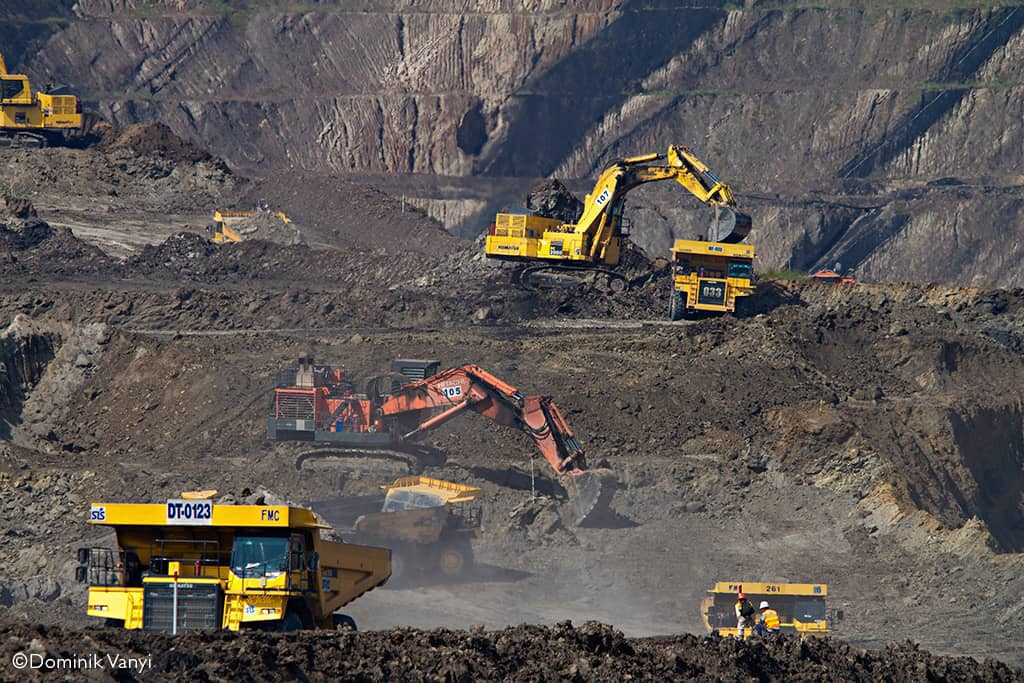
Hwange Colliery Company Limited says it has solved the production problems that once held back Zimbabwe's largest coal producer. Today, the challenge is no longer digging coal out of the ground but finding enough buyers for it.
After years of restructuring and investment, the company says it now has the capacity to produce up to 15 million tonnes of coal annually, more than double the seven million tonnes it expects to produce this financial year and well above the 10 million tonnes targeted next year.
"Our biggest focus, as we speak, is actually markets and logistics. That's where the bottleneck is," Hwange Colliery Administrator Munashe Shava said.
"In terms of coal extraction from the mines, that's not an issue. We have sorted out that side of things. We can do up to 15 million tonnes a year. But it's how to move that product into the markets and how to find those markets. That's where our focus is."
For years, the debate centred on low production caused by ageing equipment, financial distress and operational inefficiencies. Today, the more difficult question is whether demand exists to absorb such a dramatic increase in output.
The answer is not straightforward.
Zimbabwe remains one of Africa's largest coal producers. According to the International Energy Agency, the country ranked third on the continent in coal production in 2023, behind only South Africa and Mozambique, producing 132,245 terajoules of coal, while coal accounted for 31.7% of the country's total energy supply and 54.1% of electricity generation. Coal exports represented 98% of Zimbabwe's total energy exports, highlighting the mineral's continued importance to foreign currency earnings.
Yet the global market that Zimbabwe hopes to serve is changing rapidly.
The African Development Bank has stopped financing new coal-fired power projects as part of its climate strategy.
Former African Development Bank President Akinwumi Adesina made the institution's position clear.
"Coal is the past, and renewable energy is the future. For us at the African Development Bank, we're getting out of coal."
The bank has instead redirected investment towards renewable energy programmes such as the Desert to Power initiative and Mission 300, which seeks to expand electricity access across Africa using cleaner energy technologies.
This global shift means Zimbabwe cannot simply assume that increasing production will automatically translate into increased exports.
Instead, analysts say the country's biggest opportunity lies much closer to home.
The Zimbabwe Coal Producers Association says regional industrial demand remains strong despite the global transition away from coal.
Association chairman Linos Masimura has argued that transport constraints, rather than weak demand, are preventing Zimbabwe from significantly expanding exports.
According to the association, industrial coal export revenues more than doubled to US$14.4 million over an eight-month period, with South Africa, Zambia and the Democratic Republic of Congo emerging as the biggest potential growth markets.
Masimura says producers could export up to ten times current volumes if efficient rail transport replaced expensive road haulage.
Related Stories
That demand is driven less by electricity generation and more by heavy industry.
The Democratic Republic of Congo's expanding copper and cobalt mining sector requires coal and coke for mineral processing. South Africa's ferrochrome and steel industries continue to consume metallurgical coal, while Zambia's growing mining industry also presents opportunities for Zimbabwean exporters.
Recognising this shift, Zimbabwean producers are increasingly targeting higher-value products such as coke rather than relying solely on exports of raw thermal coal.
Zimbabwe's power sector consumes approximately three million tonnes of coal annually, with the Hwange Power Station alone using between one million and two million tonnes each year to generate electricity.
Coal also remains the dominant fuel for cement manufacturers, brick makers, ferrochrome smelters and other heavy industries. According to the International Energy Agency, 93% of Zimbabwe's final coal consumption occurs in industry, making industrial production the backbone of domestic demand.
Even so, domestic consumption alone is unlikely to absorb the additional production Hwange hopes to bring on stream.
Industry forecasts suggest Zimbabwe's coal production will remain broadly flat through 2028, despite decades of average annual growth of 3.3% since 1986. Analysts say the expected plateau reflects growing commercial rather than geological constraints.
The challenge is compounded by changing international investment patterns.
Global lenders have become increasingly reluctant to finance thermal coal projects because of environmental, social and governance commitments. Several major coal developments across Africa have lost international financial backing as investors redirect capital towards renewable energy.
Zimbabwe has increasingly relied on Chinese investment to expand coal mining and coal-fired electricity generation while simultaneously encouraging investment in coal beneficiation, including coke production and coal-bed methane projects.
While developed economies are accelerating the transition towards cleaner energy, many African countries continue to prioritise affordable and reliable baseload electricity to support industrialisation.
Coal therefore remains economically relevant across much of the region even as international financing becomes harder to secure.
The commercial challenge for Hwange Colliery is therefore not simply finding buyers today, but positioning itself in markets that are likely to remain viable over the next two decades.
Regional industrial users appear to offer the strongest opportunity.
The African Continental Free Trade Area also presents potential to expand intra-African coal trade by reducing barriers to regional commerce and strengthening cross-border value chains.
However, industry experts caution that competitiveness will increasingly depend on logistics.
Road transport continues to inflate export costs, reducing Zimbabwe's competitiveness against producers in South Africa and Mozambique that enjoy stronger rail and port infrastructure.
Improving rail connectivity to export corridors such as Beira and strengthening domestic freight capacity could determine whether Hwange's expanded production translates into higher export earnings or remains stranded at mine sites.







Leave Comments