






ZimNow News Desk
Zimbabwe has secured an important credibility point in its re-engagement with the International Monetary Fund, but the same review has exposed a central weakness in the country’s stabilisation drive: social and priority spending is still not keeping pace with the needs of vulnerable citizens.
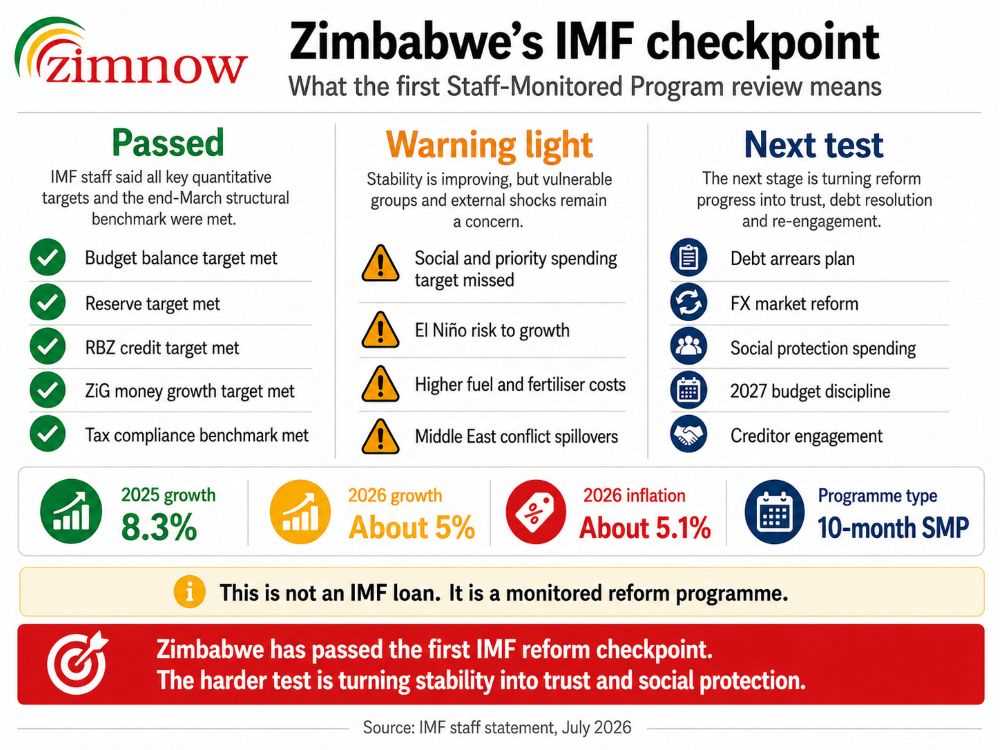
Subject to IMF management approval, IMF staff and Zimbabwean authorities have reached a staff-level agreement on the first review of the country’s 10-month Staff-Monitored Program, approved in March 2026.
IMF mission chief Wojciech Maliszewski said completion of the review marks “an important step” toward arrears clearance, debt restructuring and re-engagement with the international community.
The positive signal is that Zimbabwe met all quantitative targets under the programme through end-March 2026, including primary budget balance, net official international reserves, Reserve Bank of Zimbabwe credit to the nonfinancial public sector, new external non-concessional borrowing and ZiG monetary base growth.
But the review also revealed the programme’s most politically sensitive weakness. Zimbabwe missed the indicative target on protected social and priority spending.
That means the country is showing fiscal and monetary discipline on paper, while failing one of the key tests that matters most to ordinary people: whether stabilisation is protecting the vulnerable.
The IMF said the missed target underscored the need to improve budget execution and ensure “timely support to vulnerable groups.”
Zimbabwe needs to rebuild trust with creditors, investors and development partners after years of arrears, currency instability and strained international financial relations.
Related Stories
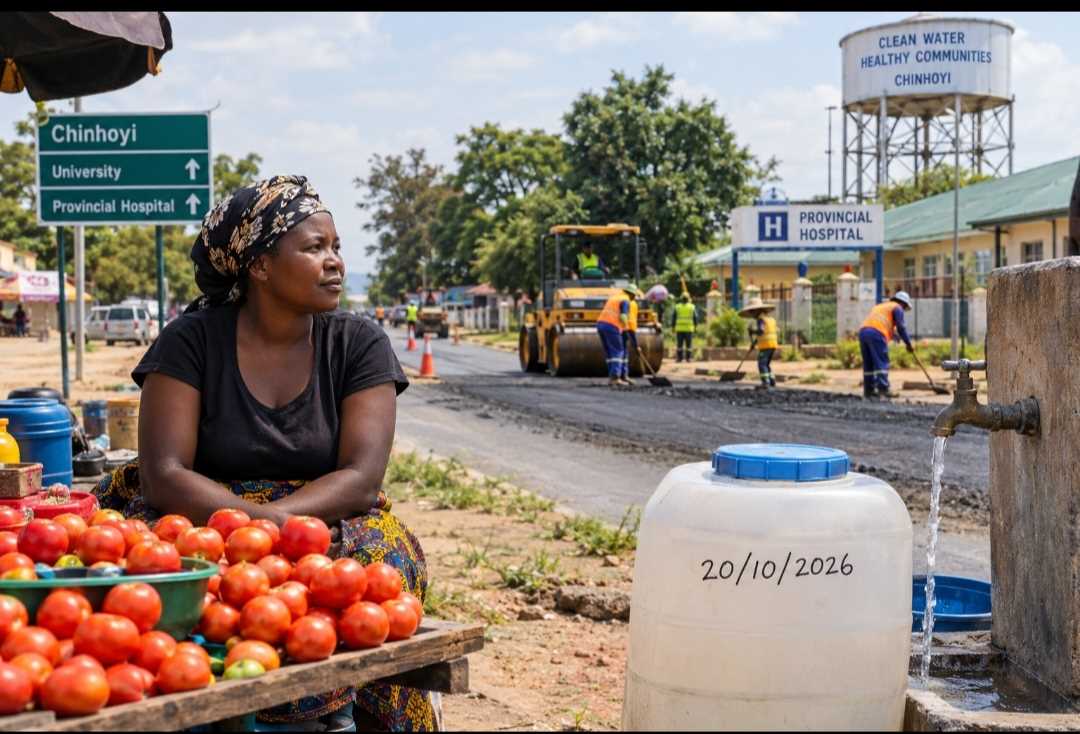
But if stabilisation does not translate to better public services, more reliable support for poor households, improved access to water, sanitation, housing, health and education it leaves citizens out.
IMF milestone vs people’s test
| What improved | What remains weak |
|---|---|
| IMF staff-level agreement reached | No IMF loan or bailout |
| All quantitative targets met | Social and priority spending target missed |
| Inflation projected at about 5.1% | Vulnerable groups still need timely support |
| 2026 growth projected at about 5% | El Niño could cut growth to 2–3% |
| Re-engagement track record strengthened | HRMI says water, sanitation, housing and income rights remain weak |
The IMF review connects with findings by the Human Rights Measurement Initiative. HRMI assesses how countries perform on rights such as education, food, health, housing and work.
Zimbabwe scored 31.1% on the right to water, 35.8% on sanitation and 36.4% on subsistence income, with HRMI warning that those indicators have deteriorated over the past 15 years.
HRMI co-executive director Thalia Kehoe Rowden said: “The rights we measure are absolutely fundamental, and leaders must prioritise them…. We urge Zimbabwe’s leaders to take action and improve the quality of life in light of this data.”
Macroeconomic stability is supposed to create conditions for better livelihoods, stronger services, jobs, investment and public confidence.
If government meets debt and currency targets while missing social spending targets, the reform programme risks looking successful to creditors but incomplete to citizens.
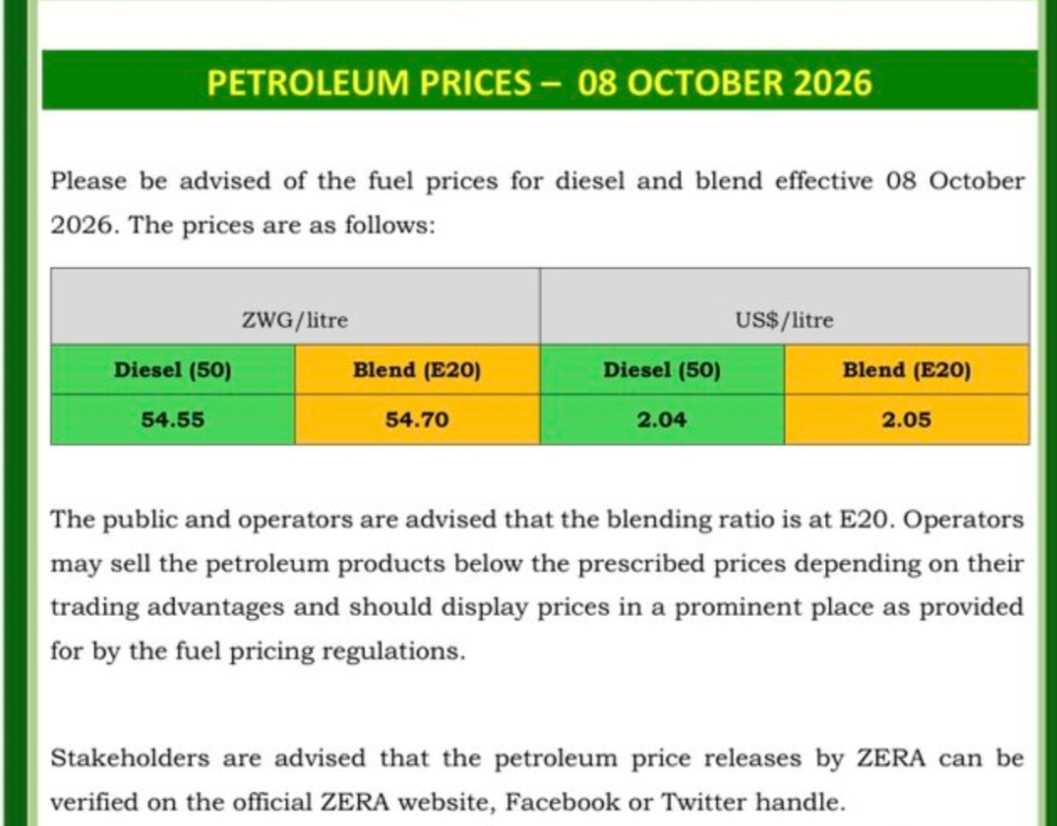
The IMF has also warned that Zimbabwe has weak resilience and faces downside risks from possible El Niño conditions, higher fuel and fertiliser prices, transport costs and shipping disruptions linked to the Middle East conflict. If El Niño materialises, the IMF said growth could moderate further to the 2% to 3% range.



Leave Comments