







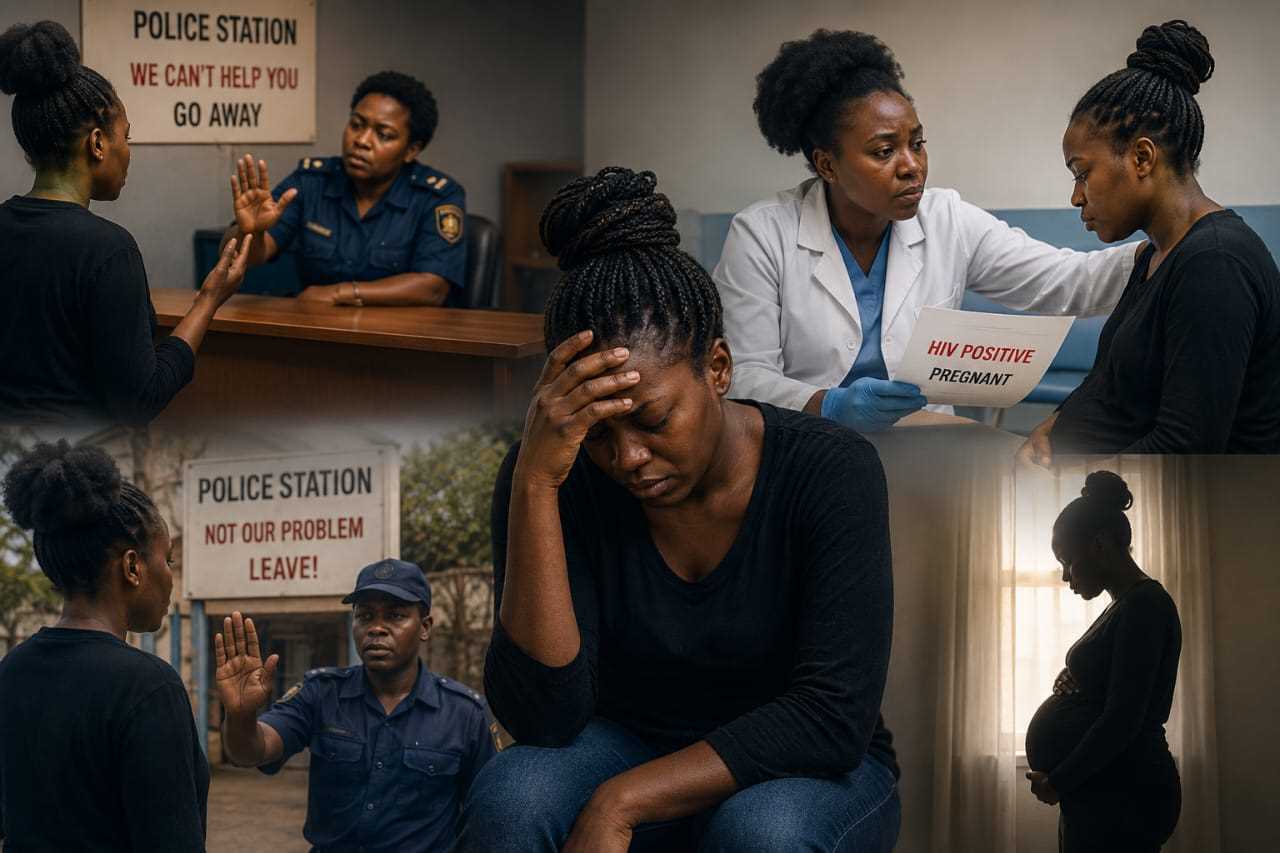
When a nurse told Emelda* that she was pregnant and HIV positive, she knew her life had changed forever.
For the woman from rural Zimbabwe, however, the devastating diagnosis did not begin with the rape that left her pregnant. It began years earlier, when she says she walked into a police station seeking justice after being sexually assaulted, only to be accused of being a sex worker and turned away.
For years, she has lived with the trauma of sexual violence. But what still haunts her, she says, is the memory of reporting two separate rapes at two different police stations and leaving both without help.
"I was looking for protection," she said. "Instead, I was judged."
At 23, while living in Sadza, Emelda says she was raped. Summoning the courage to report the assault to police, she believed officers would investigate.
Instead, she alleges they dismissed her complaint.
"They said I was a sex worker who had failed to agree on payment with a client. They refused to hear my story," she said.
She says she left the police station without an investigation, carrying not only the trauma of rape but also the pain of not being believed.
Unable to rebuild her life in Sadza, she later relocated to Chivhu in the hope of starting over.
For a while, life appeared to improve.
Then, in 2016, while working alone in a field, she says she was attacked again.
"A man appeared from nowhere with his face covered. He was holding a hoe and threatened to kill me if I did not do what he wanted," she recalled.
"I was raped again."
Despite her previous experience, she says she decided to report the attack, hoping this time justice would prevail.
Instead, she alleges history repeated itself.
According to Emelda, one of the police officers at the station had previously worked at the station where she reported the first rape. She alleges the officer told colleagues that he knew her from the earlier case and dismissed her allegations before any investigation could begin.
"I felt invisible. It was as if my past had already decided my future," she said.
Unlike after the first assault, Emelda says she did not seek medical treatment.
"I thought they would ignore me again. I went home and decided not to tell anyone or do anything about it, but my heart was heavy."
Weeks later, she began feeling unwell.
Related Stories
At a health facility, she received devastating news.
She was pregnant.
Further tests confirmed she was HIV positive.
"I knew my life had changed forever. The rape had taken more than my dignity. It had changed everything," she said.
For survivors of sexual violence, reporting promptly can help preserve forensic evidence while providing access to critical medical services such as HIV post-exposure prophylaxis, emergency contraception, treatment for injuries and psychosocial support.
Family Support Trust director Tamburai Muchinguri said stronger referral systems were needed in rural communities, alongside better training for police officers and healthcare workers.
"The referral pathways in rural areas are not as strong as those in urban areas. In urban areas, these cases are mostly handled at regional courts where police officers and other personnel receive specialised training. There is a need to bridge that gap," he said.
Mental health experts say experiences such as Emelda's amount to secondary or institutional victimisation, where survivors suffer additional trauma at the hands of institutions meant to protect them.

Registered family therapist Tawanda Karise said reporting sexual violence often requires enormous courage.
"When a survivor finds the courage to report sexual violence, they are taking an enormous emotional risk. Being dismissed, disbelieved or turned away by those expected to provide protection can become a second traumatic experience," he said.
"This response can intensify feelings of shame, helplessness, self-doubt and betrayal. Survivors may begin questioning their own memories or wondering whether what happened was serious enough to deserve help."
Karise said such experiences can worsen trauma symptoms and increase the risk of depression, anxiety, post-traumatic stress disorder and suicidal thoughts, while discouraging survivors from seeking medical care, counselling or legal assistance in the future.
He added that victim blaming has profound psychological consequences because it subtly shifts responsibility from the perpetrator to the survivor.
Women's rights advocates say survivors who are turned away or blamed risk missing life-saving medical interventions and losing opportunities to pursue justice.
Women's Legal Resources Foundation legal expert Tadiwanashe Magaya said every police station in Zimbabwe is expected to have a Victim Friendly Unit.
"If a regular officer is intimidating a survivor, the case should immediately be referred to the Victim Friendly Unit," she said.
She called for stronger witness and survivor protection laws, independent oversight of investigations into sexual offences and increased funding for the Victim Friendly System.
"We also need to strengthen independent oversight on sexual crimes to decentralise the power of the police and adequately fund the Victim Friendly System so survivors never have to face perpetrators alone in court," Magaya said.
Today, Emelda continues to live with the emotional and physical consequences of what she says happened to her.
She hopes no other woman seeking justice will have to endure what she did.





Leave Comments