








Zimbabwe’s child welfare programmes are facing tighter resource constraints, with UNICEF reducing the geographic reach of some humanitarian interventions while seeking to integrate services across health, nutrition, education, water and sanitation, child protection and social protection.
The issue was highlighted in UNICEF Zimbabwe’s 2026 Mid-Year Review, which is examining how the organisation can maintain results for children as available resources come under pressure.
“How can we achieve greater results for children with increasingly constrained resources?” UNICEF Zimbabwe said the question is at the centre of its 2026 review. The organisation said the process is also examining partnerships, supply and logistics, programme convergence and resource mobilisation as it prepares recommendations for its next Country Programme.
The resource pressure is not only a planning concern. UNICEF’s humanitarian prioritisation for Zimbabwe shows that funding constraints have already affected programme coverage.
In its revised 2025 humanitarian strategy, UNICEF said child protection and social protection programmes had been “significantly impacted by the withdrawal of key partners and donors”. It reduced nutrition programming from 38 to 21 districts, concentrating assistance in areas with the highest rates of acute malnutrition.
The same document says funding constraints limited the organisation’s ability to respond to flooding emergencies and support school infrastructure development, while broader programming in lower-risk areas was scaled back. Child protection programming was also geographically reduced, with greater emphasis placed on integrated services in high-risk districts.
UNICEF said the revised approach was intended to concentrate limited resources on areas where needs were greatest. Its strategy prioritised districts where drought, disease outbreaks and malnutrition overlap and called for “high-impact, integrated programming”.
That approach is now reflected in the organisation’s emphasis on programme convergence.
“A child does not experience our programmes in isolation,” UNICEF Zimbabwe said during the Mid-Year Review, pointing to the links between health, nutrition, education, WASH, child protection, social protection, climate resilience and adolescent engagement. The organisation said stronger programme convergence should therefore be central to its work.
Related Stories
Zimbabwe’s child population faces vulnerabilities across several of these areas. UNICEF estimates that children account for about 47 percent of the population, or approximately 7.1 million people. About 4.8 million children are estimated to live in poverty, including 1.6 million in extreme poverty, while rural children have more limited access to health, education, water, sanitation and social protection services.
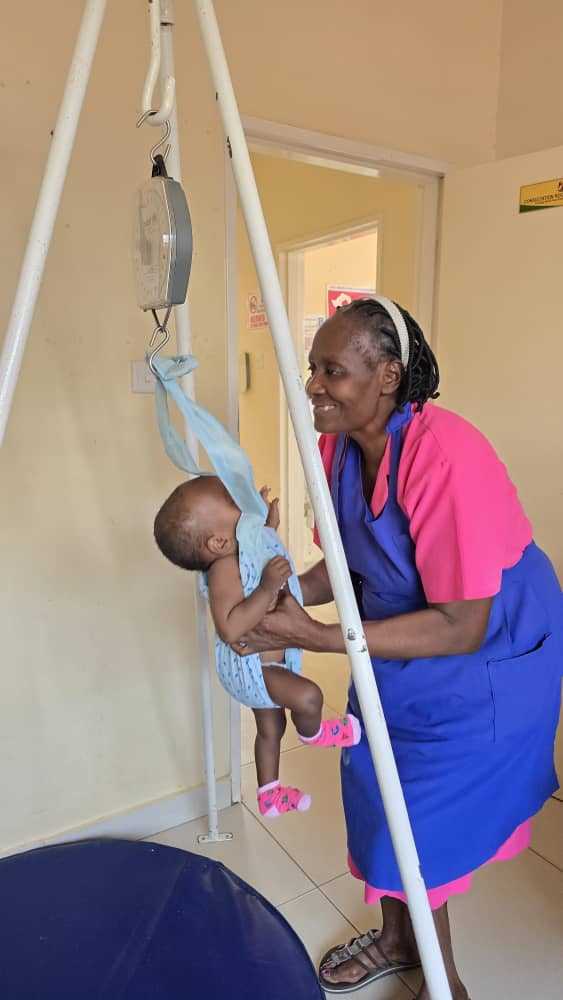
Nutrition remains one of the pressure points. UNICEF reports that stunting among children under five has risen from 23.5 percent to 27 percent, while exclusive breastfeeding remains at 42 percent. In 2024, more than 1.9 million children under five were screened for wasting and 15,155 were treated.
The pressures also extend to child protection. UNICEF says the sector faces a shortage of trained social workers, limited investment in social welfare and weaknesses in the implementation of policies and legislation. In 2024, 27,134 children received services through the National Case Management System, while 117,588 children and adolescents accessed community-based mental health and psychosocial support during emergencies.
Financing constraints are also visible in government social-sector spending. UNICEF’s analysis says social sectors accounted for 29 percent of total government expenditure in 2024, with more than 80 percent of that spending going to wages and salaries. Although the 2025 budget projected social-sector spending at 35 percent, UNICEF reported that by September 2024, disbursement rates were 68 percent for education, 53 percent for health and just 18 percent for social protection.
The organisation has also reported the effect of reductions in external development assistance. In its latest Children First newsletter, UNICEF Zimbabwe said global reductions in development assistance had “significantly constrained” its programming and operational activities. The office said it responded by streamlining processes and reducing staffing levels by about 24 percent while continuing to deliver services in health, nutrition, WASH, education, child protection and social protection.
The wider humanitarian financing picture has also been difficult. UNICEF reported that the 2024 United Nations and humanitarian partners’ Flash Appeal for Zimbabwe, valued at US$443 million, received only 32.4 percent of the required funding. UNICEF separately mobilised US$10.5 million of its 2024 Humanitarian Appeal for Children for the drought and cholera responses.
The consequences of funding shortages can be seen particularly clearly in humanitarian programming. UNICEF’s revised 2025 strategy said it would reach fewer people in some areas while concentrating resources on districts with the greatest needs. It planned to continue life-saving services while integrating health, nutrition and WASH interventions with child protection in selected high-risk districts.
The organisation’s latest annual reporting also points to continuing pressure on essential systems. UNICEF said its US$90 million Health Resilience Fund, which had supported Zimbabwe’s primary healthcare system since 2022, entered its final phase ahead of its closure in June 2026 and warned that its phase-out was expected to put additional pressure on an already overstretched health sector.
At the same time, UNICEF’s 2025 annual report records areas where investment and integrated delivery have produced measurable results. These include community-based nutrition programmes, improved access to water and sanitation, learning interventions and support for vulnerable families through social protection. The report says such approaches have helped maintain essential services despite a difficult operating environment.
The Mid-Year Review therefore comes at a point when UNICEF is having to balance two realities: the breadth of children’s needs and the resources available to respond to them.





Leave Comments