





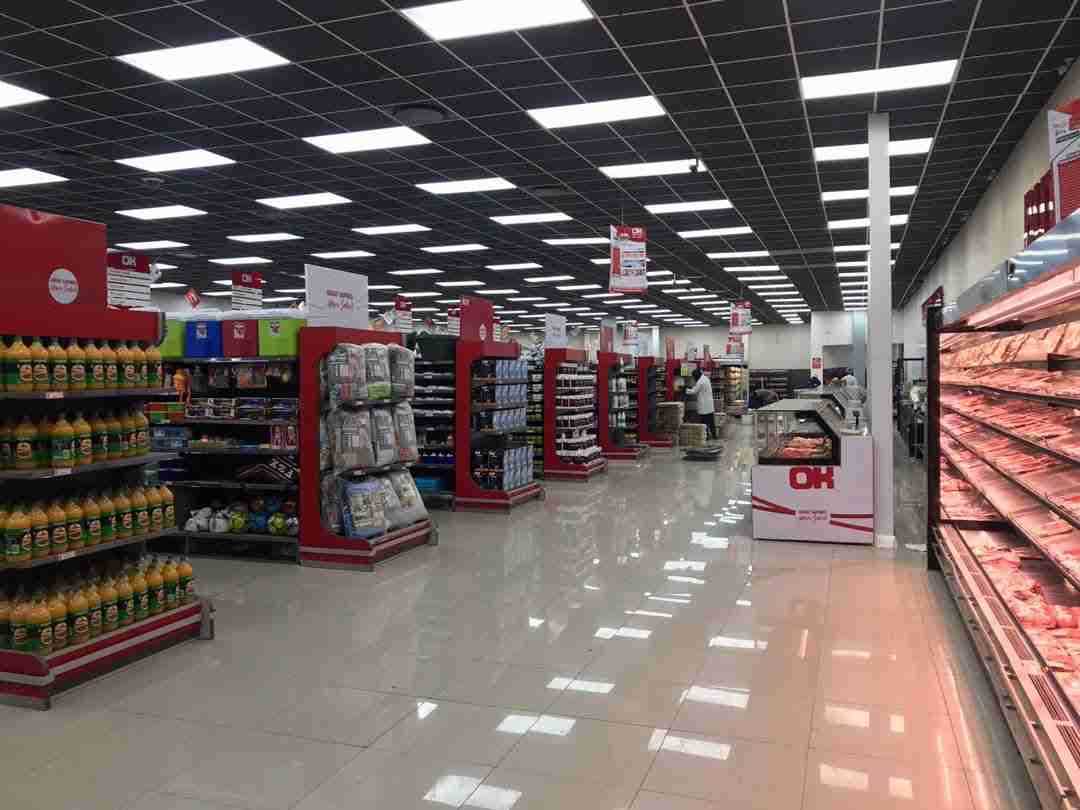
OK Zimbabwe’s US$15 million restocking facility has brought some relief to the troubled retailer, but analysts say the company now faces a difficult strategic choice, whether to continue operating its 44-store network or concentrate its limited working capital on fewer, fully stocked outlets.
The retailer secured bank guarantees worth US$10 million from CBZ Bank and US$5 million from BancABC, allowing major suppliers to resume deliveries after months of disruptions.
The arrangement has also supported the reopening of branches that were closed during the company’s cash-flow crisis.
However, capital markets analyst Tinashe Mukogo questioned whether the US$15 million facility is sufficient to properly stock all 44 stores.
Mukogo pointed to OK Zimbabwe’s 2015 position, when the retailer had 61 stores and inventory worth US$46.7 million.
That amounted to approximately US$766,000 in inventory per store.
Applying the same level to the current 44-store network would require roughly US$34 million in inventory to fully stock the branches.
“If OK Zimbabwe is genuinely turning around, that's good news. Nobody wants to see one of Zimbabwe's oldest retail chains disappear,” Mukogo said.
“However, one detail in the story is worth paying attention to. The story states that OK Zimbabwe is still running 44 stores. Is that too many even after dropping from about 70 stores?”
Mukogo estimated that if OK Zimbabwe already has around US$6 million in inventory, the new US$15 million facility could potentially take its stock position to about US$21 million if fully utilised.
That would represent approximately 62% of the estimated US$34 million required to stock the 44 stores at the historical level.
This has raised the possibility that the retailer could generate better returns by concentrating its resources on a smaller number of outlets rather than spreading stock thinly across its entire network.
“Would OK Zimbabwe be better off with 20 fully stocked stores than 44 stores sitting at 62%?” Mukogo asked.
He said retail businesses depend heavily on product availability, meaning a store with shelves that are only partially stocked may struggle to retain customers.
“If a factory moves from 30% utilisation to 60% utilisation, that is a big improvement,” Mukogo said.
“However, in retail, moving from 30% stocked to 60% may not make much of a difference, as customers want availability close to 100% to encourage them to return.”
The debate comes as OK Zimbabwe attempts to recover from a major liquidity crisis that resulted in the company entering corporate rescue in February 2026 with debts of about US$37.4 million, including approximately US$24 million owed to suppliers.
The retailer had previously raised US$20 million through a rights issue in August 2025, with a substantial portion used to settle legacy supplier debts. However, supplier deliveries reportedly remained limited, highlighting the difficulty of restoring normal trading conditions.
Related Stories
OK Zimbabwe’s revenues also declined sharply, falling from about US$245.2 million in the year ended March 2025 to approximately US$28.3 million in the six months to September 2025. Monthly revenue reportedly fell to around US$1.3 million by January 2026.
Financial analyst Kennedy Ndoro said the company should consider a “shrink to grow” strategy if its available working capital cannot adequately support the current footprint.
“Whoever is tasked with this turnaround needs to understand the ‘shrink to grow’ philosophy,” Ndoro said.
“A half-stocked store isn't a store but a museum of lost trust.”
Ndoro argued that maintaining a large store network would not necessarily translate into profitability if customers could not reliably find products.
“Customers don't return to see if you've improved; they return when you're reliable. OK Zimbabwe cannot afford to be ‘62% reliable’,” he said.
“In retail, profitability isn't a function of footprint size but a function of velocity.”
He warned that empty shelves could trigger a cycle in which declining customer traffic reduces sales, weakening cash flow and making suppliers more cautious.
“When shelves are empty, customers leave. When customers leave, suppliers get nervous. When suppliers get nervous, they demand cash upfront,” Ndoro said.
“And when cash is tied up, the spiral continues.”
The latest financing has nevertheless allowed suppliers including Dairibord, ZimGold, Olivine, National Foods and Nestlé to resume deliveries, giving OK Zimbabwe an opportunity to rebuild sales.
But the arrangement has also raised questions about whether the underlying financial problems have been resolved or whether supplier risk has simply been shifted to the banking sector.
Financial analyst Munyaradzi Hoto previously said the bank guarantees had effectively provided a third-party balance sheet behind OK Zimbabwe’s new supplies.
“A guarantee means suppliers are no longer extending credit to OK Zimbabwe; they are extending it to the guarantor banks,” Hoto said.
The sustainability of the arrangement could therefore depend on what happens when the guarantees expire.
Mukogo acknowledged that securing financing during corporate rescue was itself a positive development.
“To be fair, this step is still making some progress. Getting any facility during the corporate rescue process is not easy. You have to start somewhere,” he said.
But he warned that OK Zimbabwe would need to move quickly from the initial recovery phase to a sustainable operating model.
“More likely than not, OK Zimbabwe may need to close even more stores to stretch working capital sufficiently and keep the business going,” Mukogo said.







Leave Comments