








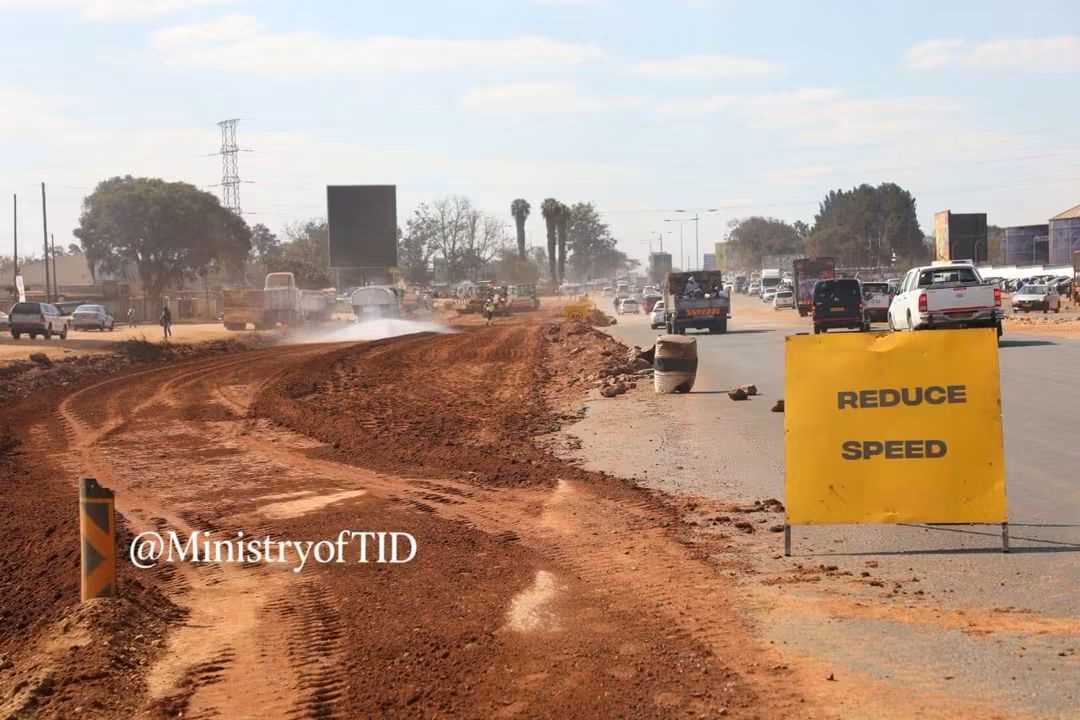
Commuters, public transport operators, and motorists traversing Harare’s southern transit corridor have commended the Minister of Transport and Infrastructural Development, Hon. Felix Mhona, following the ongoing major rehabilitation works along Simon Mazorodze Road.
Simon Mazorodze Road serves as a vital economic arterial link connecting Harare's central business district to high-density southern suburbs including Waterfalls, Glen Norah, Highfield, Glen View, Budiriro, and Chitungwiza as well as serving as the key gateway for regional traffic along the Harare-Masvingo highway.
Before the recent interventions, the crucial artery had deteriorated into a state of severe disrepair.
Deep potholes, crumbling tarmac, and structural defects along key bridge overpasses had forced thousands of daily commuters into unbearable traffic gridlocks. Conditions became so dire that many motorists were actively avoiding the route altogether, opting for lengthy bypasses through residential side streets to prevent vehicular damage.
The Ministry of Transport’s direct intervention under the Government's ongoing infrastructure drive has brought noticeable relief, resurfacing critical stretches, widening key choke points, and improving structural bottlenecks.
Locals and motorists who spoke to Zim Now shared their views on the road's transformation:
Tendai Moyo, a kombi driver operating the Chitungwiza–Mbare route, said the road works have saved operators from costly maintenance bills.
Related Stories
"Driving on Simon Mazorodze was becoming a daily nightmare," Moyo said. "We were replacing suspension arms and blown tires almost every week because the potholes were like craters. A lot of us drivers were dodging the main road completely and cutting through inner suburbs, which added 30 minutes to every trip. What Minister Mhona and the government have done here has saved our vehicles and brought back normal travel times."
Farai Mutasa, a daily commuter from Waterfalls, echoed similar sentiments, noting that traffic flow has improved significantly during peak hours.
"It got to a point where you would rather leave for work an hour early just to avoid the congestion caused by drivers swerving to avoid broken tarmac on the flyovers," Mutasa said. "Seeing actual paving equipment and real asphalt being laid down is a huge relief. Minister Mhona deserves credit for prioritizing this section because it affects thousands of us every morning."
For local business owners operating along the industrial hub, the rehabilitated infrastructure is already boosting operations. Rudo Machingauta, a business owner in the area, highlighted the positive impact on commercial logistics.
"Our delivery trucks were constantly delayed, and customers were avoiding visiting our premises because the road conditions were so appalling," Machingauta said. "Since the resurfacing began, traffic flow has improved drastically. Minister Felix Mhona’s hands-on approach to monitoring these projects directly is paying off for local businesses."
Private motorists have also welcomed the government’s response to public concerns regarding hazardous driving conditions. Blessing Dziva, a driver from Glen Norah, commended the ministry's swift action.
"For years, Simon Mazorodze felt completely abandoned, and it was dangerous driving here at night," Dziva said. "Many people I know had stopped using the road altogether. Seeing the government fix the road surfaces and clear the bottlenecks shows that our transport challenges are finally being listened to. We hope Minister Mhona keeps this momentum going across all connecting feeder roads."









Leave Comments