









Zimbabwean furniture manufacturers, retailers and home-living businesses have a new digital marketplace through which they can showcase products and connect directly with customers across the country, as ZimNest seeks to move more of the local furniture trade online.
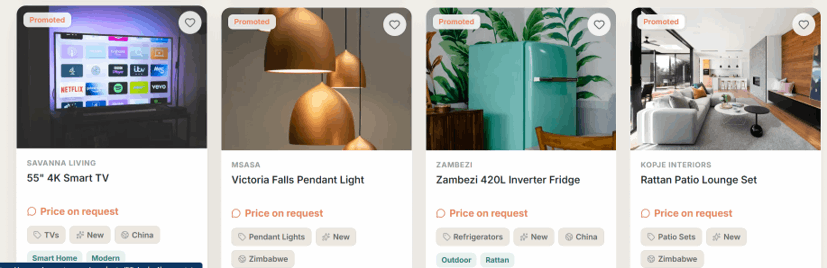
For a furniture maker working from a workshop in Harare, Bulawayo or another Zimbabwean town, producing a good sofa, dining suite or wardrobe is only half the job.
The other challenge is getting enough people to see it.
Zimbabwe's furniture market still relies heavily on physical showrooms, referrals, Facebook and Instagram pages and WhatsApp catalogues. ZimNest Living is positioning itself as another route to market, bringing furniture manufacturers, retailers, appliance dealers, décor businesses, building-material suppliers and home-service providers onto a specialised online marketplace.
Rather than competing for attention alongside cars, phones, clothes and hundreds of unrelated products on a general classifieds site, businesses on ZimNest are placed inside a platform dedicated to homes and living.
Visit the site: https://www.zimnest.co.zw/
A digital storefront for Zimbabwe furniture makers
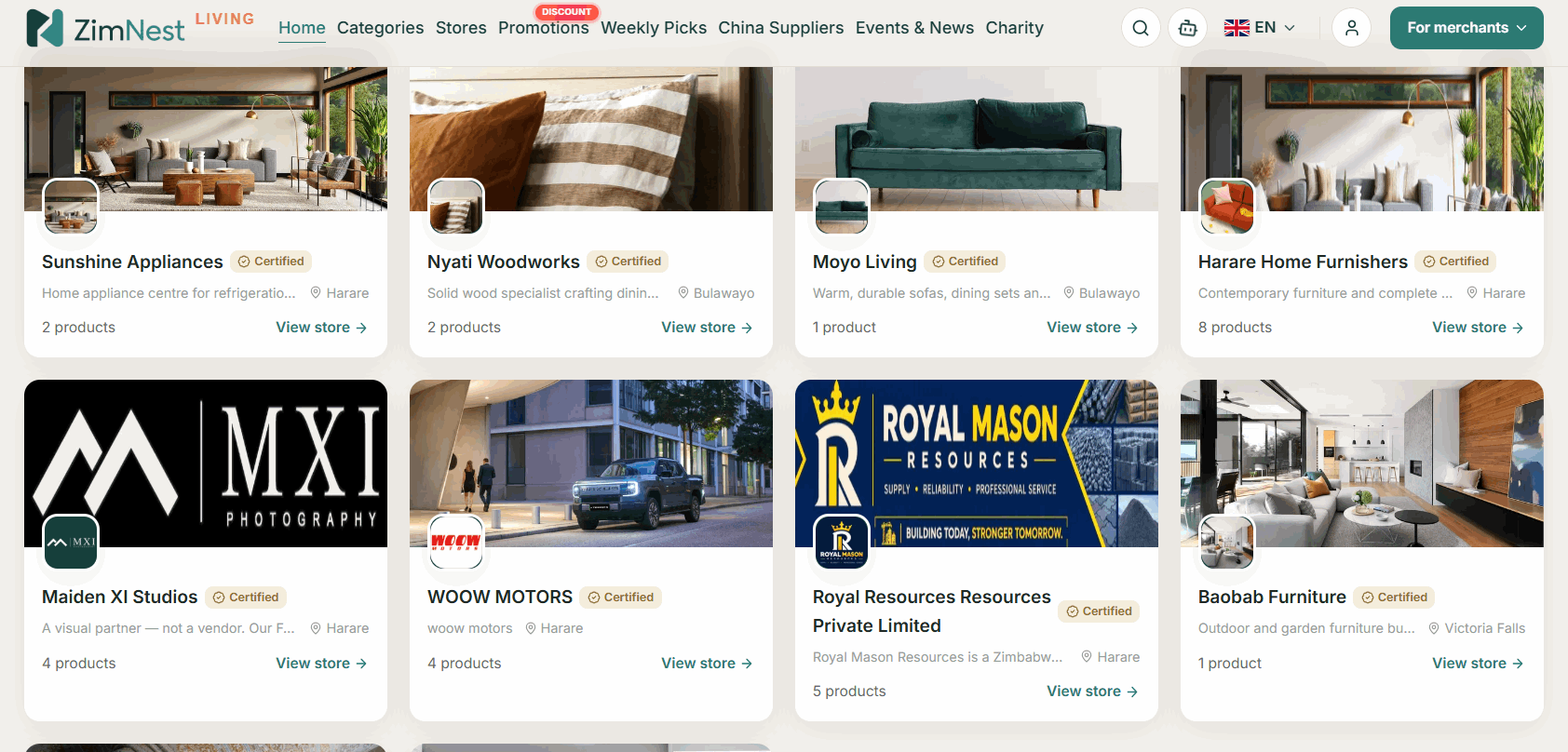
One of the platform's main attractions for smaller manufacturers is that a business does not need to build its own e-commerce website before establishing an online presence.
Approved merchants can create branded storefronts carrying their business name, logo, product catalogue and contact details.
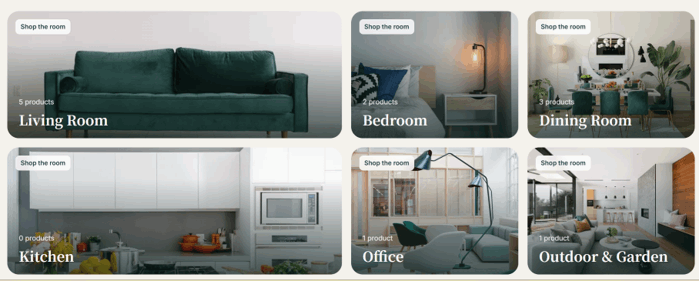
Their furniture and other products can then be found through ordinary searches, product categories and room-based browsing covering spaces such as the living room, bedroom, dining room, office and outdoor areas.
For a small workshop, that potentially turns products previously seen mainly by walk-in customers, referrals or social-media followers into merchandise searchable by customers elsewhere in Zimbabwe.
ZimNest specifically accepts both manufacturers and resellers, alongside appliance dealers, home décor and textile businesses, interior designers and building and interior-material suppliers.
That could be particularly useful for Zimbabwe's dispersed furniture manufacturing sector, where a customer looking for locally made furniture may know what they want but not necessarily know which workshop makes it.
Buyers deal directly with the seller
ZimNest is not positioning itself as the middleman in the final furniture sale.
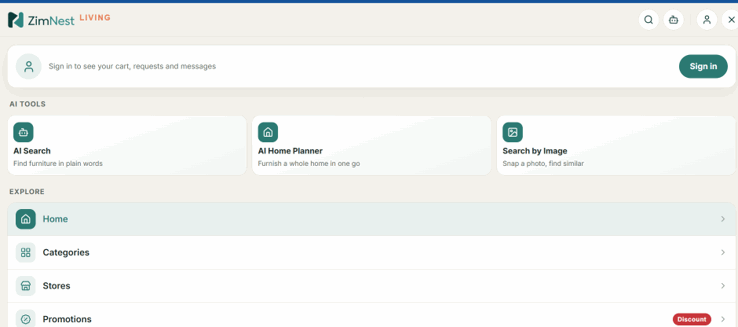
Customers can contact merchants through in-platform messaging, WhatsApp or telephone and discuss prices, dimensions, delivery and other requirements directly with the business.
The platform says it charges no commission on sales. Applying to join is free, while paid membership options provide additional listings and promotional features.
That model is particularly relevant to furniture manufacturing, where the price displayed on a standard product may only be the beginning of the conversation.
A customer may want a different fabric, timber, colour, size or design. A dining table for six may become one for eight. A wardrobe may have to fit a particular wall.
Direct contact preserves the negotiation and customisation that already characterises much of Zimbabwe's furniture trade while moving product discovery online.
Addressing the trust problem
Buying furniture online comes with another challenge: trust.
Related Stories
An attractive photograph of a sofa tells a customer little about who made it, whether the business exists at the address given or whether the product delivered will resemble the one advertised.
ZimNest is trying to address that through merchant verification.
Businesses submitting applications provide company information and documentation for review. The platform also says members certified through the Zimbabwe Furniture & Home Association can carry certification badges, while certified merchants can receive greater visibility in search results.
This could help buyers distinguish established businesses from anonymous online sellers, although the value of the system will ultimately depend on how consistently verification is conducted and understood by consumers.
ZimNest's current store directory includes businesses listed in Harare and Bulawayo, covering furniture, appliances and home products.
More than likes and followers
There is another useful feature for businesses accustomed to marketing mainly through social media.
Merchants can see data including product views, contact clicks and enquiries through their ZimNest dashboard.
For a furniture maker, those numbers can answer practical questions.
Are customers looking at beds or sofas? Which dining set attracts enquiries? Are people seeing a product but failing to contact the business?
That information is basic by sophisticated e-commerce standards, but potentially useful to a small manufacturer trying to understand what customers actually want.
Search for furniture instead of searching for the seller
Perhaps ZimNest's bigger proposition is changing how Zimbabweans find furniture.
A customer looking for a sofa traditionally needs to know a shop, ask for recommendations, drive around furniture districts or encounter a seller through advertising or social media.
On a specialised marketplace the process begins with the product instead.
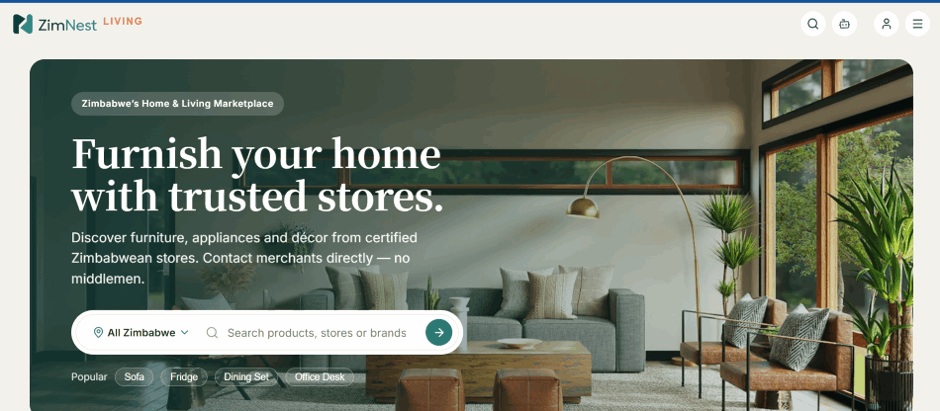
A buyer can search for furniture, browse by category or room, compare products and stores and then contact the relevant merchant. The homepage currently allows searches for products, stores and brands across Zimbabwe and highlights categories including furniture, appliances, office furniture, décor and building materials.
For established furniture businesses, that represents an additional sales channel.
For smaller Zimbabwean manufacturers, it potentially addresses a much more fundamental problem: discoverability.
A workshop does not have to be on a major road or have a large showroom to appear alongside businesses selling similar products.
Whether ZimNest becomes an important part of Zimbabwe's furniture trade will ultimately depend on the number and quality of businesses that join, how frequently sellers update their products and prices, and whether enough consumers adopt the platform as a place to search before buying.
Technology can provide the shop window.
The buyers and sellers will determine whether there is a busy shop behind it.
Disclosure: Zim Now has market-affiliation links with ZimNest and is entering into a partnership with the platform. This article independently examines publicly available features of the platform and their relevance to Zimbabwean manufacturers and sellers.









Leave Comments