






The Zimbabwe Revenue Authority has issued a civil penalty order of US$2,054,250 against OK Zimbabwe Limited for alleged non-compliance with the Fiscal Data Management System, adding fresh pressure to a retail giant already battling declining revenues, store closures and worsening liquidity constraints.
According to the group’s audited financial statements for the year ended 31 March 2025, the penalty was calculated under Section 81B of the Value Added Tax Act, based on 914 tills over a 90-day period beginning 23 January 2024.
ZIMRA alleges the retailer failed to meet FDMS reporting requirements.
However, OK Zimbabwe is contesting the charge, arguing that it was in the process of integrating FDMS but faced technical challenges outside its control, which it communicated to the tax authority. The retailer also says the legal basis for the penalty is unclear under the VAT Act, that ZIMRA did not issue the mandatory “show cause notice,” and that the number of tills used in the calculation is incorrect.
The company has since appealed to the Commissioner of Domestic Taxes and maintains that it has a strong legal foundation to challenge the penalty. As a result, no provision for the charge has been recorded in the financial statements.
The penalty comes at a time when the group is navigating deep financial, operational and leadership strain.
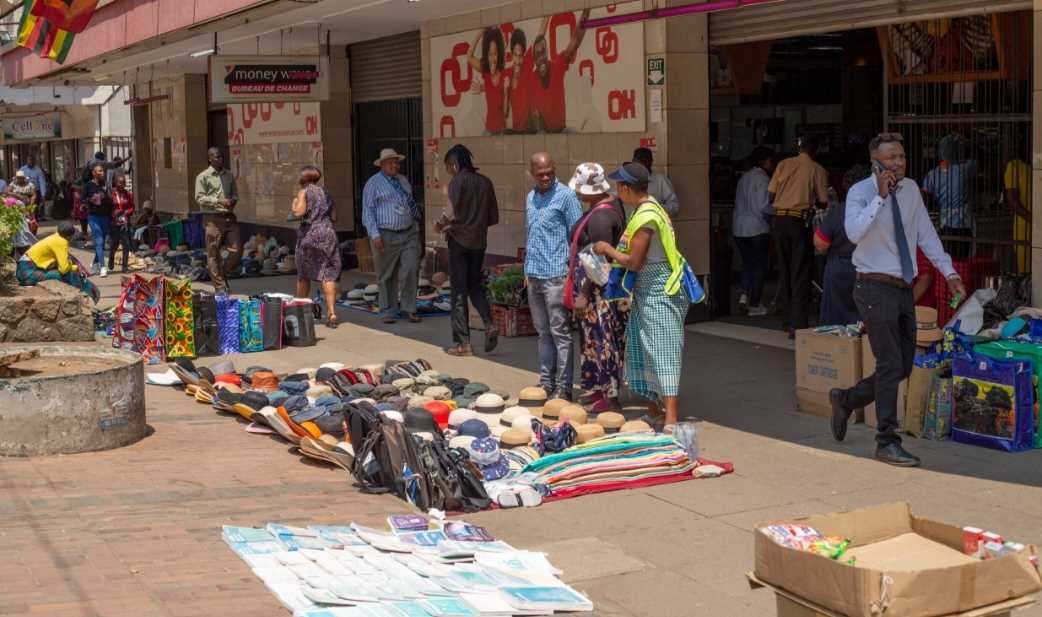
Revenue fell by 52% to US$245 million, weighed down by exchange-rate instability, weakening consumer spending power, foreign-currency shortages and intensifying competition from the informal sector.
OK Zimbabwe posted a US$25 million loss, triggering a wider working-capital deficit, delayed supplier payments and persistent stock shortages across its network of 69 stores.
The retailer has also been forced to scale back its footprint. The audited report shows the closure of OK Marondera, OK Banket and OK Banket Liquor, along with the termination of lease agreements for several previously closed branches. All Alowell Medical Investment pharmacies were also shut, while the group exited the Food Lovers franchise through the sale of its Borrowdale and Avondale branches.
Related Stories
These moves resulted in a reduction of about 4,470 square metres of trading space. Management says the downsizing, together with ongoing asset disposals, is expected to improve cost efficiency and strengthen financial stability.
Leadership changes have added to the turbulence. In February 2025, both the CEO and CFO left the company through voluntary separation. Former executives Willard Zireva and Alex Siyavora returned in interim capacities to stabilise operations and restore confidence.
Rising operational costs have further eroded margins. Frequent national power outages forced the retailer to rely heavily on diesel generators, driving up fuel consumption, maintenance costs and carbon emissions. Although administrative and overhead expenses were cut by 44%, energy-related costs continued to escalate.
To shore up liquidity, the board declined to declare dividends, pursued a US$20 million rights issue and sold properties worth US$10.5 million to reduce debt and replenish stock.
Despite the mounting pressures, management insists that the group remains a going concern. It expects cost-optimisation measures, improved supply-chain recovery and investments in renewable energy to gradually stabilise the business. The company also reported community contributions amounting to US$52,393 during the year.
Zim Now this week reported that OK Zimbabwe’s deteriorating financial position has prompted expert warnings that the retailer may need to close 20 or more additional stores to survive, over and above the 11 already shut. Analysts say a US$41 million working-capital deterioration, weak liquidity, shrinking supplier credit lines and a 52% revenue slump have made the current 62-store footprint unsustainable.
Even after raising US$20 million through a rights issue and planning a further US$10.5 million in property disposals, analysts argue the retailer can no longer support its wide network and must prioritise a smaller, well-funded and consistently stocked operation.
The audited results paint a picture of deep operational distress — a US$25 million loss, stock shortages, restricted capital expenditure, rising fuel costs and intensifying competition from the informal sector. Analysts say OK Zimbabwe’s survival will depend on aggressive restructuring, further store consolidation, digital modernisation, stronger SME supply-chain partnerships and ecosystem collaboration with fintechs and logistics players.
Management acknowledges the extent of the distress and has embarked on store closures, property sales and organisational restructuring, alongside interim leadership, in an effort to restore stability.








Leave Comments