

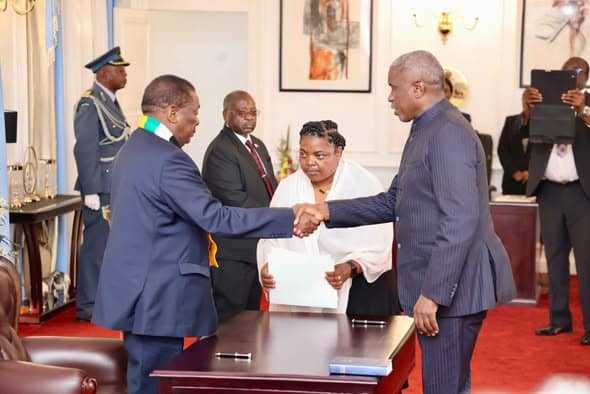







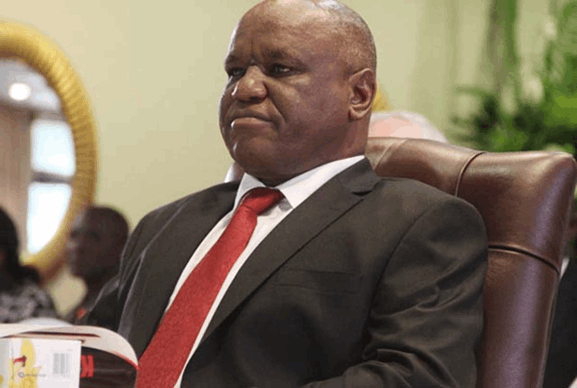
Chief Justice Luke Malaba could still preside over and deliver a definitive ruling on any legal challenge arising from a proposed presidential term extension, should Parliament move such a motion in the coming weeks, a senior legal authority has said.
The assessment comes as the Judicial Service Commission formally confirmed on Friday that Justice Malaba will retire on 15 May 2026, bringing clarity to his remaining tenure and setting a firm judicial clock on any constitutionally sensitive litigation likely to arise before then.
But while the retirement announcement has been widely interpreted as closing the chapter on judicial extensions, legal experts say it simultaneously opens a narrow but decisive window in which the Chief Justice could still shape Zimbabwe’s constitutional trajectory ahead of the 2030 elections.
“If a constitutional amendment motion on presidential term extension is introduced in the next four weeks and is challenged, the matter would go straight to the Constitutional Court. Justice Malaba would still be in office and fully empowered to hear and determine it,” a senior lawyer told Zim Now.
“He could constitute the bench, preside over proceedings, and deliver a final ruling before his retirement in May. There is no procedural barrier to that.”
In a press statement issued on Friday, the Judicial Service Commission said Justice Malaba’s last working day will be midnight on 14 May 2026, with his formal retirement taking effect the following day.
The Commission said his departure is in line with Section 186(1) of the Constitution, which allows a Chief Justice to serve until the age of 70, with an option to extend tenure once by five years. Justice Malaba exercised that option in 2021 after reaching the mandatory retirement age.
The extension itself followed a controversial constitutional amendment passed by Parliament, which triggered legal challenges and sparked national debate over judicial independence, executive power, and constitutionalism.
Related Stories
With Justice Malaba now in the final four months of his tenure, attention is now on what constitutional matters might still pass through his courtroom before he steps down.
That question comes as political speculation intensifies that Justice Minister Ziyambi Ziyambi will soon move a motion in Parliament seeking to extend presidential term limits beyond 2028.
Such a move would trigger one of the most complex constitutional processes under Zimbabwe’s supreme law, as indications are that the key players want to ride on the two-thirds parliamentary majority and avoid a national referendum as specified under Section 328.
It would almost certainly invite an immediate Constitutional Court challenge.
According to the legal expert consulted, any such case would be treated as a national urgency matter and fast-tracked.
“These are not ordinary cases,” the legal authority said.
“Election disputes, executive power cases, and constitutional amendment challenges are prioritized. If an application is filed in February or early March, it could be heard within days and judgment delivered well before May.”
The Judicial Service Commission said preparations for his departure are already underway, including a special sitting of the Constitutional Court on 14 May and a retirement dinner attended by senior figures from the Executive, Legislature, and regional judiciaries.
Justice Malaba leaves office after four decades in the judiciary, having served as a magistrate, High Court judge, Supreme Court judge, judge of appeal, and chief justice.
His tenure has coincided with some of Zimbabwe’s most politically charged constitutional litigation, including election disputes and landmark executive power cases.








Leave Comments