








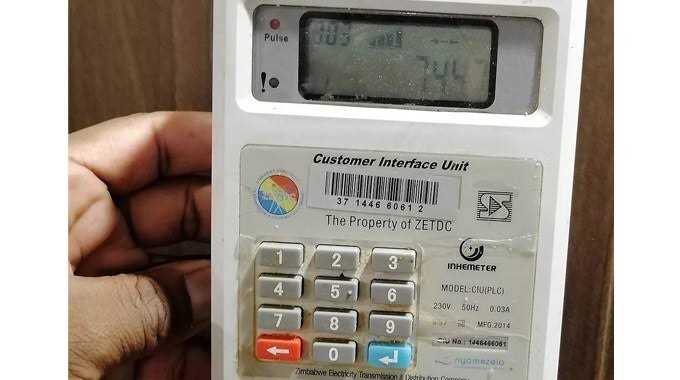
Zimbabwe’s prepaid electricity tariff structure is under intense public scrutiny as consumers grapple with stark differences in the number of units received for the same amount of money, exposing deeper concerns about affordability, transparency and supply reliability.
What has unsettled many households is not only the rising cost of power, but the discovery that US$30 can produce sharply different outcomes within the same month. In some cases, residents have received as much as 292 units for that amount, while others have obtained only 190 units.
The disparities stem from the stepped domestic tariff system used by the Zimbabwe Electricity Supply Authority (ZESA), where electricity is charged in consumption bands within a calendar month.
The first 50 kilowatt-hours (kWh) attract the lowest rate. The next 51–100kWh are charged slightly higher, while consumption beyond 100kWh rises steeply, with the 101–200kWh band costing almost double the first tier.
As households exhaust cheaper bands, subsequent purchases automatically fall into higher-priced tiers regardless of when the tokens are bought.
Admire Simboti said complaints have mounted as more residents begin to compare receipts.
“Some residents recently spent $30 to obtain 292 units, but others received only 190 units for the same amount. I have received many complaints about this and other areas of confusion,” said Simboti.
For families operating on tight monthly budgets, the structure has become more than a technical billing issue.
Rudo Chikowore said her recent purchase left her puzzled.
“For $25 which I paid on Thursday evening, I got 118 units not 700 units or anything nearest to the equivalence of $25,” said Chikowore.
She added: “It’s not correct. What I mean is this. My consumption per month is $25 worth of electricity units. At the beginning of the month, I do not have enough cash, so I buy units worth $11. When I then want to top up, I am charged an exorbitant tariff. Why should that be the case?”
Others argue the system is structured to promote responsible usage.
Farai Muchengeti said: “The first purchase of the ZESA prepaid units at whatever date in the month gets the most favourable tariffs; any subsequent purchases will be at the higher tariffs.”
Related Stories
Tapiwa Zhou said clearer public education may be needed.
“There appears to be a misunderstanding on ZESA tariff, maybe ZESA should educate the public. The first 50KW in any calendar month are the cheapest whether bought on 1st or 15th. The next 51-100KW are slightly more expensive whether purchased on 1st or 15th. 100-150 are twice cost of first 50KW. If purchasing directly from ZESA their receipt gives the full breakdown,” said Zhou.
Kudzai Chiwenga defended the principle behind the structure.
“It’s not penalising per se. But it’s a billing structure which is made to encourage consumers to use less power or to be responsible. Izvo zvitori normal and legal because they display the cost structure pajekerere… kana engine yemotor inodaro. If you drive at average speeds it consumes less and if you drive at high speed it consumes more gas per km,” said Chiwenga.
However, tariff concerns are unfolding against a backdrop of persistent power outages, amplifying frustration among prepaid customers who feel exposed to both high costs and unreliable supply.
“Imagine my situation where I don’t have electricity but I already gave ZESA my money for this service through the prepaid system and they are sitting on it… We are dealing with thieves,” said Shadreck Moyo.
Thelma Mutarangi said prepaid tokens have offered little comfort during outages.
“I do not have gas and I only have a few logs for firewood but we had bought electricity tokens enough to cover us for the whole month at our home. We are now helpless. We will never buy prepaid electricity again because it’s pointless,” said Mutarangi.
Tasha Maradzika said prolonged blackouts in her area have made prepaid purchases feel futile.
“It is pointless to waste my hard earned money on Zesa tokens anymore as her area has gone for more than three days now without electricity,” said Maradzika.
Blessing Hove questioned whether a flat-rate alternative might ease tensions.
The question remains, though why not go for a flat fee instead? What’s the reasoning behind it?” said Hove.
While progressive tariffs are widely used internationally to manage demand and encourage conservation, the unfolding public reaction suggests that without sustained consumer education and improved supply stability, confusion and dissatisfaction may persist.






Leave Comments