








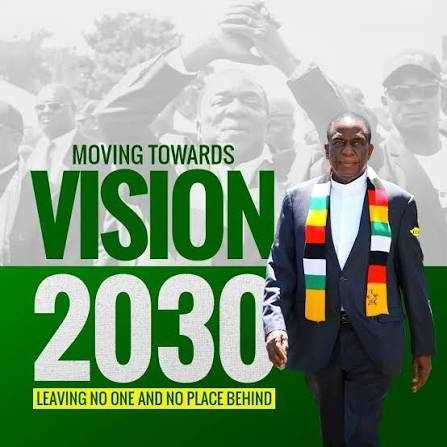
Zimbabwe has never lacked ambition. From the euphoria of independence in 1980 to the technocratic language of today’s development frameworks, the country has consistently produced bold national blueprints: “Growth with Equity.” “Health for All by 2000.” “Education for All.” “Housing for All.” Now, “Upper Middle-Income Economy by 2030.”
On paper, these visions are impressive. In practice, they have become a familiar ritual of aspiration without arrival.
So when Vision 2030 promises a transformed, prosperous Zimbabwe within five years, the public response is not excitement but fatigue. Not hostility—just weary disbelief. And that skepticism is neither irrational nor unpatriotic. It is historically informed.
Zimbabweans have been here before.
In the early 1980s, the new state set out to dismantle colonial inequalities through massive social investment. Schools were built, clinics expanded, and literacy soared. The ambition was real—and for a time, so was the progress. But the model depended on sustained economic growth, disciplined public finance, and political restraint—three conditions that gradually eroded.
By the 1990s, reform energy shifted toward structural adjustment. The promise changed from social justice to market efficiency. Again, the language was hopeful. The results were uneven. By the 2000s, the policy vocabulary had turned almost entirely to crisis management.
What links these eras is not bad intention. It is the recurring gap between policy ambition and institutional capacity.
Vision 2030 enters this history burdened by legacy. It is not judged in isolation, but as the latest chapter in a long series of grand national statements that rarely survive contact with reality.
That is why, for many Zimbabweans, the plan feels hollow—not because prosperity is undesirable, but because the route to it remains unclear.
The goal itself is not implausible. Countries have made dramatic economic leaps within a decade. Rwanda, Vietnam, and—before recent setbacks—Ethiopia show that sustained reform can transform economies. But their success rested on three foundations: policy coherence, credible institutions, and political accountability.
This is where Zimbabwe’s Vision 2030 begins to strain.
First, policy inconsistency remains a structural problem. Over the past decade, the country has lurched between currency regimes, fiscal approaches, and investment narratives. One year prioritises liberalisation; the next reverts to controls. One season courts foreign capital; the next unsettles it through abrupt regulation. Vision 2030 promises stability—but stability cannot be proclaimed. It must be earned through predictable conduct.
Second, institutional weakness continues to undercut execution. Zimbabwe does not fail mainly because it lacks plans. It falters because the machinery meant to implement them is overstretched, under-resourced, and often politicised.
Development is not driven by slogans. It is driven by procurement systems that work, courts that enforce contracts, regulators that apply rules evenly, and civil servants insulated from partisan pressure. Without these, even the best strategy document becomes decorative.
Related Stories
Third, the credibility gap is widening. Vision 2030 speaks the language of transformation, yet many citizens experience stagnation: informalisation of work, declining real incomes, and deteriorating public services.
Today, well over 70 percent of Zimbabwe’s workforce survives in the informal economy. That statistic alone explains why official optimism often struggles to resonate. When national narratives consistently clash with lived reality, trust erodes.
And without trust, visions become communication exercises rather than social contracts.
To be fair, the Second Republic has made real attempts to reframe the development story. The mantra “Zimbabwe is open for business” signalled a rhetorical break from isolation. Infrastructure projects—roads, dams, power stations—demonstrate that the state still understands the importance of visible investment. Engagement, however limited, with international financial institutions reflects an awareness that reintegration matters.
But these efforts coexist with stubborn contradictions: persistent governance concerns, unresolved debt arrears, and an economy still shaped more by survival than by accumulation.
That tension is why Vision 2030 often sounds less like a roadmap and more like a reassurance—to markets, to investors, and to citizens—that tomorrow will be better, even when today feels uncertain.
Yet dismissing the vision entirely would also be a mistake.
National plans serve a purpose. They create benchmarks. They force governments to articulate priorities. They give citizens something against which to measure performance. The danger is not in having a Vision 2030. The danger lies in treating it as an article of faith rather than a testable programme.
For Vision 2030 to escape the fate of its predecessors, three shifts are essential.
First, honesty about starting conditions. Zimbabwe cannot leapfrog development stages through rhetoric. Productivity must rise before prosperity does. That requires hard reforms in agriculture, manufacturing, energy, and skills—not just flagship projects.
Second, the depoliticisation of delivery. Development must become a technocratic process, not a partisan one. Roads should be built because they unlock markets, not because they serve electoral geography.
Third, measurable accountability. Targets must come with timelines, independent monitoring, and real consequences for failure.
Without this, Vision 2030 risks becoming what so many plans before it were: a statement of intent that steadily outlives its credibility.
Zimbabwe does not suffer from a poverty of ideas. It suffers from a poverty of follow-through.
Until that changes, Vision 2030 will remain suspended between hope and history—not a destination, but another eloquently written future waiting to be delivered.
Simbarashe Namusi is a peace, leadership, and governance scholar, as well as a media expert. He writes in his personal capacity.








Leave Comments