







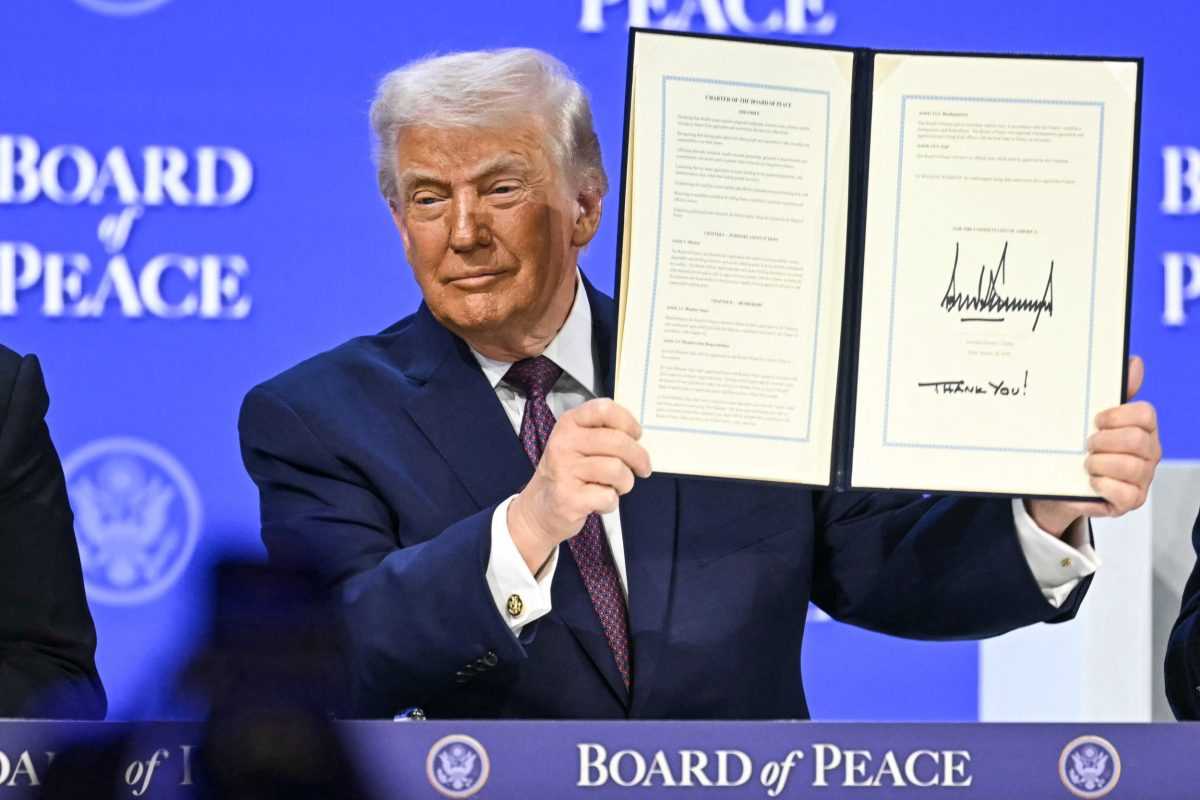
The European Union’s diplomatic service has raised legal and constitutional concerns over the charter governing former US President Donald Trump’s newly launched Board of Peace, according to an internal document seen by Euractiv.
The intergovernmental body, signed into existence in Switzerland, has been promoted by Trump as a platform for resolving global conflicts. However, the European External Action Service says the organisation’s governance structure may conflict with EU constitutional principles.
Related Stories
While the UN Security Council previously welcomed the creation of the Board as part of a Gaza peace framework, the EEAS argues that the final charter goes far beyond what was endorsed by the UN. Under the charter, Trump would serve as inaugural chairman with powers to appoint his successor and veto decisions, raising concerns over concentration of authority.
European Council President António Costa said EU leaders were “taken by surprise” by the scope of the charter, while EU officials noted that participation remains a political rather than strictly legal decision at this stage.
Several EU countries, including France, Germany, Spain, Italy and the UK, have declined to join the initiative. Hungary and Bulgaria have responded positively, while Poland and the European Commission are still reviewing their positions. Commission President Ursula von der Leyen has acknowledged the invitation but said questions remain over key aspects of the charter.
The EEAS maintains that the Board, as constituted, operates as a standalone international organisation with only loose links to the UN-backed Gaza agreement.





Leave Comments