








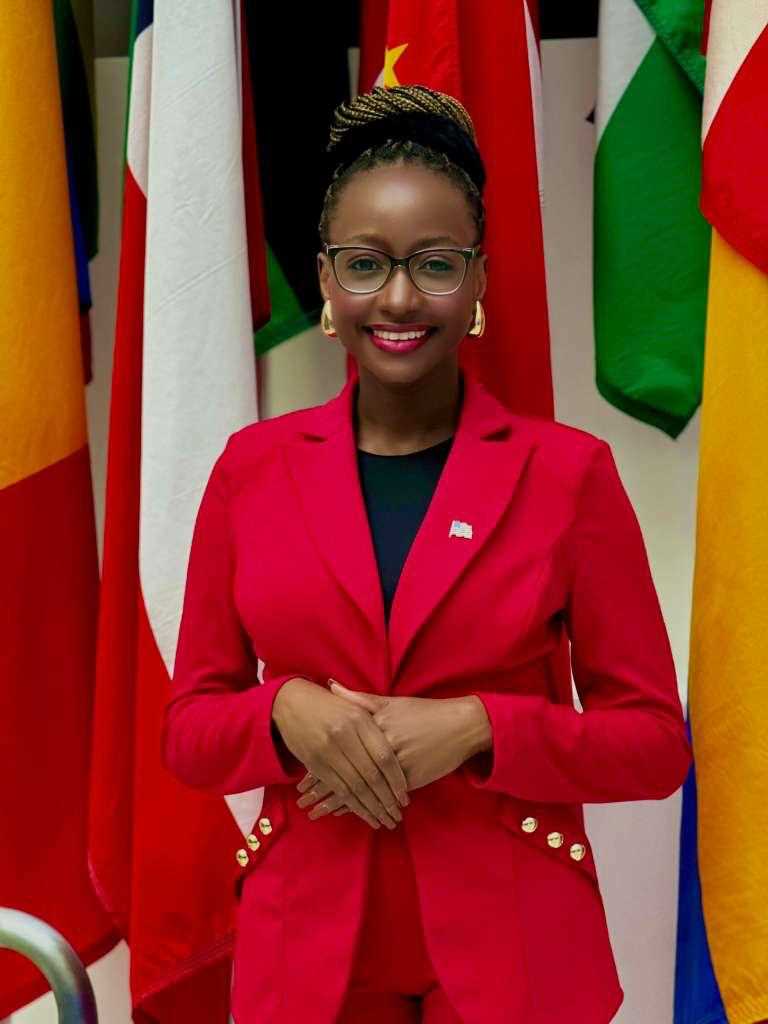
For Tatenda Dzvimbo, leadership has never been about titles or visibility. It has been shaped by movement—across borders, cultures, and experiences—and grounded in a deep sense of responsibility to community, service, and opportunity.
Her story begins far from global institutions and international platforms, at Langham Girls High School, an Anglican mission school in rural Zimbabwe where discipline, faith and academic excellence formed the foundation of her ambitions.
At just 16, Dzvimbo’s life changed dramatically when she became the first Zimbabwean student to attend the United World College in Mostar, Bosnia and Herzegovina on a full scholarship. Leaving home for the first time was both daunting and transformative.
“Leaving Zimbabwe to attend United World College in Mostar at the tender age of 16 was one of the most defining transitions of my life,” she said. “My worldview at the time was largely shaped by my immediate surroundings.”
Moving to a post-conflict European city exposed her to global realities far beyond what she had previously known. Living alongside students from diverse countries reshaped her understanding of identity, history and leadership.
“Being in Mostar, a city marked by post-conflict rebuilding, made global issues feel real and personal,” Dzvimbo said. “UWC taught me that leadership is not about individual achievement, but about responsibility—about using your voice and opportunities to contribute to something greater than yourself.”
That experience planted what she describes as a lifelong global mindset while deepening her connection to Zimbabwe.
“It was not just a geographical shift,” she reflected. “It was the beginning of my evolution into a global citizen.”
Her academic journey continued in the United States at the University of Oklahoma, where she pursued both a Bachelor’s and Master’s degree in Economics and International Development as a UWC Davis Scholar.
Arriving on a full scholarship, Dzvimbo carried what she describes as a profound sense of purpose.
“I was deeply aware that I was not just pursuing my degrees for myself, but also carrying the hopes of many people who had invested in me,” she said.
Her time at the university was marked by leadership milestones and barrier-breaking. She served as the first international student representative on the Mayor’s Roundtable, earned recognition as a Withrow Leadership Scholar, was named Outstanding Senior in the College of International Studies, and became the first international female student selected to the Homecoming Royalty Court.
Yet her most enduring contribution may have been founding the African Women’s League, an organisation created to support African female students navigating academic and cultural transitions abroad. The initiative has since evolved into the non-profit African Women’s League Global.
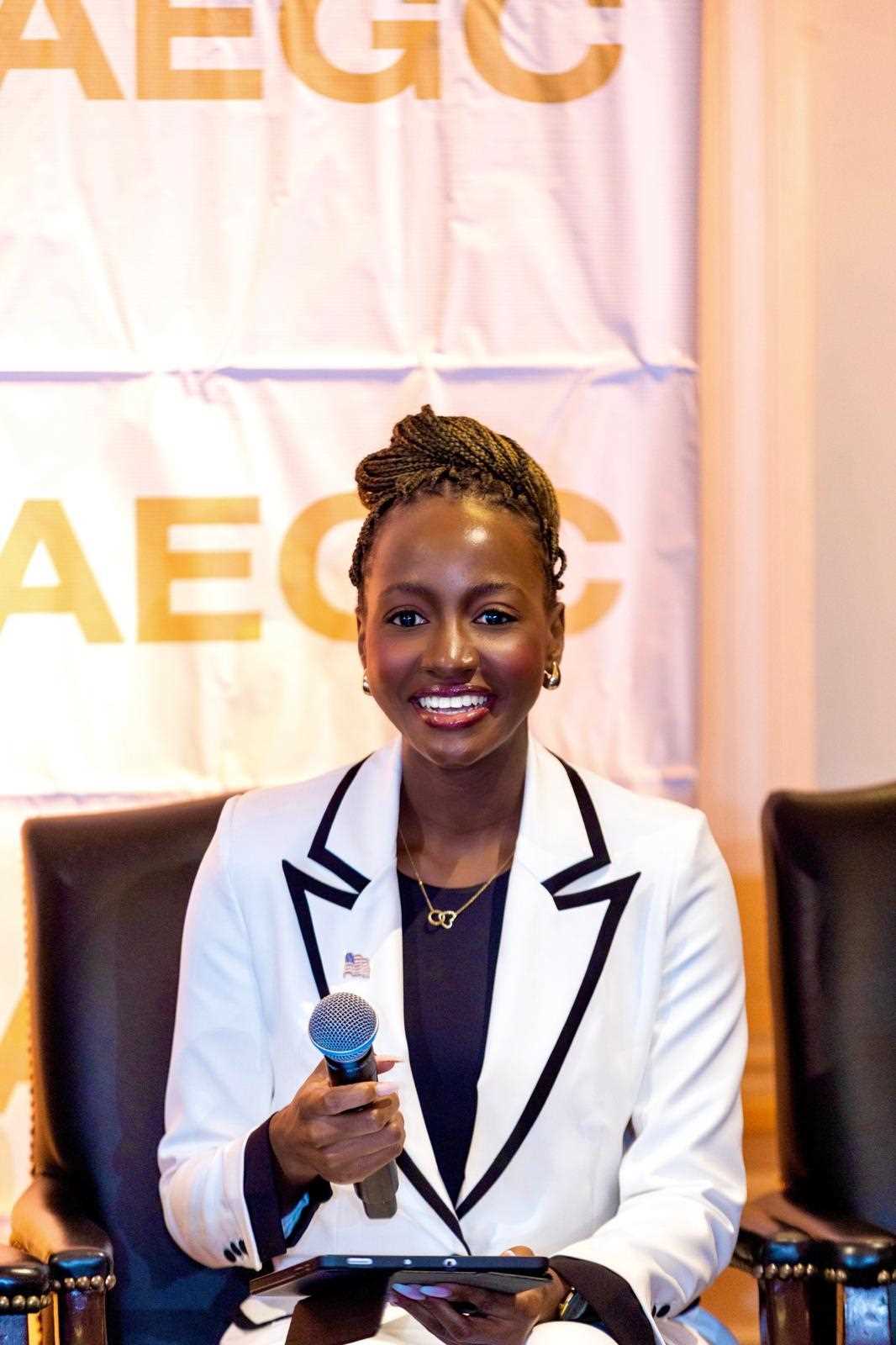
“Leadership is not just about occupying spaces,” she said. “It is about transforming them to be more inclusive and accessible for those who come after you.”
Despite these achievements, Dzvimbo acknowledges that the journey has not been without struggle. As an immigrant and young African woman operating in elite global environments, she faced moments of doubt and intense pressure.
“There were times when I questioned whether the journey I was pursuing was sustainable,” she said. “The pressure of building a future while constantly needing to prove myself can be overwhelming.”
Faith, family, and a broader sense of purpose became her anchors during those moments.
Related Stories
“I realized that stopping would not only limit me, but also what I could represent for others,” she said. “Perseverance is often quiet—it is choosing to continue even when things feel uncertain.”
Today, Dzvimbo works in housing and community development, a field she views as central to dignity and justice. Her work focuses on ensuring that development solutions address structural inequalities affecting underserved communities, particularly in rural areas.
“Housing is not just about buildings,” she explained. “It is about whether families have stability, whether children can learn in safe environments, and whether communities can grow and thrive.”
Her professional path has taken her into collaboration with multilateral institutions including the United Nations, the World Bank and the African Union, where she advocates for inclusive development approaches grounded in lived realities.
“I do not approach this work as purely technical,” she said. “It is part of a broader mission to ensure development is equitable and reflective of the communities it is meant to serve.”
Central to her philosophy is servant leadership—an approach she believes prioritises people over position.
“Leadership is not about being seen, but about being effective,” Dzvimbo said. “It means asking: What does the team need? How can I add value here?”
Navigating global spaces has required resilience and self-belief. She admits that stepping into prestigious environments often came with imposter syndrome.
“In many rooms, I am not just representing myself—I am representing my country and a broader narrative about what is possible,” she said. “I have learned to shift from questioning whether I belong to recognizing that my perspective is exactly why I am in those rooms.”
Her Zimbabwean identity remains central to how she approaches leadership internationally. Growing up during economic instability gave her a personal understanding of how global policy decisions affect everyday lives.
“It is one thing to study policy in theory; it is another to have lived in the downstream effects of global power dynamics,” she said. “That perspective makes me approach international work with empathy and seriousness.”
Dzvimbo believes Zimbabwe’s greatest untapped resource lies in its youth but warns that structural barriers continue to limit opportunity.
“Zimbabwe is full of talented young people, but many lack access to information, mentorship, networks and opportunity pipelines,” she said. “Young people do not only need encouragement—they need equitable access and real pathways.”
Among her greatest influences is her mother, an engineer pursuing a doctorate, whose emphasis on education shaped Dzvimbo’s trajectory.
“She always told us that if you do not come from a wealthy family, education is your most guaranteed pathway to success,” she said. “She embodies resilience, faith and quiet strength.”
Dzvimbo hopes to bridge global development work with tangible impact back home, creating systems that expand access for future generations.
Her message to young Zimbabweans is both simple and deeply personal.
“Your circumstances do not have the final say over your future,” she said. “Where you begin may shape you, but it does not have to limit you.”
And perhaps the philosophy that best captures her journey comes in the words she offers to those who dare to dream beyond their environment:
“Dare to dream,” Dzvimbo said. “There is no price tag to dreaming big—it is free.”





Leave Comments