






By Simbarashe Namusi
Zimbabwe feels angry.
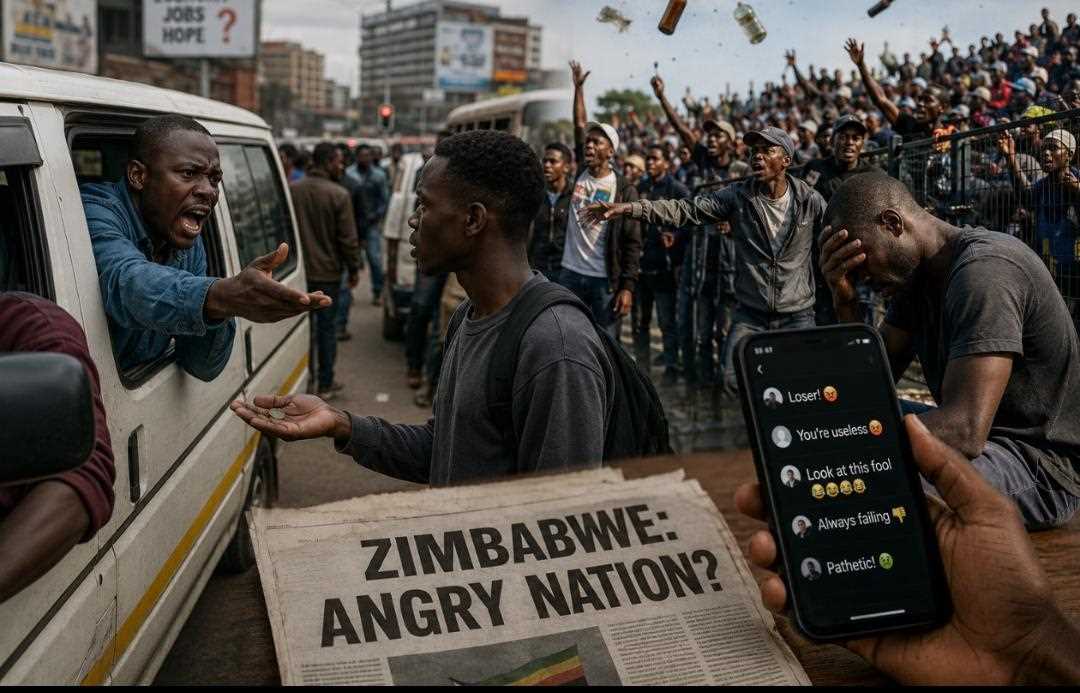
You can sense it in the kombi conductor arguing with a passenger over two dollars in change. In the venom of political exchanges. In bottles flying from football terraces after a disputed decision. In the cruelty of social media timelines, where humiliation increasingly passes for entertainment.
Different places. Same mood.
Not angry in the revolutionary sense. Not angry enough to storm Parliament or burn tyres in the streets. Ours is a quieter, more intimate anger — the kind that slips into conversations, queues, roads, homes and timelines. The kind that settles into a society slowly, until people stop noticing it.
Somewhere along the way, aggression became part of Zimbabwe's public culture.
What makes this national mood so unsettling is that it exists alongside another Zimbabwe — one that still prides itself on politeness, humour and restraint. Zimbabweans still greet strangers warmly. People still apologise excessively. Communities still gather for funerals with extraordinary generosity.
And yet, beneath that outward civility lies a growing reservoir of frustration.
Perhaps that is why the anger rarely announces itself directly. Instead, it leaks sideways into online cruelty, political hostility, commuter rage and sudden public outbursts over seemingly minor issues.
Anyone who has boarded a kombi during rush hour knows the atmosphere: exhaustion, impatience and a sense that everyone already feels attacked before anything has even happened. Even ordinary transactions now carry tension. A missing dollar in change can quickly escalate into confrontation.
Even humour feels different now — sharper, harsher and almost predatory.
Zimbabweans still laugh often. But increasingly, the laughter sounds wounded.
Perhaps this is what happens to societies trapped in survival mode for too long.
For decades, Zimbabweans have lived under near-constant economic and emotional pressure. Inflation, unemployment, corruption, political uncertainty and shrinking opportunities have created a population that is permanently tense. Survival itself has become exhausting.
And exhausted societies become irritable societies.
There is a particular kind of anger that develops when effort no longer guarantees dignity. When university degrees gather dust. When honest work struggles to compete with corruption and political connections. When talented young people can no longer imagine stable futures for themselves.
Over time, disappointment hardens into bitterness.
Much of Zimbabwe's visible anger is also expressed through masculinity — through dominance, intimidation and emotional hardness. In a society where many men feel economically disempowered, aggression often becomes one of the few remaining ways to project control, authority or pride.
That frustration then spills into homes, roads, politics and public spaces.
Related Stories
Politics has deepened this national mood. Zimbabwe's political culture has long rewarded confrontation more than dialogue. From liberation struggle rhetoric to election-related violence and militant party loyalism, politics often operates through domination rather than persuasion. Opponents are not simply viewed as wrong, but as enemies.
That culture inevitably trickles down into society itself.
Supporters insult one another with a level of venom that often exceeds their actual ideological differences. Citizens inherit the hostility of political elites and carry it into daily life. Politics ceases to be about ideas and becomes identity warfare.
It is difficult to build a calm society when the national conversation is permanently combative.
Then there is social media, perhaps the clearest mirror of modern Zimbabwean anger.
Zimbabwean online spaces are intelligent, creative and brutally entertaining. They are also increasingly cruel. Public humiliation has become a form of social currency. People are mocked for unemployment, heartbreak, grief, failure and vulnerability. A personal mistake can become national entertainment within hours.
We no longer debate to persuade. We debate to destroy.
The frightening thing is how normal the cruelty has become. Zimbabweans now consume one another's humiliation with barely a pause for reflection. Outrage travels faster than empathy. Compassion increasingly feels conditional.
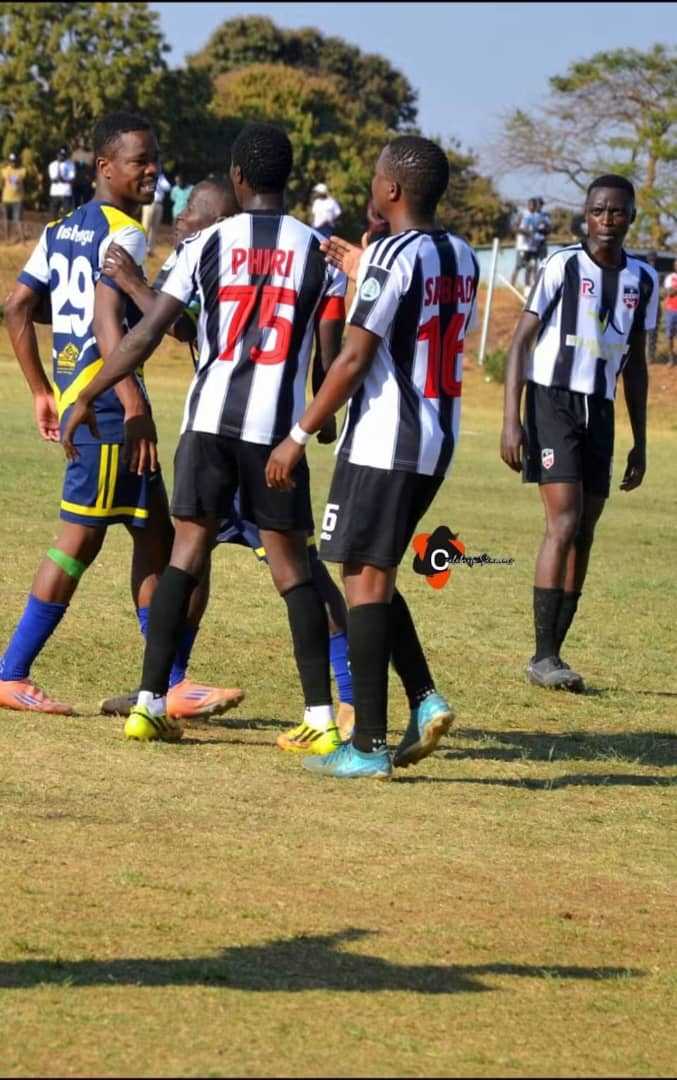
Football violence tells a similar story. Matches involving clubs such as and often carry tensions that extend far beyond sport itself. Tempers flare quickly because the frustration did not begin inside the stadium. Football merely provides a stage for emotions already simmering beneath the surface.
In a country where many people feel powerless in everyday life, public spaces become emotional release valves.
Of course, not all anger is unhealthy. Citizens should be angry about corruption, collapsing public services, inequality and the steady erosion of opportunity. A society completely numb to injustice would be far more dangerous.
But prolonged anger changes people.
It reduces patience. It hardens language. It weakens empathy. Eventually, hostility stops feeling abnormal and starts feeling ordinary. People become quicker to insult, slower to forgive and less willing to recognise each other's humanity.
Perhaps that is Zimbabwe's quiet crisis.
Not simply economic decline. Not simply politics.
But emotional exhaustion.
Because nations do not collapse only through economics or politics. Sometimes they decay emotionally first. The cruelty normalises. The empathy fades. The anger becomes cultural.
And perhaps the most worrying thing about Zimbabwe's anger is not that it exists.
It is how familiar it has become.
Simbarashe Namusi is a peace, leadership, governance and media scholar writing in his personal capacity.








Leave Comments