









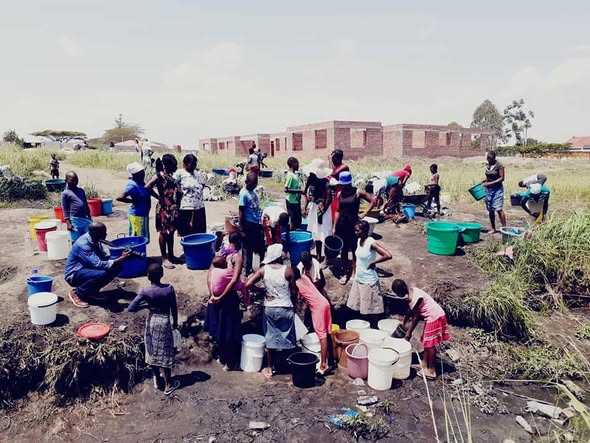
Harare’s water crisis is an exhausting, decades-long tragedy that has hollowed out the dignity of its residents, but the cruelest truth of this failure is that its burden is not shared equally. For years, the capital city has watched up to 60 percent of its precious treated water vanish into the ground as non-revenue water before it ever reaches a consumer's tap, lost entirely to a crumbling, ancient pipeline network. While this infrastructure collapse is managed in the abstract by policymakers at Town House, on the ground, it is the city’s women and children who pay the heaviest price, bearing the physical, emotional, and social trauma of an unwatered city.
When taps run dry, the burden of water sourcing falls squarely on the shoulders of mothers, daughters, and young children. Across high-density suburbs like Highfields, Budiriro, Glen View, and Mabvuku, the lack of a reliable household supply has forced women into a grueling, daily routine of tracking down alternative water sources. This means waking up in the dark, freezing hours of the early morning to push heavy wheelbarrows or carry staggering 20-litre jerrycans on their heads from overstretched community boreholes. For children, particularly young girls, the crisis steals their childhood and compromises their future, as hours that should be spent studying, sleeping, or playing are consumed by long, exhausting queues. More disturbingly, forcing women and children into dark, isolated alleys and insecure communal water points at dawn or dusk exposes them to heightened vulnerabilities, making them prime targets for harassment and physical insecurity.
In this context, the strategic partnership between the City of Harare, Helcraw, and Hangzhou Laison Technology represents a vital opportunity to dismantle this cycle of vulnerability. The ongoing rollout of 320,000 smart prepaid water meters across the capital complemented by the critical pipeline rehabilitation replacing old asbestos pipes with modern PVC networks, is the exact financial and structural lifeline required to bring water back into the home. By moving away from the failed post-paid model, which has starved the city of the capital needed to buy chemicals or fix leaks, prepaid meters ensure an immediate, reliable stream of cash flow directly into the water department's coffers. This steady revenue is what allows the municipality to stabilize water distribution, build network pressure, and systematically expand constant, running water to neighborhoods that have been parched for a generation.
Related Stories
A constant, household-level water supply driven by a properly funded, prepaid grid is a profound instrument of social justice and gender equity. When water flows reliably from a tap inside a kitchen or yard, the daily manual labor of water scavenging is instantly eradicated. For women, this means reclaiming their time, their health, and their dignity, allowing them to pursue economic opportunities and care for their families without physical exhaustion. For children, a predictable domestic supply safeguards their education, ensuring they arrive at school on time, clean, rested, and ready to learn, while drastically reducing their exposure to waterborne diseases like cholera and typhoid.
To ensure this digital transformation succeeds without compounding the financial anxieties of struggling families, the implementation must remain sensitive to the communities it serves. The recent High Court challenges, such as the application brought forward by a ratepayer in Mabelreign regarding automatic disconnections, highlight the fear of sudden cut-offs. To counter this, the City of Harare must introduce a tiered tariff structure that guarantees a non-negotiable, free or heavily subsidized basic "lifeline" block of water for every household's survival needs. Prepayment should function progressively, ensuring that luxury or commercial consumption funds the system while basic domestic access is fiercely protected. By supporting the prepaid model and shaping it with empathetic, pro-poor safeguards, Harare can build a self-sustaining utility that moves women and children away from the boreholes and restores the safety, health, and dignity of home-based running water





Leave Comments