









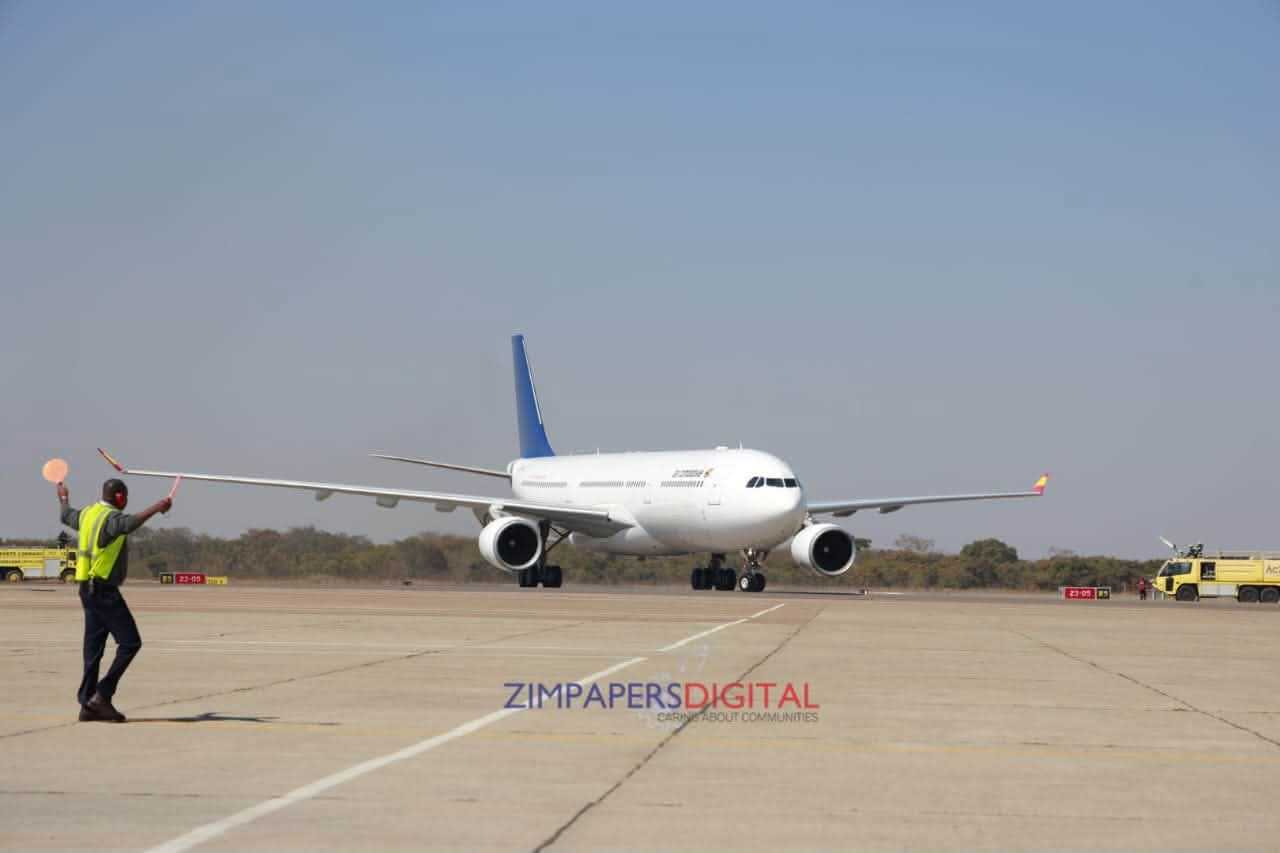
The return of Air Zimbabwe to the Harare-London route has been hailed as a major milestone for Zimbabwe’s aviation sector. However, beyond the excitement of the aircraft reception and launch ceremony lies a bigger test: whether the national carrier can convert renewed connectivity into sustainable economic value.
After a 16-year absence from the direct route, Air Zimbabwe is back on one of the country’s most important international corridors, reconnecting Zimbabwe with one of its largest diaspora communities while opening fresh opportunities for tourism, trade and investment.
Transport and Infrastructural Development Minister Felix Mhona, speaking at the aircraft reception ceremony held at Robert Gabriel Mugabe International Airport on Monday, described the development as a "watershed moment" for the country.
The airline’s return to London will be serviced by an Airbus A330-300 aircraft leased from Spain’s Plus Ultra, with a seating capacity of 302 passengers, comprising 30 business class and 272 economy class seats. The aircraft will commence Harare-London operations on 22 July 2026.
However, the success of the route will not be determined by the launch ceremony or the symbolic return of the national flag carrier to European skies. It will depend on passenger demand, operational efficiency, cargo utilisation and Air Zimbabwe’s ability to compete in a highly competitive aviation market.
Minister Mhona said the early market response had been encouraging, revealing that the airline had already recorded 1,479 confirmed passenger bookings shortly after announcing the route.
The cargo market has also shown confidence, with more than 30 tonnes of cargo already confirmed for transportation on the route.
Related Stories
The figures point to strong pent-up demand for direct connectivity between Zimbabwe and the United Kingdom, but the bigger opportunity lies in how the airline leverages the route beyond passenger transport.
Direct flights create opportunities for Zimbabwean exporters who have traditionally relied on connecting routes through regional hubs. Fresh horticultural produce, pharmaceuticals and other high-value goods could benefit from faster access to international markets.
For Zimbabwe, whose economic strategy places emphasis on export growth and increased foreign currency generation, aviation is expected to play a strategic role in improving access to global markets.
The diaspora market is also expected to be a key driver of the route’s success. Thousands of Zimbabweans living and working in the United Kingdom and across Europe have, for years, relied on connecting flights, often increasing travel costs and journey times.
The restoration of a direct route provides greater convenience for families, business travellers, students and professionals while strengthening links between Zimbabwe and its global community.
But perhaps the biggest question surrounding Air Zimbabwe’s return is whether the airline can sustain the momentum.
The national carrier has endured years of operational and financial challenges that eroded its international footprint. Its revival under the Mutapa Investment Fund represents a new chapter, with the Government seeking to recapitalise and reposition the airline as a commercially viable entity.
Mhona praised the Mutapa Investment Fund, led by former Reserve Bank Governor John Mangudya, for developing financial models aimed at restoring and expanding the airline's operations.








Leave Comments