






From commandeering troops through the bush and fighting for a free Zimbabwe in Chimoio and across the region, the generation of liberation war veterans earned an unquestioned position in the country's political hierarchy.
They functioned as a powerful political constituency, a source of historical authority, and, at critical moments, a force capable of shifting the balance within the ruling ZANU-PF party.
However, as Zimbabwe navigates a contentious political phase over President Emmerson Mnangagwa’s tenure and succession, an uncomfortable question has emerged in Harare: do war veterans still possess the political leverage to determine the nation's direction, or has their influence been reduced to symbolic liberation credentials?
The question carries immense weight because veterans have repeatedly appeared at decisive turning points in Zimbabwe's post-independence history.
They helped bring Robert Mugabe to power, led the land occupations that reshaped the political economy after 2000, fought to keep ZANU-PF in power during the rise of the opposition, turned against Mugabe during the 2017 military-assisted transition, and more recently produced internal opposition to attempts to extend presidential tenure.
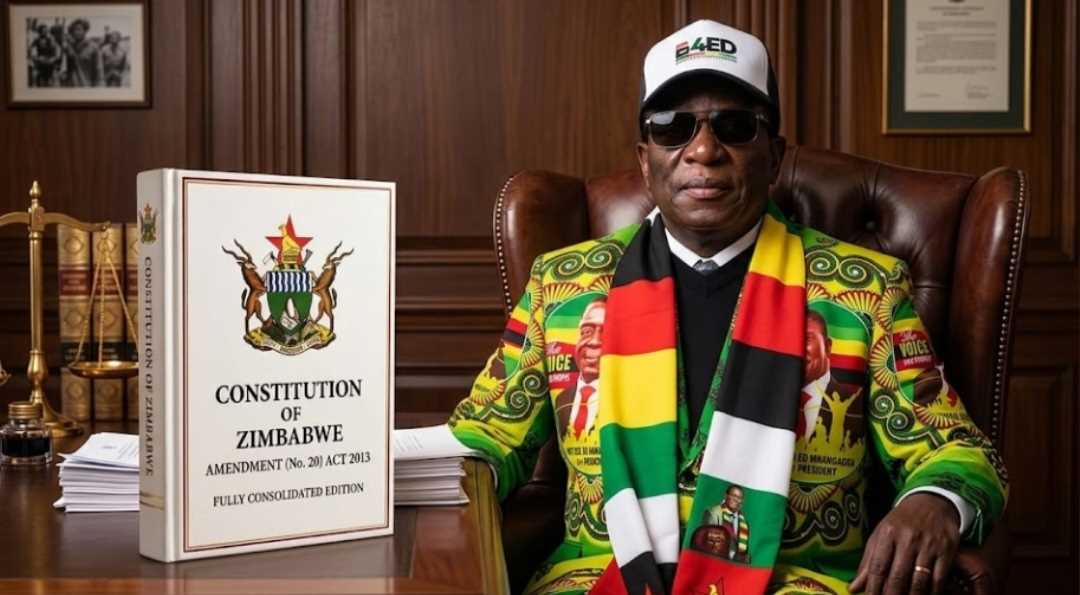
Recent developments mark a sharp reversal from that history. Six liberation war veterans approached the Constitutional Court to challenge Constitutional Amendment Bill No. 3 (CAB3), arguing that it undermined the principle of one person, one vote and violated founding constitutional values.
Their challenge was dismissed on procedural grounds, and the legislation subsequently became law as Constitutional Amendment Act No. 6 of 2026. The outcome highlighted a growing reality in Harare's succession politics: whether liberation war veterans have been transitioned from political kingmakers to historical spectators.
Their past influence was concrete. In the late 1990s, veterans confronted Mugabe over pensions and welfare, forcing substantial compensation packages in 1997. Research on the Fast Track Land Reform Programme documents veterans as primary organizers of farm occupations. A senior ZANU-PF source told The Guardian in 2000 regarding the scale of the occupations
"No one trusted the war veterans to organise it on the scale the leadership was thinking of," noting that the security establishment stepped in to ensure continuity. Veterans were later deployed alongside ZANU-PF youth structures during elections, particularly during the violent aftermath of the 2008 presidential runoff.
The relationship between Mugabe and the veterans broke down as succession struggles intensified between factions aligned with then-Vice President Emmerson Mnangagwa and Grace Mugabe’s Generation 40 (G40) group.
In 2016, Christopher Mutsvangwa and other veteran leaders publicly rebelled, accusing Mugabe of "the systematic entrenchment of dictatorial tendencies" that had *"slowly devoured the values of the liberation struggle."* Political scientist Eldred Masunungure noted at the time
"This is a result of his failure to hand over power. The succession war is driving towards a tipping point."
When Mugabe was removed in November 2017, Mutsvangwa warned that veterans were prepared to organize further street demonstrations if the long-serving leader refused to step down.
While that transition established a perception that veteran alignment was essential for political survival, veterans operated alongside the military leadership, ZANU-PF factions, and broader public demonstrations.
Their power depended on convergence with larger state and security structures.
In the current political environment, that convergence has fractured. The Zimbabwe National Liberation War Veterans Association is no longer a unified political instrument.
The government previously acknowledged three competing structures claiming to represent the association: factions associated with Christopher Mutsvangwa, Elias Moffat Marashwa, and Andreas Ethan Mathibela.
Related Stories
A official government notice called for an inclusive election, and the High Court ordered the competing groups to engage.
The fragmentation has divided the movement into distinct political stances across the board.
One faction, led by Mathibela, presents itself as an independent custodian of liberation values.
"We are not bootlickers, we are independent war veterans,"Mathibela said, adding that his faction stands "firmly on the side of constitutionalism and the rule of law." His group backed the legal challenge against CAB3 brought by veterans Reuben Zulu, Godfrey Gurira, Shoorai Nyamangodo, Joseph Chinyangare, Digmore Knowledge Ndiya, and Joseph Chinguwa.
Conversely, the formal ZANU-PF War Veterans, Ex-Political Prisoners, Detainees and Restrictees League operates inside the ruling party under Secretary Douglas Mahiya. Mahiya stated that veterans were
"100 percent in support of CAB3," describing it as a "Covenant that secures dignity, recognition and empowerment of our war veterans." President Mnangagwa instructed the League to restructure from the cell level upward and "toe to the correct line of the Party."
Meanwhile, Christopher Mutsvangwa, serving as ZANU-PF spokesperson, told party members with leadership ambitions to "wait for 2030," asserting that the year would remain central to the political calendar a position rejected by Mathibela’s group.
Internal opposition has also faced quick neutralisation.
The late Blessed Runesu "Bombshell" Geza called for Mnangagwa’s resignation, stating,"We are saying as war veterans enough is enough. You have shown that you have failed. It can't get any worse." Geza was subsequently expelled from ZANU-PF, operated from outside the country, and passed away in South Africa.
A separate intervention by retired military commanders led by retired Air Marshal Henry Muchena petitioned Parliament against constitutional changes, stating,"We write to you today not as rebels, not as dissenters... we were present when Zimbabwe was being born in blood and fire."Despite their military and historical backgrounds, the legislative process moved forward regardless.
At the same time, political influence within ZANU-PF has increasingly involved wealthy business figures, referred to locally in political debates as "Zvigananda"
The co-option of figures such as businessman Kudakwashe Tagwirei into the ZANU-PF Central Committee highlighted this shift. The dynamic produced internal friction within the executive. In a leaked dossier, Vice-President Constantino Chiwenga accused Tagwirei of "the systematic looting" of state resources and alleging the use of capital to influence party structures.
Tagwirei responded to the controversy around business influence by stating,"When you have wealth, you have an army."
Research published in the African Journal of Pentecostal Studies noted that high-value public donations by well-connected business figures increasingly function as patronage and political networking tools targeting influential public figures.
Speaking at the War Veterans League National Assembly, President Mnangagwa described veterans as the "reservoir of our Party's ideology and rich liberation war heritage." However, political analysts point out that symbolic status differs from direct political control. Analyst Vivid Gwede noted that veterans remain relevant to internal party dynamics, saying
"They will give the anti-2030 movement a mobilisation base." Conversely, analyst Kudakwashe Munemo emphasized the limits of their independent influence.
"War vets are key but may not be a deciding factor on their own given the militarisation of the state which gives the military a deciding stake."
The current landscape aligns with a long-term assessment by political analyst Ibbo Mandaza, who observed that veterans have become a "divided and depleting force, particularly as it relates to Zanu-PF."
As constitutional amendments pass into law and new financial and security dynamics shape ZANU-PF's succession debate, Zimbabwe's liberation veterans remain a celebrated historical pillar even as the power to dictate outcomes moves beyond their sole control.





Leave Comments