







ZANU-PF’s decision to keep President Emmerson Mnangagwa as party leader until 2030 and amend its constitution to align with the national Constitution has sharpened the legal and political questions surrounding Zimbabwe’s controversial Constitutional Amendment Act No. 3 of 2026.
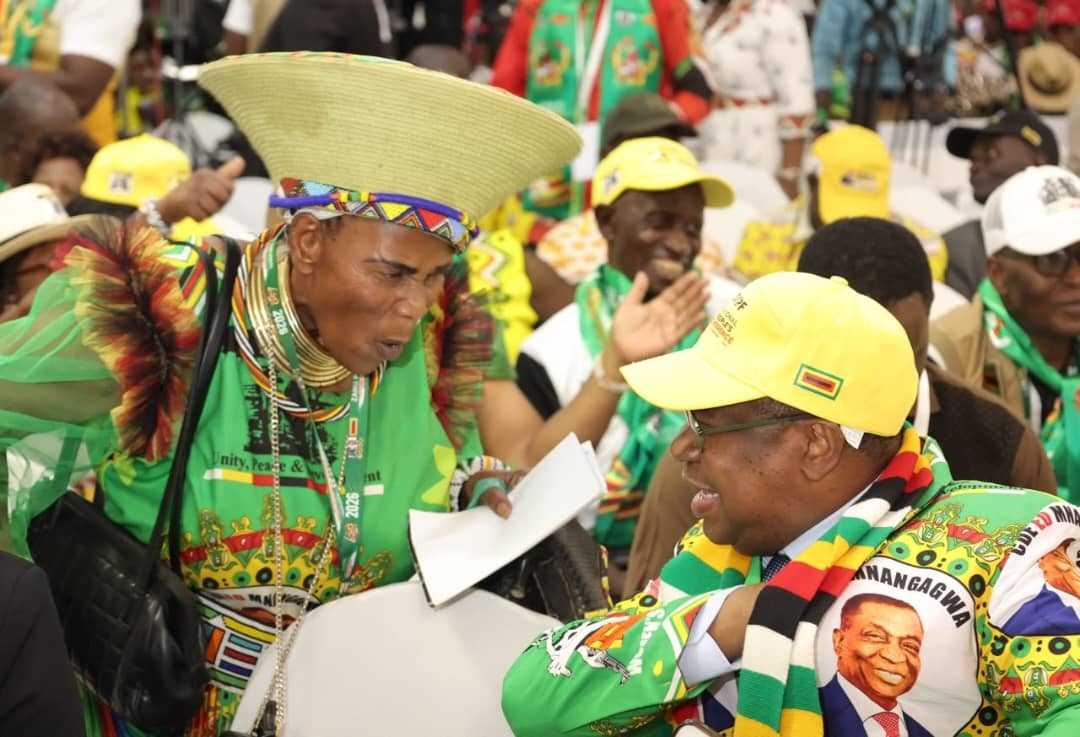
At the just-ended 23rd ZANU-PF National People’s Conference in Chinhoyi, presidential spokesperson George Charamba outlined three key resolutions, including moving the party’s Congress from 2028 to 2029, retaining Mnangagwa as the sole President and First Secretary until 2030, and amending the party constitution to harmonise it with the national Constitution.
“FROM RESOLUTIONS TO RESULTS,” Charamba wrote, describing the resolutions as part of the conference’s closing message and the President’s marching orders to party members.
The resolutions give political expression to ZANU-PF’s 2030 plan, but they do not settle the constitutional disputes surrounding the extension of presidential and parliamentary terms, the removal of direct presidential elections or the process through which CAA3 was enacted.
Those questions have opened two related but distinct legal battles: whether the constitutional amendment itself was lawfully adopted, and whether the legislation needed to implement its provisions can be aligned with the Constitution without violating constitutional safeguards.
The first dispute concerns citizens’ voting rights and whether the changes required a referendum. The second centres on whether the amendment can lawfully extend the terms of incumbents despite restrictions in the existing Constitution. A further legislative process is now expected to give effect to the new arrangements.
The government maintains that CAA3 was lawfully passed. Critics argue that Parliament cannot use its amendment powers to bypass constitutional protections designed to safeguard electoral rights and prevent those already in office from changing the rules governing their tenure.
The constitutional question: Can direct presidential elections be removed without a referendum?
At the centre of the referendum dispute is Section 67 of the Constitution, which protects citizens’ political rights, including the right of adult citizens to vote in elections and referendums and to participate in free, fair and regular elections.
CAA3 changes Section 92, replacing the direct election of the President by voters with an arrangement in which the President is elected by members of the Senate and National Assembly sitting jointly.
Opponents argue that removing the direct presidential vote affects the substance of the political rights protected by Section 67, even though the amendment does not expressly alter the wording of that section.
Section 328(6) requires a constitutional amendment affecting Chapter 4, which contains the Declaration of Rights, to be submitted to a national referendum within three months after passage. The amendment must receive approval from a majority of voters who participate in the referendum.
The legal dispute is whether changing the mechanism for electing the President indirectly amends the protected right to vote, thereby triggering the referendum requirement.
Constitutional lawyer and MDC-T leader Douglas Mwonzora, who participated in the negotiations that produced the 2013 Constitution, argues that the change cannot be separated from the political rights guaranteed under Section 67.
“So Section 67 has been amended by implication and by the argument of Zanu PF, by their own argument, then it has to be taken for a referendum,” Mwonzora said.
His argument is that the practical effect of the amendment matters. If citizens previously voted directly for the President but are now excluded from that direct choice, he maintains, their constitutional electoral rights have been affected regardless of whether Section 67 was expressly amended.
The government takes the opposite position. During parliamentary debate, Justice Minister Ziyambi Ziyambi argued that a referendum is required only where an amendment affects Chapter 4, Chapter 16, which deals with agricultural land, or Section 328 itself.
Because Section 92 falls outside those protected provisions, the Government says changing the presidential election mechanism does not automatically trigger a referendum. It also relies on Section 328(2), which provides that an Act amending the Constitution must do so in express terms, rejecting the argument that the amendment has implicitly altered Section 67.
The disagreement therefore turns on constitutional interpretation: whether the effect of the amendment on citizens’ voting rights is enough to trigger a referendum, or whether the Constitution requires an express amendment to the protected provisions.
The MDC has challenged CAA3 in the Constitutional Court, arguing that removing the direct presidential vote violates Section 67(3)(a) and required approval through a referendum. The case forms part of a wider set of challenges to the amendment.
Section 328(7): Can Mnangagwa benefit from the extension?
A separate legal battle concerns the extension of presidential and parliamentary terms from five to seven years and whether those changes can benefit people already holding office.
Section 328(7) states that an amendment to a term-limit provision extending the period a person may hold an office does not apply to anyone who held that office, or an equivalent office, before the amendment.
CAA3’s provisions on the extended presidential and parliamentary terms state that the changes apply to the incumbent President and current Parliament notwithstanding Section 328(7).
Critics argue that this wording attempts to override a constitutional safeguard through the very amendment that the safeguard is intended to regulate.
Veritas, in its Constitution Watch 9/2026 analysis, argues that Parliament cannot bypass Section 328(7) simply by inserting a “notwithstanding” clause into the amendment. In its interpretation, the proper route would be to amend Section 328 itself in accordance with Section 328(9).
Section 328(9) sets out a special procedure for amending Section 328, requiring compliance with specified constitutional amendment procedures, including the referendum requirement in Section 328(6).
Veritas argues that the provisions allowing the current President and Parliament to benefit from the extensions are invalid, and that the amendment’s treatment of Section 328 means the referendum question goes to the validity of the Act as a whole.
That is Veritas’ legal position rather than a judicial ruling, but it raises a fundamental question: can Parliament use a constitutional amendment to disapply a restriction governing how constitutional amendments themselves operate?
The Law Society of Zimbabwe also raised concerns about extending terms for incumbents. In submissions on the proposed amendment, it said that while changing the presidential term and election method did not necessarily raise substantive legal concerns in themselves, applying the extensions to those already in office raised serious constitutional questions.
The Society also warned that replacing direct presidential elections with parliamentary election diluted the principle of “one man, one vote”.
Sibanda challenges the incumbency benefit
Former Binga North legislator Prince Dubeko Sibanda has separately challenged the provisions allowing the extensions to benefit the current President and Parliament.
His Constitutional Court application invokes Section 117(2)(a), which gives Parliament the power to amend the Constitution in accordance with Section 328, alongside Section 328(7), which restricts the application of term-limit extensions to incumbents.
Sibanda’s case focuses on whether Parliament had the constitutional authority to confer an extended term on office-holders already in power despite the existing restriction.
“It is not directed at the wisdom, popularity or political desirability of a seven-year term. It is directed at the constitutional competence of an amendment that seeks to confer an incumbency benefit in the teeth of s 328(7),” he argued.
Related Stories
The distinction is important. Sibanda’s challenge does not necessarily argue that a seven-year term is unconstitutional in every circumstance. Instead, it asks whether the extension can lawfully be applied to Mnangagwa and the current Parliament in light of the restriction already contained in the Constitution.
His application followed an earlier attempt to challenge the proposed changes before they became law. That case was struck off the roll while the provisions were still in Bill form. The subsequent challenge followed the amendment’s promulgation.
Madhuku and the war veterans: Who has the right to choose the President?
Professor Lovemore Madhuku has also been involved in legal challenges arising from CAA3, including an application on behalf of war veterans contesting the removal of direct presidential elections.
The applicants argue that citizens cannot be stripped of their direct vote for the President without a referendum. Madhuku has framed the dispute as a question of constitutional rights rather than political preference.
“We are seeking direct access to the full court to do a very simple thing, to say that you cannot take away the right of Zimbabweans to elect their president directly without a referendum,” he said.
He added: “You can’t just wake up like what CAB 3 did and say for all these years you’ve been voting for your president, now you’re no longer going to vote for the president, the president will be elected in parliament.”
The State has opposed the applicants’ request for direct access to the Constitutional Court, arguing that they should first approach the High Court.
The dispute raises not only the substantive question of electoral rights but also the procedural question of how constitutional claims should be brought before the highest court.
Madhuku and six war veterans had previously challenged Mnangagwa’s involvement in the Cabinet process surrounding the amendment, invoking Sections 90(1), 90(2)(b) and 196(2), among other provisions. That application was struck off the roll without resolving the substantive constitutional questions.
Mahere invokes the democratic purpose of the Constitution
Former opposition legislator and lawyer Fadzai Mahere has criticised the removal of direct presidential elections, drawing on arguments made by the late former ZANU-PF legislator and constitutional thinker Eddison Zvobgo.
Mahere said Zvobgo had made a “compelling case” that direct presidential elections were central to the principle of “one man, one vote”, arguing that a parliamentary executive would be “divorced from the people”.
“It’s a pity ZANU-PF no longer has intellectual muscle of this calibre,” she wrote on X.
In another post, she accused the ruling party of pushing through the amendment while denying citizens a secret ballot, saying: “They cannot even have a sound cerebral debate. They are denying secret ballot in their desperation to railroad a brainless amendment that will ruin the remaining embers of our democracy.”
Mahere has also criticised what she described as “mbingarism, cash for votes and cars for loyalty”, alongside paid online supporters who change positions according to who offers the most money.
Her broader constitutional argument centres on the purpose of the 2013 Constitution, which she says was designed to limit the concentration of power in the presidency. The Constitution established five-year presidential terms, renewable once, and guaranteed citizens’ political rights under Section 67.
Mahere has linked the present dispute to the political negotiations and violence surrounding Zimbabwe’s 2008 crisis, arguing that constitutional safeguards and electoral participation should not be treated as obstacles to be removed when they become inconvenient to those in power.
Her argument is that elections themselves are not the source of political toxicity. Rather, the conduct of political actors and the treatment of citizens’ rights determine whether elections are meaningful and legitimate.
Mpofu: The Constitution is not an instrument of office-holders
Advocate Thabani Mpofu has also criticised CAA3, arguing that the Constitution cannot be treated as a tool at the disposal of those who temporarily hold public office.
“The Constitution is the normative architecture of our democratic order,” Mpofu said in comments reported by NewZimbabwe.com.
He added: “Any claim by temporary office-holders to possess dominion over the Constitution, or to treat it as an instrument subject to their will, is constitutionally impermissible.”
Mpofu’s argument reflects the principle of constitutional supremacy in Section 2, which provides that the Constitution is the supreme law and that any law or conduct inconsistent with it is invalid to the extent of the inconsistency.
Section 117(2)(a) gives Parliament the authority to amend the Constitution, but that authority is subject to Section 328. Parliament has amendment powers, but it must exercise them through the procedures the Constitution establishes.
The central question is therefore not whether Parliament can amend the Constitution, but whether the process and substance of CAA3 comply with the limits imposed by the Constitution itself.
From constitutional amendment to party and electoral laws
The resolutions adopted at the ZANU-PF conference bring the legal debate into sharper political focus. By resolving that Mnangagwa remain party President and First Secretary until 2030 and that the party constitution be harmonised with the national Constitution, the ruling party has signalled its intention to align its internal arrangements with the new constitutional framework.
However, the party constitution and the national Constitution serve different purposes. A ZANU-PF resolution to amend the party’s governing document cannot, by itself, determine whether CAA3 complies with the national Constitution or whether the challenged provisions will survive judicial scrutiny.
The party’s Congress was also moved from 2028 to 2029, according to Charamba’s account of the conference resolutions. The timing places the planned party Congress a year before the end of the extended presidential term envisaged under CAA3.
That political timetable now runs alongside the Government’s plans to amend legislation to implement the new constitutional arrangements.
In his State of the Nation Address on September 29, 2026, Mnangagwa said consequential amendments were needed following the enactment of CAA3. The legislative agenda identified three measures: amendment of the Electoral Act, amendment of the Constitutional Court Act and enactment of a new Delimitation Commission Act.
The laws are intended to give effect to the new arrangements, including changes affecting presidential elections and the institutions responsible for electoral administration and delimitation.
But the statutory process is not the same as the constitutional validity dispute. An amendment to the Electoral Act may establish procedures for an election in which Parliament chooses the President, but that would not, by itself, settle whether the constitutional change removing the direct vote was lawfully adopted.
Similarly, a new Delimitation Commission Act would have to be assessed against the constitutional framework governing delimitation and electoral administration. The legislation cannot simply be assumed to cure any defect in the process through which CAA3 was enacted.
The Law Society of Zimbabwe had already raised concerns about aspects of the proposed constitutional changes beyond the presidential election method and term extensions. These included transferring voter registration and the voters’ roll from the Zimbabwe Electoral Commission to the Registrar-General, creating a new Delimitation Commission, giving the President power to appoint ten senators, and changing arrangements for judicial and Prosecutor-General appointments.
Those concerns suggest the implementing laws will attract scrutiny of their own. Their wording, institutional safeguards and consistency with the Constitution will matter even if they are presented as technical or consequential amendments.
The courts remain the decisive arena.





Leave Comments