









Zimbabwe’s long-running Deka River pollution crisis is once again under parliamentary scrutiny, but the latest investigation is raising questions about whether the country’s environmental enforcement system can protect communities from the costs of coal mining.
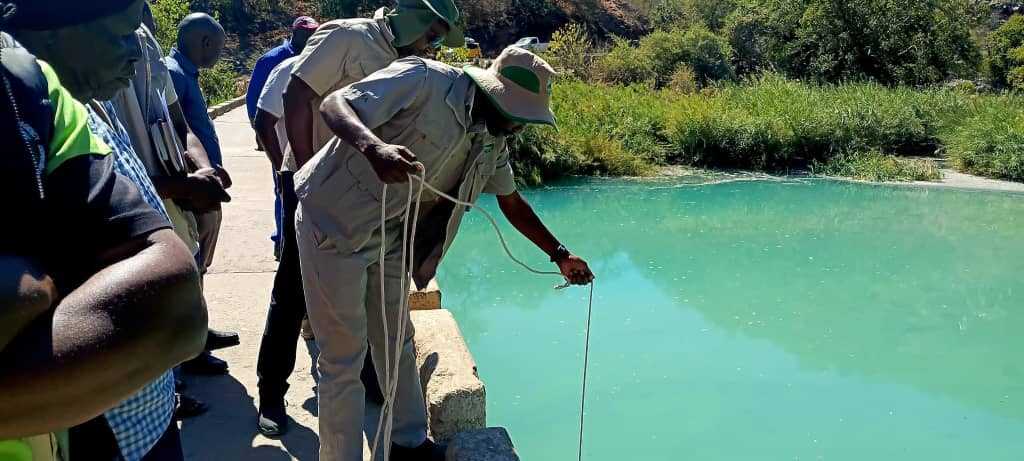
The Parliamentary Portfolio Committee on Environment, Climate and Wildlife has visited Hwange as part of an investigation into a petition over alleged coal-mining pollution of the Deka River. The committee inspected Rising Firm Investments, one of nine mining companies operating in the catchment, before visiting the river itself to assess its condition.
The visit comes after years of complaints from downstream communities, alongside scientific and investigative evidence pointing to deteriorating water quality and damage to livelihoods.
Deka is not simply another polluted waterway. It runs through communities including Zwabo Mukuyu, Mashala, Shashachunda, Kasibo and Mwemba before flowing towards the Zambezi. Research has documented the river’s importance to livestock, fishing and household livelihoods, while residents have reported declining access to usable water.
The Environmental Management Agency has previously identified acid mine drainage as a major feature of the pollution problem. During the parliamentary inspection, EMA officials explained the natural neutralisation of acidic mine drainage and the subsequent precipitation of metals, including iron, manganese and aluminium.
That explanation, however, points to the complexity of the problem rather than resolving it.
A 2023 study by Midlands State University researchers, based on water samples collected from three sections of the Deka River over three consecutive years from 2019 to 2021, examined the relationship between coal mining, water quality and community livelihoods.
Earlier investigations also found that pollution was not attributable to a single operator. EMA identified nine mining companies in the Deka catchment as contributing directly or indirectly to contamination, while investigations have also pointed to pollution associated with Hwange’s thermal power generation and sewerage infrastructure.
Communities have reported fish deaths, livestock losses and reduced fishing activity. In Shashachunda, one farmer told investigators that his herd had fallen from 52 cattle to 12, while other residents reported livestock reproductive problems.
Related Stories
The crisis has also forced communities to look for alternatives to a river that once supported both household needs and livelihoods. Reports have documented the construction of boreholes in affected areas, although access to and the adequacy of these alternative water sources remain concerns.
Investigations have linked Deka pollution to mining and industrial activities for years, while an earlier environmental assessment found that acid mine drainage, coal dust, leaching from stockpiles and contaminated groundwater were contributing to the deterioration of the river system.
EMA itself previously acknowledged that existing effluent-abatement technologies in Hwange were not as effective as required to eliminate the risk of pollution.
“The current effluent abatement technologies being implemented within the Hwange area specifically for AMD are not as effective as would be desired to entirely reduce the risk of pollution,” the agency said.
That admission exposes the central weakness in the response: monitoring pollution after it occurs is not the same as preventing it.
Parliament’s latest intervention therefore comes at a critical point. Its investigation is examining mining methods, waste disposal, water quality and the effects of mining on communities, wildlife and the wider environment.
The inspection of Rising Firm Investments also provides an opportunity to move the debate beyond accusations and counter-accusations and establish, through physical evidence and regulatory records, where pollution is originating, how much is entering the river and whether companies are complying with their environmental obligations.
For communities living along the Deka, the issue is ultimately less about technical terminology such as acid mine drainage and more about whether they can safely use the river that has supported them for generations.
The environmental cost is also being measured in lost livelihoods. Residents have previously described fishing as a source of food and income, while livestock farmers have reported deaths and reproductive problems among their animals.








Leave Comments