









Zimbabwe’s airports handled 1.19 million passengers in the first half of 2026, up 7.1% from 1.11 million a year earlier, but behind the headline increase is a more consequential shift: domestic air travel is beginning to strengthen at a time when airlines are simultaneously expanding routes, modernising fleets and confronting the high costs of operating in Zimbabwe.
The latest Civil Aviation Authority of Zimbabwe figures show that the country handled about 80,000 more passenger movements in the first six months of this year, with increased domestic demand identified as a major driver.
The growth follows an already strong 2025, when airports handled about 2.52 million passengers, a 10% increase from 2024. International traffic remained dominant at 2.16 million passengers, while domestic traffic grew faster in percentage terms, rising 15% to 357,133 passengers.
That distinction is important. Domestic passengers still represented only about 14% of total passenger movements in 2025, meaning Zimbabwe’s aviation market remains overwhelmingly dependent on international traffic. The latest increase in domestic demand therefore points to a potentially important expansion of the market rather than evidence that domestic aviation has already become broadly accessible.
Airports Company of Zimbabwe chief executive Tawanda Gusha says the growth is already visible in both passenger numbers and aircraft movements.
“We have been seeing growth in our business, both in passenger numbers as well as in aircraft movements,” Gusha said, noting that passenger numbers increased 10% between 2024 and 2025 while aircraft movements rose 5%.
The infrastructure is increasingly capable of accommodating that growth. Robert Gabriel Mugabe International Airport, following its expansion completed in 2023, can handle substantially more passengers than the country currently puts through its main gateway. Passenger throughput at the airport reached about 1.65 million in 2025.
Gusha says the infrastructure is not the immediate constraint.
“This airport (Robert Gabriel Mugabe International Airport) is capable of handling the largest passenger aircraft in operation currently, which is the Airbus A380,” he said. “So the capacity is still there. We still call on the airlines to bring in even more and bigger planes.”
That comment exposes the next challenge for Zimbabwe’s aviation sector. The country has invested heavily in airport infrastructure, but filling that capacity requires airlines to establish commercially viable routes and maintain reliable frequencies.
The market is responding.
Ethiopian Airlines, for example, operates into Robert Gabriel Mugabe International Airport, Joshua Mqabuko Nkomo International Airport and Victoria Falls, while the carrier has also introduced its Airbus A350-900 on Zimbabwe services. Gusha said airlines were recording “very promising load factors” that had been in the 90s during the period under review.
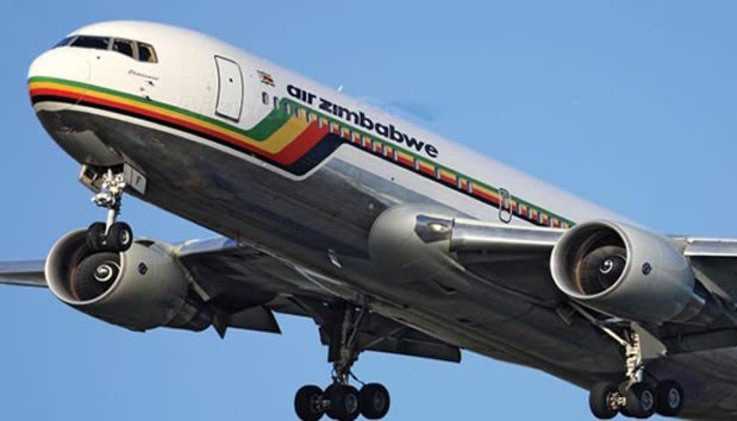
Fastjet has also been expanding its network, while Air Zimbabwe has added domestic services linking Harare with Bulawayo and Mutare. The growing competition is important because Zimbabwe’s domestic aviation market has historically been constrained by high operating costs, limited route viability and relatively expensive fares.
The industry’s human-resource problem, however, could become a new constraint just as passenger demand strengthens.
Fastjet Zimbabwe executive director Farayi Chikuni warned in July that the country was losing highly trained aviation professionals to better-paying markets abroad.
“We have a general shortage of pilots and air traffic controllers within the country. The biggest challenge is that our pilots can go to the Middle East where they earn more and are not taxed,” Chikuni said.
That presents a contradiction for a sector seeking rapid expansion: Zimbabwe is trying to attract more airlines and increase passenger traffic while simultaneously struggling to retain some of the skilled personnel required to support that expansion.
The cost structure is another obstacle. CAAZ and industry stakeholders have been pushing for changes that could make Zimbabwe more competitive as an aviation destination, particularly as regional airlines weigh the cost of adding routes.
This is crucial because a 7.1% increase in passenger movements does not necessarily translate into equivalent growth in airline profitability.
The 2025 figures illustrate the problem. While passenger numbers rose 10%, aircraft movements increased by only 0.7%, from 65,306 to 65,764. Domestic aircraft movements actually fell 1% to 31,668. Cargo throughput also declined 18%, from 15,838 tonnes to 12,981 tonnes.
Related Stories
In other words, more passengers were being carried without a comparable expansion in the number of flights, while air-freight volumes moved in the opposite direction.
That suggests airlines have been squeezing more passengers out of existing capacity rather than simply adding large numbers of new flights.
It also makes Air Zimbabwe’s return to the London market particularly significant.
The national carrier resumed direct Harare-London flights in July after a 14-year absence, using an Airbus A330 under a wet-lease arrangement with Spain’s Plus Ultra. Before the relaunch, the route had already accumulated 1,479 confirmed passenger bookings and more than 30 tonnes of cargo.
Transport and Infrastructural Development Minister Felix Mhona described the response as evidence of strong pent-up demand.
“The response from the market has been exceptionally encouraging,” Mhona said. “Within a remarkably short period following the announcement of this route, I am told Air Zimbabwe has already recorded 1,479 confirmed passenger bookings — an extraordinary expression of confidence.”
He added: “The cargo market has responded equally positively. More than 30 tonnes of cargo have been confirmed for this route, demonstrating the enormous commercial opportunities presented by direct connectivity.”
The London route therefore illustrates why the aviation story matters beyond passenger statistics.
A direct connection can support tourism, business travel, diaspora movement and exports, particularly high-value agricultural products where speed and reliability are important.
John Mangudya, chief executive of the Mutapa Investment Fund, said research showed more than 110,000 passengers travelled between Harare and London last year despite having to use connecting flights.
“This route is fundamentally driven by robust commercial numbers,” Mangudya said. “Our research shows that over 110,000 passengers travelled between Harare and London last year alone, and they were forced to navigate exhausting multi-stop regional transit. Air Zimbabwe is now stepping in to capture that market.”
That demand helps explain why the latest 1.19 million passenger figure should not be viewed in isolation.
Zimbabwe’s airports handled approximately 1.93 million passengers in 2023, 2.28 million in 2024 and 2.52 million in 2025. The market has therefore expanded by roughly 31% in two years.
Yet the growth is still uneven.
Victoria Falls, Zimbabwe’s principal tourism gateway, has been one of the strongest performers. Passenger traffic there rose 48.4% in the second quarter of 2025, from 107,500 to 159,527, while flight operations increased 75.2%.
This shows how tourism can generate aviation demand, while aviation can in turn expand tourism capacity. More seats make destinations easier to reach; more tourists make additional routes commercially viable.










Leave Comments