









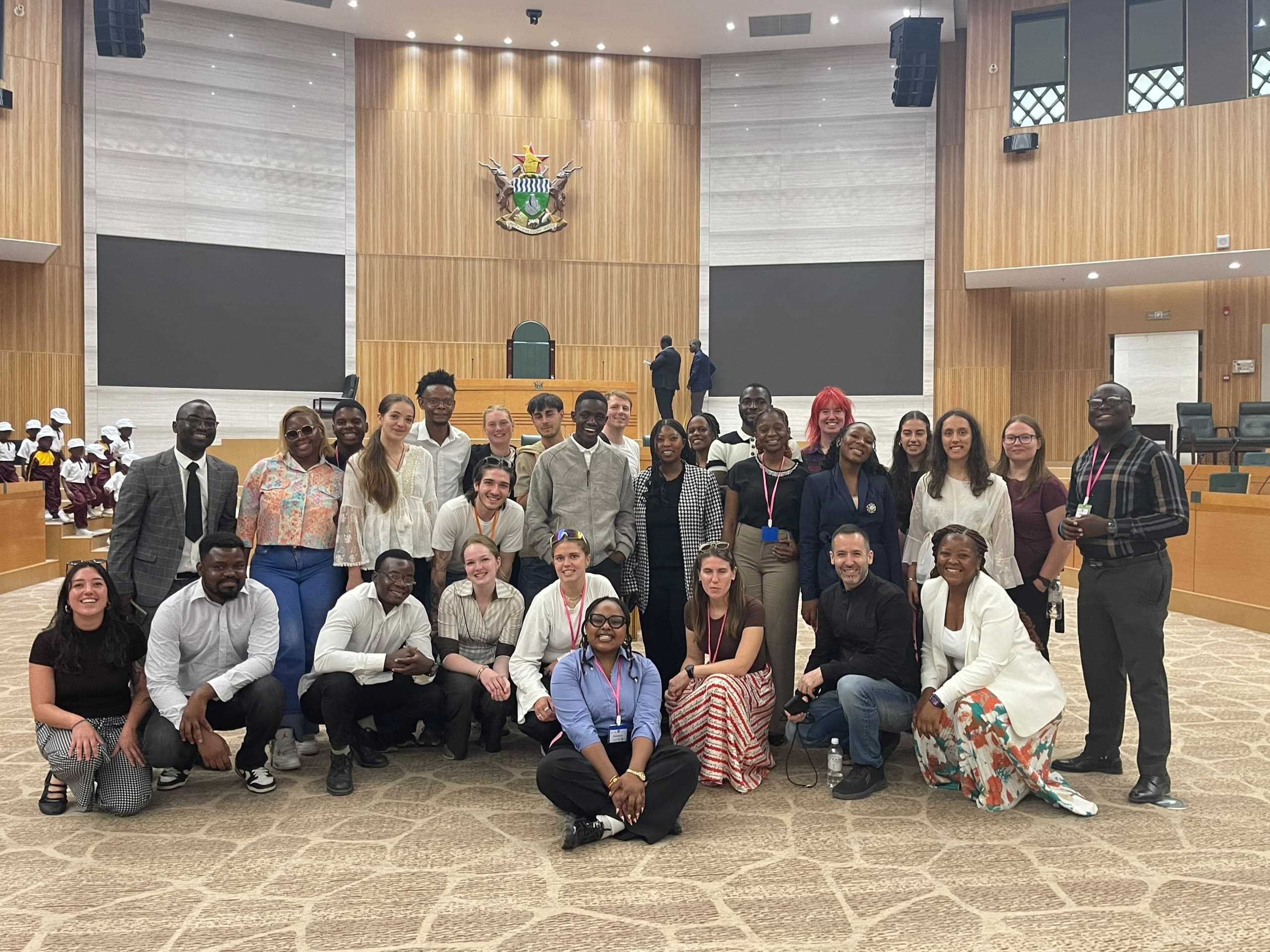
A delegation of 28 young leaders from Zimbabwe, Malawi, Denmark, and Spain voted in favor of building and protecting urban green safe spaces following a mock parliamentary debate on climate change in Harare.
The parliamentary simulation, held on Friday, September 25, formed a core component of the international Co-Creating Green Safe Spaces Youth Exchange, hosted by the Rural Enterprise Trust of Zimbabwe (RETZ).
Prior to taking the floor, delegates toured the National Assembly and Senate to gain insight into legislative processes, parliament's composition, and the legal pathways to becoming a Member of Parliament. During the briefing, youth representatives questioned parliamentary officials on how legislative bodies actively support youth participation and social inclusion in climate policy.
The formal motion put before the mock House centered on whether municipal authorities should prioritize the construction and protection of green safe spaces to help urban youth adapt to rising global temperatures and climate shocks.
Taking the floor, the proposing side emphasized the urgent physical and social necessity of urban vegetation
“Honourable Speaker and fellow youth, we are here today because our planet is warming up, and young people are feeling the heat. Trees give us shade, cool down our neighborhoods, and clean our air. More importantly, these parks give us a free, safe space to connect, play, and support each other when climate stress hits.”
While acknowledging the cooling benefits of urban forestry, the opposition raised economic realities, cautioning that municipal budgets must account for competing essential services like housing, water infrastructure, and electricity
“Honourable Speaker and fellow youth, I agree with the Green Team that parks, trees, and shaded areas are beautiful and necessary. But we must look at the reality on the ground.”
Related Stories
The opposing side advocated for a balanced fiscal strategy, proposing that cities integrate fruit trees around existing public institutions like schools and clinics while directing capital expenditure toward immediate basic infrastructure needs. Following rigorous deliberations, delegates voted across party lines to pass the motion in favor of prioritizing green safe spaces.
For many international and local participants, stepping onto the grounds of Parliament provided a powerful civics lesson. One delegate noted that while passing through security initially felt daunting, parliamentary staff inside were “very friendly and informative.” Sitting in the decision-making chambers and debating sustainability alongside international peers stood out as a highlight of the Harare visit.
As part of the practical learning itinerary, the group later toured a local agroecology farm to study plant propagation, sustainable farming technology, and market-driven agriculture. Participants observed how aligning crop output with local Zimbabwean and Chinese consumer demand helped the farm minimize harvest waste and stabilize market prices.
“The clear communication with the people they serve is something that I’d like to see more of at home,” one participant reflected.
The cultural exchange concluded with a city tour and shopping in Harare, where international visitors sampled local cuisine.
“The local food has been delicious,” remarked a participant who noted the memorable experience of eating traditional sadza in Zimbabwe after first trying the staple dish during an earlier intercultural program in Spain.
The initiative is implemented through a cross-border partnership comprising RETZ (Zimbabwe), the Sustainable Rural Community Development Organisation (Malawi), Søholm 4H (Denmark), and Las Niñas del Tul (Spain), with local support from the Youth Agenda Trust and the Youth Empowerment and Transformation Trust.
The project forms part of the Erasmus+ Capacity Building initiative, co-funded by the European Union and the Danish government.








Leave Comments