









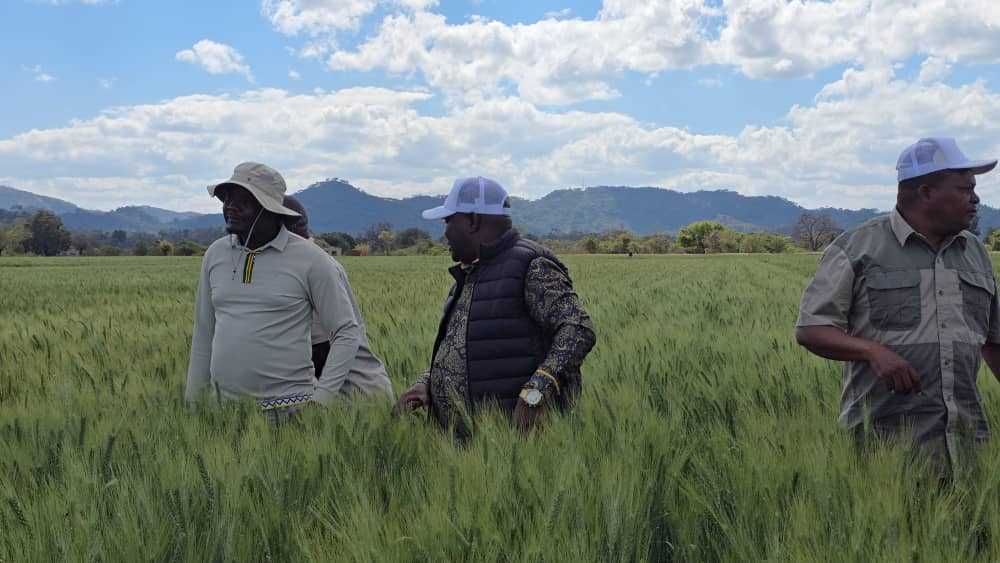
Agricultural development is gaining momentum in Mashonaland Central, with irrigation projects being implemented by the Agricultural Marketing Authority (AMA) reaching key milestones and expected to increase farmers’ access to reliable water for year-round crop production.
The projects are part of broader efforts to expand irrigation infrastructure, improve agricultural productivity and strengthen food security, while helping farmers reduce their vulnerability to erratic rainfall and the effects of El Niño-induced drought conditions.
Among the projects already completed is the 45-hectare Dotito Irrigation Scheme, where farmers are using the infrastructure to irrigate their crops.
Based on an estimated average output of five tonnes per hectare, the scheme has the potential to produce about 225 tonnes of maize per production cycle.
The 52.5-hectare Chimhanda Irrigation Project has also reached 100 percent completion. The project has been officially certified and is now operational, with farmers actively utilising the irrigation system.
At an estimated five tonnes per hectare, Chimhanda has the potential to produce approximately 262.5 tonnes of wheat per production cycle.
Other projects are at different stages of implementation.
The 120-hectare Maparo Irrigation Project is 75 percent complete, with the installation of irrigation pivots still outstanding. Once fully operational, the scheme could produce an estimated 600 tonnes of wheat per production cycle at five tonnes per hectare.
Work is also progressing on the larger 360-hectare Negomo Phase 1 project, which could support an estimated 1,800 tonnes of maize or wheat per production cycle once fully operational.
Several additional community irrigation projects are also moving forward.
Related Stories
The 66-hectare Mudotwe project, once operational, could produce approximately 330 tonnes of maize per production cycle, while the 22-hectare Rukunguwo project has the potential to produce about 110 tonnes.
The two projects have undergone site handovers and are now progressing through the procurement process.
Collectively, the six irrigation projects highlighted have a combined area of 665.5 hectares and, based on the five-tonnes-per-hectare estimate, have the potential to produce approximately 3,327.5 tonnes of wheat per production cycle when fully operational.
The developments are being supported by funding mechanisms established to strengthen irrigation development, including resources channelled through Grain Levy disbursements under Statutory Instrument 87 of 2025.
The funds are allocated towards the Irrigation Development Fund, administered through the AFC Land and Development Bank, while AMA provides administrative and project oversight.
The expansion of irrigation infrastructure is expected to give farmers greater capacity to cultivate beyond the traditional rainy season, potentially increasing agricultural output, improving household incomes and strengthening the availability of food and cash crops.
It could also help mitigate the effects of El Niño, which can result in below-normal rainfall, prolonged dry spells and reduced crop yields in rain-fed farming areas.
Unlike rain-fed agriculture, irrigation allows farmers to maintain crop production even when rainfall is inadequate, providing greater certainty over planting and harvesting and reducing exposure to drought-related crop failures.
With completed schemes already operational and several others under construction or procurement, Mashonaland Central is seeing irrigation investment translate into projects with the potential to significantly increase agricultural production and strengthen the province’s contribution to national food security.
The increased production will also enable farmers to retain part of their harvest for household consumption, helping improve food security at the family level while allowing them to sell surplus produce and generate income.







Leave Comments