





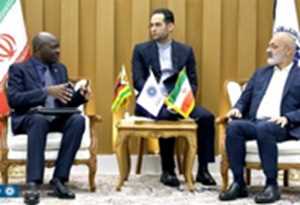
Iran has set its sights on building a stronger economic footprint in Zimbabwe, with senior officials in Tehran outlining a broad cooperation agenda spanning mining, energy, agriculture, manufacturing and health technologies.
Speaking during a meeting with Zimbabwe’s Deputy Minister of Foreign Affairs and International Trade, Tim Bindi, Iranian Deputy Economy Minister Ghadir Ghiyafeh said the two countries’ economies can operate as “complementary partners,” pointing to shared strengths in natural resources and young, educated populations.
Iran, he noted, has 22 million educated youth, world-class mineral reserves and strong capabilities in high-tech manufacturing, pharmaceuticals and power generation. Zimbabwe, with a GDP of about 53 billion dollars and projected growth of 6.6 percent, brings vast agricultural land, substantial mineral wealth and a youthful workforce of its own.
“Together, these capacities create promising prospects for mutually beneficial cooperation,” Ghiyafeh said.
Mining and Mineral Processing Take Centre Stage
The Iranian delegation placed particular emphasis on mining and downstream mineral processing as the most immediate avenue for joint investment. Ghiyafeh said Iran is ready to partner with Zimbabwean private players to establish processing capacity that captures more value locally.
Bahram Shakouri, who heads the Iran Chamber’s Mining and Mineral Industries Commission, described Zimbabwe’s geology as “fertile ground” for collaboration and stressed that Iran’s strengths in exploration, extraction and especially processing could support significant developments. He added that reducing policy risks in Zimbabwe would help accelerate capital inflows and technology transfer.
Related Stories
An Iranian mining delegation is expected to visit Zimbabwe in the coming months, and Tehran has requested detailed information on investable projects to refine its mission.
Energy, Infrastructure and Agriculture in Focus
Ghiyafeh also flagged opportunities in power and infrastructure, including electric and thermal power stations, gas plants, combined-cycle stations, electricity transmission lines and small to medium solar plants for mines and industrial zones. Iran is positioning itself to support Zimbabwe’s energy deficit while creating commercial openings for its engineering firms.
On agriculture, Iranian officials expressed readiness to cooperate on mechanisation, irrigation systems and food processing facilities. Ghiyafeh said establishing processing units close to Zimbabwean farms would create stable rural employment and build long-term export opportunities.
Deputy Minister Bindi welcomed these proposals, saying Zimbabwe is transitioning toward a more market-driven model where the government plays an enabling role for private investment. He emphasised that fertile farmland, demand for mechanisation and regional trade access create strong incentives for Iranian firms.
Pharmaceuticals, Market Access and Next Steps
The two parties also discussed opportunities in pharmaceuticals, medical equipment and skills training. Iran says its health-sector products are competitive and of high quality, and it sees scope for partnerships with Zimbabwean hospitals, universities and private manufacturers.
Bindi highlighted Zimbabwe’s strategic position within COMESA and SADC, offering Iranian companies wider access to African markets. He invited Iranian investors to participate in upcoming national projects and expressed hope that a trade delegation from Tehran will attend the Zimbabwe International Trade Fair in April 2026.
To operationalise the agreements, Ghiyafeh proposed establishing an Iran–Zimbabwe Joint Business Council, saying his government is ready to present a list of priority private-sector projects and dispatch evaluation teams soon.
If executed, the roadmap outlined in Tehran points toward a new phase of structured, sector-driven cooperation between the two countries, anchored in mining, energy, agriculture and advanced manufacturing.







Leave Comments