





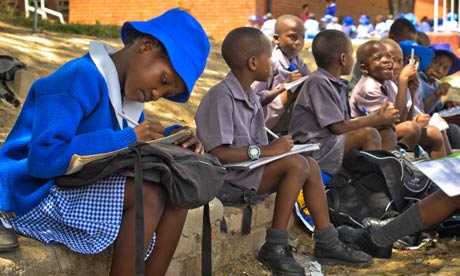
Sending children to school in Zimbabwe is increasingly becoming an unsustainable burden for many households, with rising fees, transport costs, uniforms and extra lessons stretching family incomes beyond breaking point, even in public schools.
At Mutasa Primary School in Highfield, parents pay US$40 per term in tuition, US$20 per month for extra lessons, and an average of US$1 per day for transport, pushing the total cost for one child to well over US$100 per term, excluding uniforms and stationery.
Parents said the cumulative costs, rather than tuition alone, are forcing families to make painful trade offs between education, food, rent and healthcare.
Guardian Patience Sekai Makiwa said while public school fees appear affordable on paper, associated expenses have become overwhelming.
“By the end of the month, I spend more on transport and extra lessons than on actual school fees,” she said
She said transport costs sometimes result in missed school days, particularly towards month-end, disrupting attendance and learning continuity.
Similar challenges are being reported at Glen View 2 High School, where parent Kumbirai Desmond Muzondiwa said uniforms, transport, stationery and examination fees had turned public education into a financial strain.
“Even though it is a government school, the costs add up very quickly,” Muzondiwa said.
“When you include transport, uniforms, stationery and extra lessons, it becomes difficult to cope.”
He said delays in paying fees often lead to learners being sent home, affecting attendance and academic progress.
“When children miss lessons because of fees, they struggle to catch up, especially during exam periods,” he said, adding that some families are forced to borrow money or postpone rent payments to keep children in school.
Education costs escalate sharply at private and mission schools.
Elite private institutions such as Dominican Convent and Watershed College are charging between US$3 000 and US$6 200 per term, while mission schools including Gokomere, Sandringham and Howard High charge between US$500 and US$700 per term.
A January 2026 fee schedule compiled by Kudzi from the Zim Boarding Schools Social Media Group shows Anderson School charging US$3 000 for new learners and US$1 500 for continuing learners, Cornerstone Marondera and Chitungwiza US$2 500, Kutama US$1 500–US$2 500, Langham Girls High US$500 per term after an initial US$1 500, Sandringham US$611–US$700, while Goldridge College in Kwekwe and Rydings School charge above US$3 000 per term.
Uniform costs have also surged sharply. Parents report paying US$60 for shoes, US$150 for blazers, US$80 for skirts and blouses, and up to US$500 for school-sold uniform sets, up from about US$250 previously.
Related Stories
A basic Grade One uniform set now costs around US$135, excluding bags and sportswear.
Parent Branco Shumba said the burden cuts across income groups.
“School fees, uniforms, transport and textbooks put serious pressure on family budgets,” he said.
“We cut back on leisure, delay household repairs and sometimes borrow money just to prioritise education.”
Education practitioners said schools are also under strain.
Mrs Kabanda, a senior school official at Budiriro 3 High School, said parents are expected to cover tuition, registration fees, and development levies, which fund teachers’ salaries, utilities and learning materials.
“Schools understand that parents are struggling, and many allow installment payments,” she said.
“But schools still have obligations. Teachers must be paid, and the learning environment must be maintained.”
She said private schools, in particular, operate without government funding and rely entirely on fees to sustain operations.
“To maintain qualified teachers, basic facilities and learning resources, schools are forced to charge fees that reflect operational realities,” she said.
Teachers warn that rising education costs are already affecting enrolment and retention.
Teacher Evans Marara at Roosevelt Girls High said enrolments are typically high at Form One but drop significantly by Form Four as families fail to sustain costs.
“Students miss school because of transport money, attend lessons without proper meals, or drop out completely,” he said, adding that poverty has contributed to early marriages and risky relationships that end learners’ education prematurely.
Marara said schools struggling to collect fees also fail to motivate teachers, afford textbooks or maintain laboratories, undermining learning outcomes.
Schools said inflation and rising operating costs have made levies unavoidable.
“If this continues, Zimbabwe risks losing a whole generation of learners because education is becoming unaffordable for most families,” Marara said.







Leave Comments