








Nearly one in four girls aged 15 to 19 in Zimbabwe has experienced pregnancy, highlighting the scale and urgency of a crisis that continues to deepen despite years of intervention, according to the latest national data.
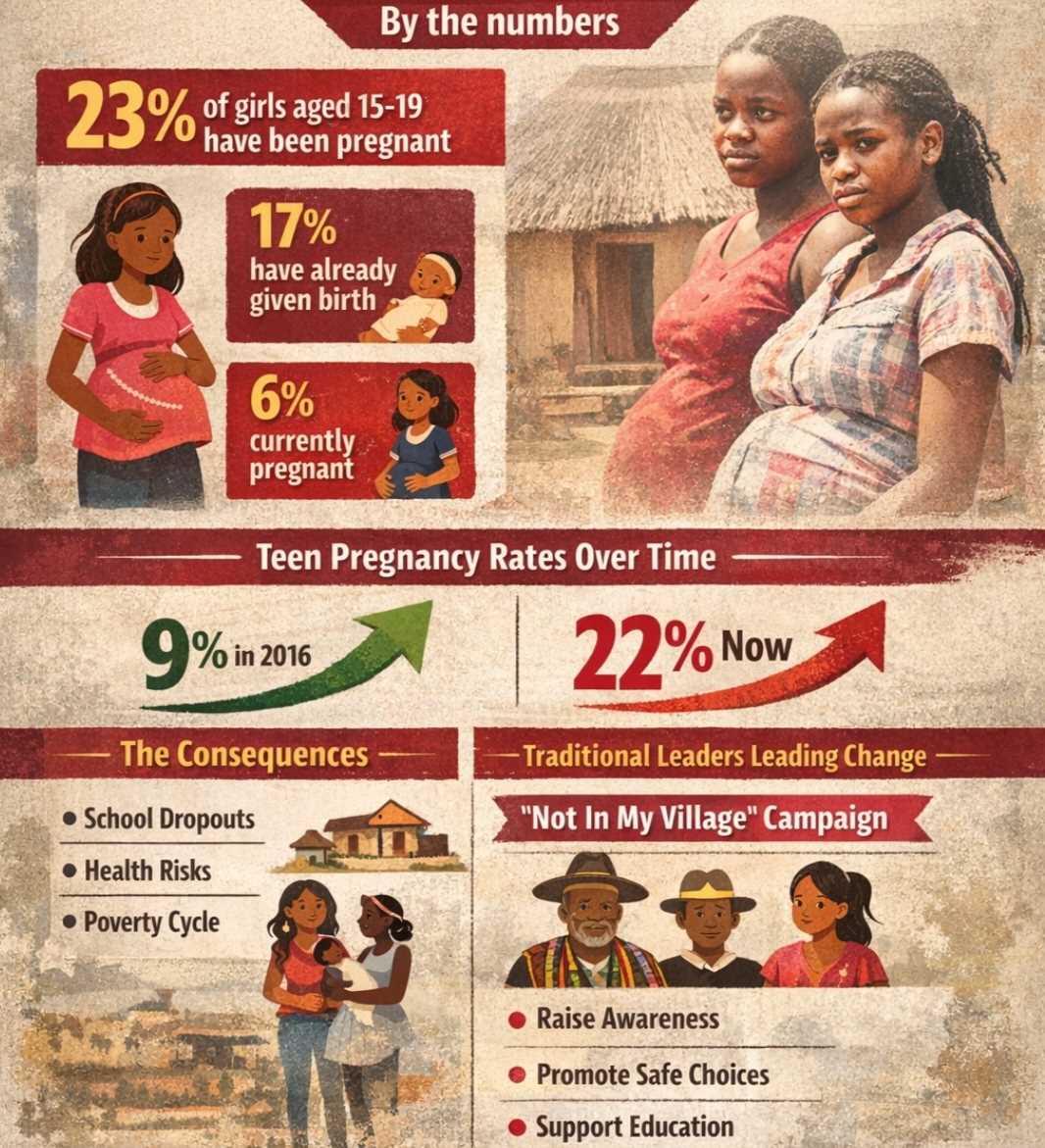
Findings from the 2023–24 Zimbabwe Demographic and Health Survey show that 23 percent of girls in this age group have ever been pregnant. Of these, 17 percent had already given birth, while six percent were pregnant at the time of the survey.
The burden is heaviest in rural communities, where about 30 percent of teenage girls have experienced pregnancy, compared with 15 percent in urban areas, pointing to persistent inequalities in access to education, health services and protection.
Trend data suggests the situation has worsened over the past decade. National assessments indicate that teenage pregnancy prevalence rose sharply from about nine percent in 2016 to approximately 22 percent in recent years, raising concerns over the effectiveness of existing prevention strategies.
The high prevalence carries serious social and economic consequences. Teenage pregnancies are closely linked to school dropouts, reduced educational attainment, increased maternal health risks and prolonged cycles of poverty affecting adolescent girls and young women.
Public health advocates have also warned that adolescents account for a significant share of maternal deaths in Zimbabwe, with some assessments indicating that around 25 percent of maternal deaths occur among adolescents and young women under the age of 24.
Related Stories
Against this backdrop, the United Nations Population Fund (UNFPA) has renewed calls for stronger community-level action, identifying traditional leaders as key actors in reversing the trend.
“Teenage pregnancies remain a challenge, but change starts at the community level. Traditional leaders play a critical role in guiding, mentoring and protecting young people,” UNFPA said.
The agency is promoting the Not-In-My-Village campaign — a community mobilisation initiative led by traditional leaders — as a frontline tool to shift social norms and reduce early pregnancies.
“By leading the Not-In-My-Village campaign, traditional leaders help raise awareness, promote responsible decision-making and ensure that every child grows up safe, educated and empowered. Together, communities can say: ‘Not in my village!’” UNFPA added.
UNFPA Zimbabwe said the campaign is designed to actively involve chiefs, headmen, youth groups and health educators in driving behaviour change, supporting girls to stay in school and improving access to youth-friendly sexual and reproductive health services.
The organisation stressed that community ownership and traditional leadership are critical to tackling deeply rooted drivers of teenage pregnancies, including harmful gender norms, poverty and limited access to appropriate health services for adolescents.
UNFPA added that the long-term success of such initiatives will depend on sustained support from government, civil society and traditional institutions, alongside expanded access to comprehensive sexual and reproductive health education.








Leave Comments