







A Patriotic Observer's Perspective
Zimbabwe's lithium is a genuine asset. We sit on some of Africa's richest deposits, and the ambition to process our minerals here at home rather than ship them out as raw ore is not just correct policy; it is the only sensible path for a country that has watched its resources leave without building lasting wealth for generations.
The lithium export ban announced in February 2026 came from exactly that logic. Nobody serious is arguing against value addition. But wanting the right outcome and managing the road to get there are two different things, and that distinction matters.
Our Goal Is Not in Question
Let us be clear about what is not being debated. Local beneficiation is the right direction. Indonesia figured this out with nickel and turned it into an industrial transformation: jobs, technical skills, downstream manufacturing, and real GDP. The president's vision of Zimbabwe as a serious player in the global electric vehicle and battery supply chain is not wishful thinking. The demand is real, and we have the raw material.
The question is not whether to pursue this. The question is whether our current approach is building the foundation we need or quietly undermining it.
The Investment We Cannot Afford to Lose
Zimbabwe's lithium sector exists today largely because of Chinese capital. More than US$1.4 billion has come in; Chinese companies account for over 90% of our lithium production, and they were among the first to take Zimbabwe seriously when much of the world was still hesitant.
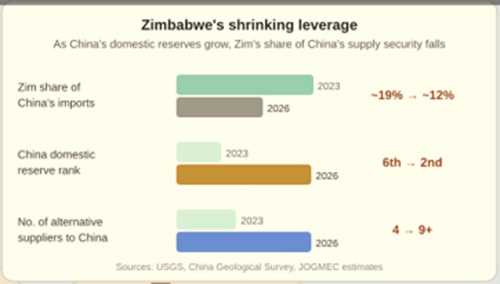
That relationship cannot be taken for granted. Not because we owe anyone a favor, but because we are competing in a global market. Australia is a major lithium supplier. South America's salt flats are expanding capacity. Other African nations are positioning themselves aggressively. And China itself has recently confirmed lithium reserves that now rank it second in the world, meaning its supply security is improving regardless of what Zimbabwe does.
Our leverage is real but not unconditional. We hold a strong hand when we are predictable, transparent, and credible partners. We weaken that hand when investors cannot plan because policy moves without warning.
What the Sudden Ban Actually Hit
The companies most disrupted by the sudden ban are not smugglers. Illegal operators have always found ways around formal export controls. The businesses scrambling right now are the licensed, tax-compliant investors who had already begun building local processing plants in response to the 2027 deadline the government itself set last year.
That is a problem. You cannot ask investors to make long-term capital commitments and then change the rules midstream. It is not just unfair; it is the kind of thing that gets discussed quietly in investor circles and affects decisions about the next project in Zimbabwe or somewhere else.
2026 Is Not the Year to Get This Wrong
Related Stories
This year marks 70 years of China-Africa diplomatic relations. For Zimbabwe specifically, it is a strategic window to deepen ties, signal seriousness as an investment destination, and demonstrate that the country is ready for the kind of industrial partnership that turns mineral wealth into manufacturing capacity.
We should be showcasing stability. We should be the example. Getting policy execution wrong in this particular year has costs beyond the immediate disruption.
A Practical Way Forward
None of this requires abandoning the value addition agenda. It requires implementing it more intelligently.
Compliant investors with valid licenses, clean tax records, and active processing timelines should be offered a clear transition framework that lets them stabilize cash flow while meeting their localization commitments. A formal whitelist of responsible operators gives government a tool to reward good actors and isolate bad ones, which is more effective against smuggling than a blanket ban.
Government should also publish a long-term mining roadmap: clear stages, incentives, timelines, and consequences. Investors make better decisions and bigger commitments when they can see the full picture, not just the latest announcement.
And before the next major policy shift, a structured consultation process with major operators would catch implementation problems early, improve the final policy, and build the trust that makes Zimbabwe easier to do business with.
What We Are Really Building
Zimbabwe's mineral wealth is not going anywhere. What we are building, year by year, is either a reputation as a serious, capable partner in global value chains or a cautionary tale about a country that had everything it needed and still could not hold it together.
The vision is right. The execution is what we owe ourselves.
The writer is an independent observer focused on national development and investment policy. Views expressed are personal and do not necessarily reflect Zim Now's position.








Leave Comments