





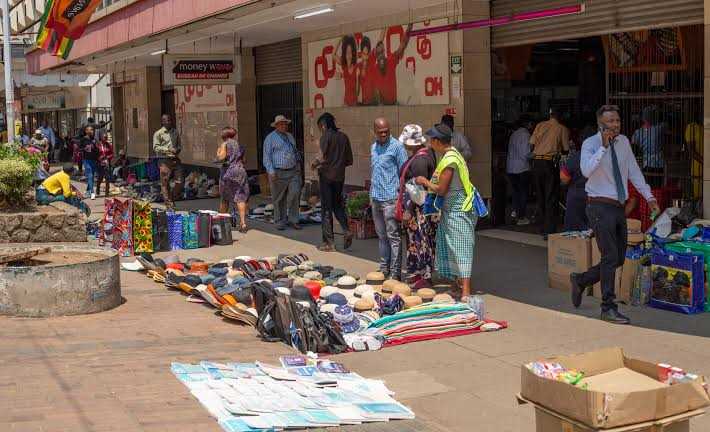
Informal traders are tightening their grip on Harare’s retail sector, pushing formal supermarkets to the brink as pavement markets, kombi boot sales, and tuckshops rapidly become the dominant source of groceries in the capital.
Sidewalks and parking spaces across the central business district (CBD) have effectively been converted into open-air shops. Traders are selling everything from basic foodstuffs to household goods, often at prices significantly lower than those found in registered outlets.
Takudzwa Moyo noted that the shift has been dramatic and is now fundamentally reshaping consumer behaviour.
“In Harare, groceries are now sold on pavements or from lorry and kombi boots. The informal sector has taken over as supermarkets close, with tuckshops becoming the new norm,” he said.
The development is not limited to the capital; residents indicate that Bulawayo is experiencing identical trends.
“Same as Byo,” said Nkosilathi Dube.
However, the rapid growth of the informal sector is raising serious concerns over product quality and consumer protection.
“And fake items are sold from this informal sector,” said Rumbidzai Chikore.
Residents also questioned the lack of enforcement by authorities, arguing that the situation is costing the fiscus millions in potential revenue.
“The thinking from the authorities for not taking action is baffling. These people do not pay taxes, no wonder motorists are the ones suffering. There are millions in potential taxes there daily,” said Blessing Ncube.
Tendai Zhou suggested the situation reflects a systemic breakdown in urban management.
Related Stories
“It’s quite a phenomenon. We have allowed informal retail traders to occupy pavements. By-laws have been disregarded. Municipal police and ZRP are feasting from these traders—bribes and kickbacks are the order of the day. No taxes are paid by this sector,” he said.
Formal retailers are now facing an uneven playing field, with growing fears of further closures across the industry.
“Very soon, more supermarkets will close because they cannot compete with informal traders who do not pay rent or tax,” Moyo added.
Frustration among residents is mounting as the character of the city continues to deteriorate.
“Harare yapera [Harare is finished]. This is not the Harare I know,” Moyo lamented.
Others described the situation in even starker terms, citing the extreme congestion and disorder now prevalent in the city centre.
“The CBD is now a war zone,” said Farai Chiwenga.
Economic pressures are a primary driver of this shift, with consumers increasingly forced to opt for cheaper alternatives outside formal retail systems.
“I think supermarkets are affected by exchange rate monitoring. They raise USD prices to compensate for ZiG values, and that pushes customers to tuckshops,” said Tawanda Muchengeti.
Zhou added that currency dynamics are further exacerbating the crisis.
“Our currency regime is bad. We favour a stronger foreign currency over our own, and that is killing the formal sector,” he said.




Leave Comments