









The case of a Harare man arrested for cooking and selling sadza divided Zimbabweans on social media. There were those who sympathised with his effort to earn a living while others pointed out to the downside of unregulated operations.
Vendors flooded Harare towards the end of the Mugabe regime after then First Lady Grace Mugabe took a populist stance asking why city fathers were persecuting people trying to earn a living at a time when formal employment figures had fallen to less than 10%.
In 2025, Harare City Council escalated its crackdown by creating a specialised police unit targeting vendors. The city spent over US$24 million policing vendors in 2024 alone, eight times the council's revenue.
This is fiscal absurdity that just fuels corruption as the vending crisis has grown. For instance, in Park Street, as early as 11 in the morning, vendors will have taken over parking bays in front of the Traffic Safety Council of Zimbabwe head office.
But the worst part is the missed opportunity to scale this thriving economy. Zimbabwe's informal sector is not marginal; it is the economy. According to ZimStat's 2023 Economic Census, 76.1 percent of all business establishments in Zimbabwe are informal, meaning they are not registered with any regulatory body or tax authority.
The sector contributes an estimated 64.1 percent of GDP, roughly US$42 billion, and sustains over 80 percent of the population for employment.
The African Development Bank says Zimbabwe is losing billions in potential tax revenue annually due to this vast untaxed sector: "Zimbabwe has the potential to generate about US$7.5 to US$8 billion annually if the informal sector is formalised,” said AfDB Principal Country Economist Kelvin Banda.
Some of the economic bleeding is clear for all to see. The vendors who colonise parking bays on Park Street prejudice the council of at least $6 in parking revenue per bay. Multiply that for all the colonised bays across the streets and it is obvious that the city is losing hundreds of dollars a day, translating to thousands a month.
What China learned and what Zimbabwe can borrow
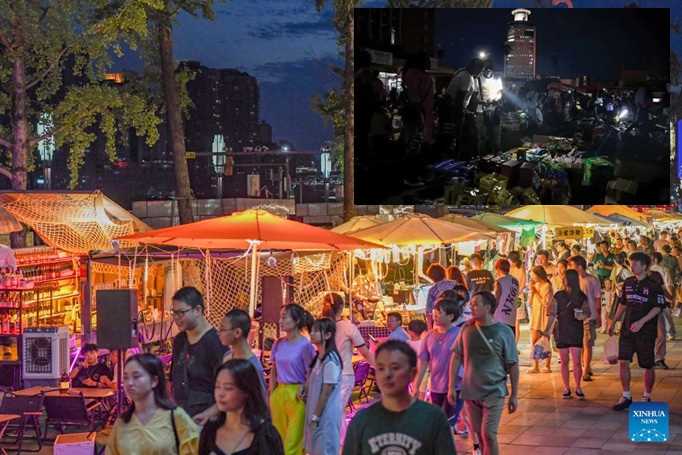
During a currently ongoing media of Zimbabwean journalists and social media publishers in China, one contrast could not be starker. Chinese cities that once fought "cat-and-mouse" battles with street vendors have reformed. Chongqing’s night markets quickly became a firm favourite destination for all.
Nanjing and other municipalities replaced antagonistic enforcement with permit systems for street food vending. Ningxia's Huaiyuan Night Market became a national model through "intensive management", integrating scattered vendors into a branded, regulated night market with unified carts, centralised food processing facilities and QR-code based oversight. The result: formerly illegal vendors now operate legitimately, pay fees, and contribute to GDP.
Related Stories
At the national level, China has issued over 2.27 billion QR codes through its "All Agricultural Code" system, digitising even the smallest rural enterprises. Street vendors obtain digital permits, use mobile payment systems that automatically record transactions, and pay simplified taxes all while being visible to tax authorities for the first time.
Meanwhile in Zimbabwe refuse to see the opportunity in the vending crisis. When the sadza cooking man became topical, the response from authorities was narrow minded and unyielding.
Both Harare Mayor Jacob Mafume and Local Government Minister Daniel Garwe were adamant that they would not consider incorporating the night economy into regulated economic activity. A 48-hour ultimatum for night vendors was issued. But several months later, vendors still throng the CBD, some setting up fires directly on pavements to roast mealies.
Finance Minister Professor Mthuli Ncube recently advocated for a system that integrates council and ZIMRA systems to capture the small, registered enterprises. Cabinet has approved measures to establish a digital registration system for all MSMEs, creating a national database, and is reviewing payment system limits to accommodate micro-enterprises. But in all that there is no system to capture vendors and the night economy.
Dr Sehliselo Mpofu of MEFMI has urged a shift in mindset: "Many people view formalisation as a threat. Education is critical so that they understand the long-term benefits of operating within the formal economy".
Four concrete steps
As Vendors Initiative for Social and Economic Transformation executive director Samuel Wadzai argued: "Rather than eliminating these trading options, there needs to be a focus on regulating and supporting vendors through proper resource allocation".
First, replace repression with registration. Redirect the funds currently spent on enforcement, US$24 million annually, toward building affordable, designated market spaces accessible to all vendors, not just those who can afford licences costing up to US$500 per year under the new single-licence regime.
Second, leverage digital tools already being deployed. The Reserve Bank's push for mandatory electronic payments, combined with simplified Know Your Customer norms and zero-deposit basic savings accounts, can automatically capture millions of daily micro-transactions without heavy enforcement.
Third, legitimise night markets. Instead of banning night vending, which economists warn will simply drive traders further underground, authorities should follow the Nanjing model: regulate operating hours, require simple permits, and provide basic infrastructure.
Fourth, align Zimra and council systems. The Finance Minister's proposal to harmonise local registration with national tax structures is exactly the right approach, turning a fragmented, punitive system into a unified pathway for compliance. But first, the councils must have a clear strategy for vendors.
As the city bleeds millions annually in ineffective repression and infrastructure is being damaged while CBD properties lose value, the question is not whether to formalise the informal economy, but how quickly Zimbabwe can stop chasing vendors and start counting them.









Leave Comments