






Calls for greater transparency in Zimbabwe's political financing have intensified following Africa Anti-Corruption Day commemorations, with governance advocates arguing that citizens cannot hold leaders accountable if they do not know who finances political parties, election campaigns and influential political figures.
Transparency International Zimbabwe used this year's commemoration to spotlight political finance transparency, warning that public trust in democracy depends on openness about the flow of money into politics.
"Democracy depends on trust, and trust depends on transparency. Across the continent, making sure that all money in politics is legit, accounted for, and transparent to all is essential for citizens to trust their elected representatives act in their interest," the organisation said.
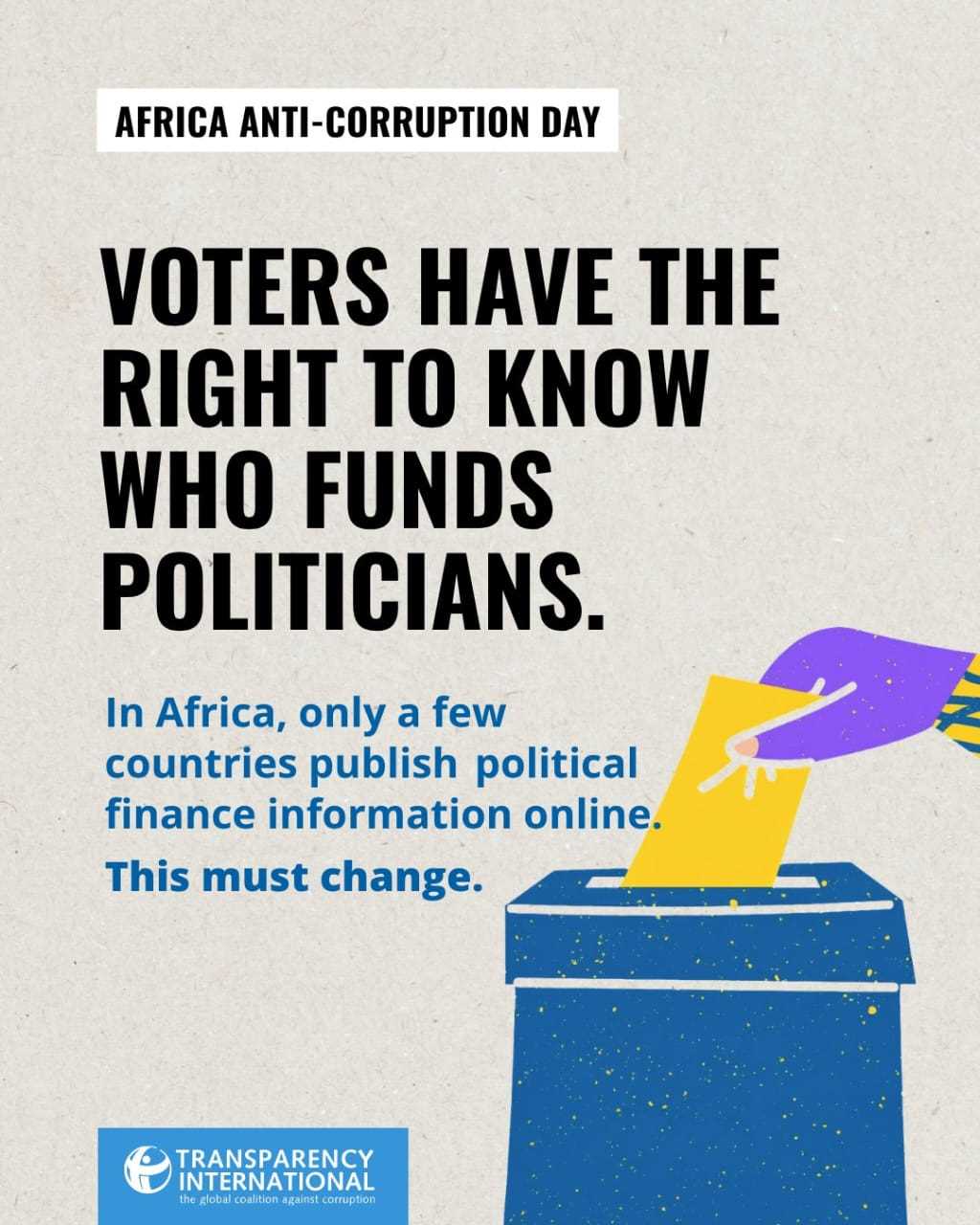
The anti-corruption watchdog added that only a handful of African countries currently publish political finance information online.
"Voters have the right to know who funds politicians. In Africa, only a few countries publish political finance information online. This must change."
The campaign has renewed debate over one of Zimbabwe's least regulated governance areas, with experts arguing that while public funding of political parties is provided for under law, there is limited transparency around private donations, campaign financing and expenditure.
The issue has become increasingly prominent following businessman Wicknell Chivayo's high-profile financial gifts to politicians, churches, musicians, athletes and other public figures over the past two years.
Chivayo has publicly donated luxury vehicles, cash and other gifts worth millions of United States dollars, saying the donations are acts of philanthropy intended to reward individuals making positive contributions to society. However, critics have questioned whether such largesse from a businessman whose companies have won major Government-linked contracts risks creating perceptions of political influence, even where no wrongdoing has been established.
The debate intensified earlier this year after Chivayo announced a proposed US$3.6 million donation to all 360 Members of Parliament, amounting to US$10,000 for each legislator, saying the money was intended to support constituency development projects. The announcement coincided with parliamentary consideration of the Constitutional Amendment Bill, now Constitutional Amendment Act No. 6 of 2026, prompting opposition politicians, governance organisations and legal experts to question whether such donations could create real or perceived conflicts of interest.
Although Chivayo insisted the donation was philanthropic and not linked to parliamentary business, critics argued that the controversy exposed significant gaps in Zimbabwe's political finance transparency framework, where private financial support to political actors is not routinely disclosed to the public.
Political scientist Professor Eldred Masunungure has previously argued that transparency in political financing is essential because undisclosed funding can undermine democratic accountability.
Related Stories
"Political parties require resources to operate, but those resources must be subjected to public accountability. Otherwise, private money risks influencing public policy without citizens knowing who is exercising that influence," he has said.
Constitutional lawyer Professor Lovemore Madhuku has also consistently argued that citizens have a democratic right to know who finances those seeking political office, warning that hidden funding weakens electoral accountability and public confidence in democratic institutions.
Election Resource Centre director Tawanda Chimhini has similarly called for stronger campaign finance reforms.
"When citizens do not know who finances political parties, it becomes difficult to assess whether public decisions are being made in the national interest or in the interests of financiers," he has previously said.
International organisations have repeatedly identified opaque political financing as one of the principal drivers of corruption.
Transparency International says undisclosed political donations can create opportunities for wealthy individuals and corporations to secure privileged access to public decision-makers, while the Organisation for Economic Co-operation and Development has warned that opaque campaign financing increases the risks of conflicts of interest, policy capture and state capture.
The United Nations Convention against Corruption also encourages States to strengthen transparency in the funding of candidates for elected office and political parties as part of broader anti-corruption measures.
Zimbabwe's Political Parties (Finance) Act provides public funding to qualifying political parties represented in Parliament. However, governance experts argue that the legislation focuses primarily on distributing State funding and contains limited provisions requiring comprehensive disclosure of private donations, campaign expenditure or the identities of major donors.
That has left significant questions unanswered during election periods, particularly regarding how political parties finance increasingly expensive campaigns and whether private financiers may later benefit from Government contracts or policy decisions.
Transparency International Zimbabwe says addressing those concerns requires more than prosecuting corruption after it occurs.
Instead, it argues that preventing corruption begins with making political finance transparent, ensuring all money entering politics is traceable, publicly accountable and open to scrutiny by voters before they cast their ballots.









Leave Comments