








Is Nelson Chamisa rebuilding a political movement or rebuilding a funding base?
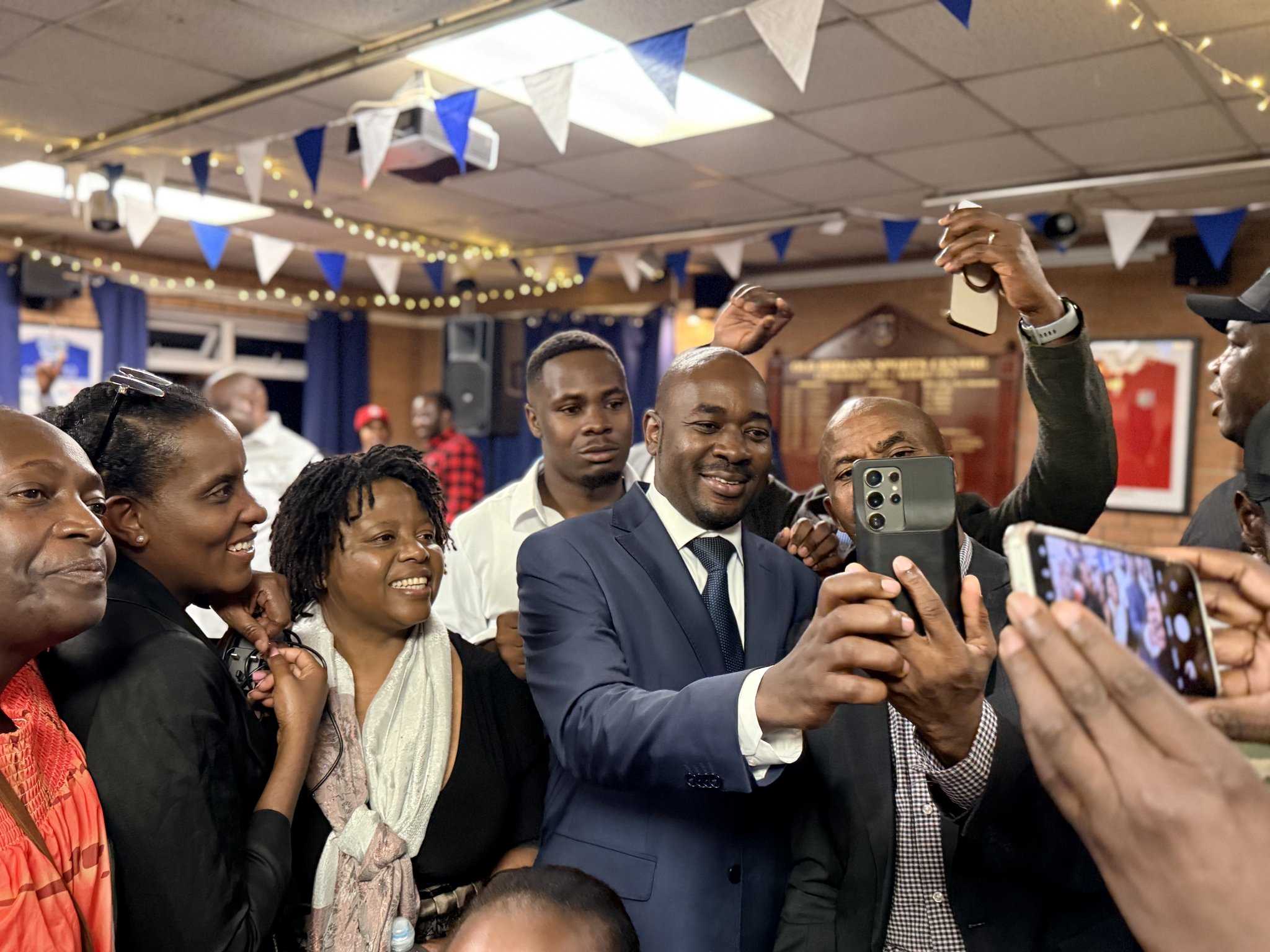
That question has ignited fierce debate following the opposition leader's consultation tour of the United Kingdom, where he has been meeting Zimbabweans in London, Manchester and Corby while describing the engagements as part of a "citizenocratic" vision for Zimbabwe's future.
Critics argue the tour is less about consulting citizens than cultivating a financially capable diaspora at a time when opposition politics inside Zimbabwe appears fragmented and Constitutional Amendment Act No. 6 has fundamentally altered the political landscape.
Supporters, however, insist the engagements are a legitimate attempt to reconnect with millions of Zimbabweans whose voices continue to shape the country through remittances, expertise and international advocacy despite being excluded from voting in national elections.
The controversy has exposed a deeper strategic dilemma facing Zimbabwe's opposition. If political power is ultimately decided by voters inside Zimbabwe, why devote time and political capital to a constituency that cannot cast a ballot? And if the diaspora's greatest contribution is financial and intellectual rather than electoral, does that make overseas consultations a strategic necessity or an admission that the political battleground at home has become increasingly difficult to navigate?
Social Media political activist Lynne Stacia is among those unconvinced.
"It is all about finding new ways of making money because elections have been removed forcefully by CAB3 and Zvigananda," she argued, suggesting the tour is driven more by fundraising than political consultation
Political commentator Nqobizitha Mlambo echoed the scepticism, warning that, "The unsuspecting will lose their money."
For Thompson Mudare, the problem goes beyond fundraising. He argues that Chamisa is investing energy in audiences abroad while failing to build resistance where it mattered most.
"This kind of politics would work in Sweden, Switzerland and NEVER IN ZIMBABWE. In Zimbabwe a serious contender needs to get hands dirty like what Tsvangirai used to do. Fighting things like CAB3. This guy is operating as if there will be elections in 2028 with a ballot, 'Vote Chamisa'," he wrote.
Those criticisms stem largely from the belief that the opposition's immediate priority after the enactment of Constitutional Amendment Act No. 6 should have been sustained mobilisation inside Zimbabwe rather than consultations abroad. For critics, the question is not whether the diaspora matters, but whether it should come before rebuilding structures, energising supporters and reconnecting with registered voters on the ground.
The criticism has also revived debate about the political value of Zimbabwe's diaspora.
Although millions of Zimbabweans living abroad continue to send billions of United States dollars home each year through remittances, they remain unable to vote in presidential or parliamentary elections under the current legal framework, except in limited circumstances for certain categories of citizens. This has led some critics to describe the diaspora as an economically important but politically powerless constituency.
Yet that conclusion may oversimplify the role the diaspora plays in Zimbabwean politics.
While it cannot directly determine election outcomes through the ballot box, the diaspora has historically provided financial support to political movements, funded civic initiatives, offered policy expertise, lobbied foreign governments and international organisations, and influenced public opinion through family networks and social media. Political messages discussed in London, Johannesburg or Birmingham often find their way into homes in Harare, Bulawayo and Mutare within minutes through WhatsApp and other digital platforms.
That influence helps explain why successive political actors, both in government and the opposition, have continued to engage Zimbabweans abroad despite the absence of external voting rights.
Related Stories
Chamisa himself has framed the tour as an exercise in listening rather than campaigning.
Reflecting on the London engagement, he said the discussions brought together academics, professionals, entrepreneurs, young people, women, journalists and students to exchange ideas on "the vision, policies and institutions needed to build a more prosperous, inclusive and citizenocratic Zimbabwe."
His office has also argued that the diaspora, estimated at close to five million Zimbabweans, is "not a peripheral constituency" but "an integral part of our nation", renewing longstanding calls for diaspora voting rights.
Supporters therefore reject suggestions that the meetings are simply fundraising exercises.
Political commentator Brighton Mutebuka argues that opposition leaders confronting competitive authoritarian systems inevitably experience periods when they appear politically weakened.
"All opposition leaders who challenge competitive authoritarian regimes go through phases where they are perceived as ineffective and waning in popularity. It is a natural curve and reaction to adversity," he said.
"The solution is not to wilt. It is to embrace the storm, learn from past challenges and look straight ahead to rebuild with fortitude, strategic patience, clarity, purpose and resilience. That is the process that Nelson Chamisa is currently going through."
Former legislator Richard Machawira similarly defended Chamisa's decision to consult supporters.
"It's his democratic right as a citizen to consult and form a political party. Anyone who wants to follow him, let them do so as it will be their choice. Above all, who is not looking for money? It's just that the ways we do so are different."
Machawira's remarks also touch on another issue underlying the controversy: political financing.
Politics is an expensive enterprise. Organising meetings, maintaining party structures, travelling, communicating with supporters and contesting elections all require substantial resources. Zimbabwe's Political Parties (Finance) Act provides public funding to political parties that meet the statutory threshold for representation in Parliament. Parties that do not qualify for state funding typically rely on lawful sources such as membership subscriptions and voluntary donations from supporters.
There is no public evidence that Chamisa's UK tour is raising funds unlawfully. However, the debate surrounding the tour reflects a political reality: the diaspora represents one of the few constituencies with both the financial capacity and continued emotional investment to support political causes from outside Zimbabwe.
That raises another strategic question. Even if fundraising forms part of the tour, would that necessarily diminish its political value? Around the world, opposition parties routinely engage diaspora communities not only for financial support but also for policy development, networking and international visibility.
The more difficult question may be whether those objectives should take precedence over domestic mobilisation.
For critics, the answer is no. They argue that no overseas engagement can compensate for a failure to organise communities inside Zimbabwe, particularly after constitutional changes that many opposition supporters viewed as requiring sustained political resistance.
Supporters see the issue differently. They argue that rebuilding an opposition movement requires more than rallies. It requires ideas, policy expertise, international engagement, financial sustainability and strategic patience, resources that diaspora communities are well placed to provide.
The debate ultimately extends beyond Chamisa's UK tour. It speaks to a larger challenge confronting Zimbabwe's opposition politics: how should limited political resources be allocated when the electorate is inside the country but significant financial resources, professional expertise and international networks are concentrated outside it?






Leave Comments