







Gilbert Munetsi
The cattle are grazing as the afternoon sun hangs lazily over the dry Zimbabwean countryside, turning the grass into a tired shade of gold.
Dust rises occasionally from the narrow path cutting through the veld. There is little here to suggest that somewhere, far beyond these fields, another football season has begun. Except for the boy.
He sits beneath the thin shade of a tree, his back against the trunk and his eyes fixed on a glowing smartphone.
The cattle can wait but, for the moment, Manchester United cannot.
He knows the club's history. He knows the players. He knows who is injured and who is suspended. He knows the latest transfer rumours and, with the confidence of a seasoned pundit, will tell you exactly where the manager went wrong last weekend.
Ask him about Zimbabwean football, however, and something changes. Ask him to name four players from the country's reigning champions and the swagger disappears.
He thinks. Then he laughs. It is an innocent moment, almost comic, and yet it contains an uncomfortable truth about African football.
The boy has not stopped loving football. And football has simply taught him to love somebody else's version of it.
On a Saturday afternoon in Harare, the same story unfolds in homes, bars, shopping centres and neighbourhood gathering places.
Television screens glow with English football. Somewhere, Arsenal are playing. Elsewhere, Liverpool are preparing for a big fixture. Manchester United supporters are arguing over tactics. Chelsea fans are celebrating — or suffering.
The shirts worn by the spectators tell another story. The badges are European and yet the passion is African.
When a European giant scores a late winner, the reaction in an African bar can be as visceral as if the goal had been scored next door. People leap from chairs, scream, embrace strangers, curse referees and argue long after the final whistle.
Arguably, a football match played in London, Manchester, Madrid or Munich can determine the emotional weather of an evening in Harare.
That is the strange geography of modern African football fandom where distance has almost ceased to matter.
Zimbabwean sociologist Dr Manase Kudzai Chiweshe has spent years studying this phenomenon. His research into trans-national football fandom found that the English Premier League had become deeply embedded in Zimbabwean social life, with Manchester United, Chelsea, Arsenal and Liverpool among the most popular clubs.
In his research, Chiweshe encountered Zimbabweans who could discuss European teams with extraordinary intimacy while knowing little about local football. Satellite television and globalisation, he argued, had helped create a huge diet of European football at the expense of local leagues.
The boy under the tree is, therefore, not an isolated curiosity. Instead, he is part of a much larger cultural shift.
"Sometimes people ask me why I support an English club when I have never been to England," says Memory Muhlakurewa, a Harare supporter. "I tell them: football doesn't work like that anymore. I have watched these players for years. I know their personalities. I know the history of the club. I have suffered with them. How can you tell me it isn't my club?"
That sentence explains something statistics alone cannot.
The modern supporter does not necessarily need geographical, but emotional proximity. And European football has become extraordinarily good at manufacturing it.
There was a time when following European football from Africa required patience. You waited for the newspaper, television highlights or for somebody travelling from overseas to bring the latest news.
Now the smartphone destroyed the waiting.
Today, a teenager in a Zimbabwean village can learn about a transfer almost as it happens. He can follow a player's social-media account, watch training footage, receive a goal alert, listen to a podcast, watch tactical analysis and argue online with supporters in Manchester.
The football match is now only the climax of a much larger entertainment machine. European football sells the stories surrounding the game as aggressively as it sells the game itself.
The personalities. Rivalries. Statistics. Controversies. Nostalgia. Shirts. Memes. Dreams. And belonging. Technology has placed all of it in the palm of an African fan's hand.
Deloitte's 2026 Annual Review of Football Finance says the European football market passed €40 billion for the first time in the 2024/25 season, reaching €40.2 billion. Europe's five major leagues generated €21.6 billion, while Premier League clubs alone produced £6.8 billion in revenue.
Those figures are ultimately figures about attention, with people watching, subscribing, clicking, buying, sharing and returning the following weekend.
A 2026 GeoPoll survey across Zimbabwe, Kenya, Ghana, Nigeria, Mozambique and South Africa found that 91% to 96% of respondents actively followed football. The English Premier League was the most followed league in four of the five markets surveyed.
A separate GeoPoll survey conducted across seven African countries found that 94% of respondents intended to follow the 2026 World Cup, while 62% planned to use mobile phones to follow the tournament.
Then there is another layer to Africa's relationship with global football: betting.
Industry estimates cited by GeoPoll put Africa's sports-betting market at around $3 billion in 2025, within a wider gambling sector valued at approximately $17.6 billion, with more than 440 million bettors across the continent. GeoPoll's 2026 research found betting participation above 50% among surveyed adults in several major African betting markets.
Gaming Compliance International estimates that Africa's online gambling market generated $23 billion in gross gaming revenue in 2025, up from $20 billion in 2024. Of that, about $17.8 billion — 77% — came through unregulated operators, according to reports citing the GCI study.
That is a regulatory problem, but it is also a window into the size of African consumer demand.
And much of this attention ultimately feeds football businesses whose headquarters are thousands of kilometres away.
UEFA's financial figures illustrate the enormous scale at the top of the European game. In its 2024/25 financial year, UEFA reported more than €5 billion in revenue, distributing €3.9 billion directly to clubs and national associations.
The Premier League's global television appeal has helped make it one of the world's most valuable sporting competitions.
While Africa is not responsible for Europe's success, African supporters are unquestionably part of the audience that gives European football its extraordinary global reach.
CAF's own numbers demonstrate that African football can command enormous commercial attention when the product is properly packaged. CAF's 2023/24 financial report recorded $166.4 million in total revenue, with TV and media accounting for 40% and sponsorship 43%.
The 2025 Africa Cup of Nations in Morocco pushed that commercial proposition further. CAF said the tournament generated a more than 90% increase in competition revenues compared with the previous edition, while the number of commercial partners also expanded.
The lesson is important. Africa does not lack an audience. It does not lack stories. It does not even lack commercial potential. It has often lacked the structures and consistency required to turn those assets into a powerful football economy.
But where is Zimbabwean football?
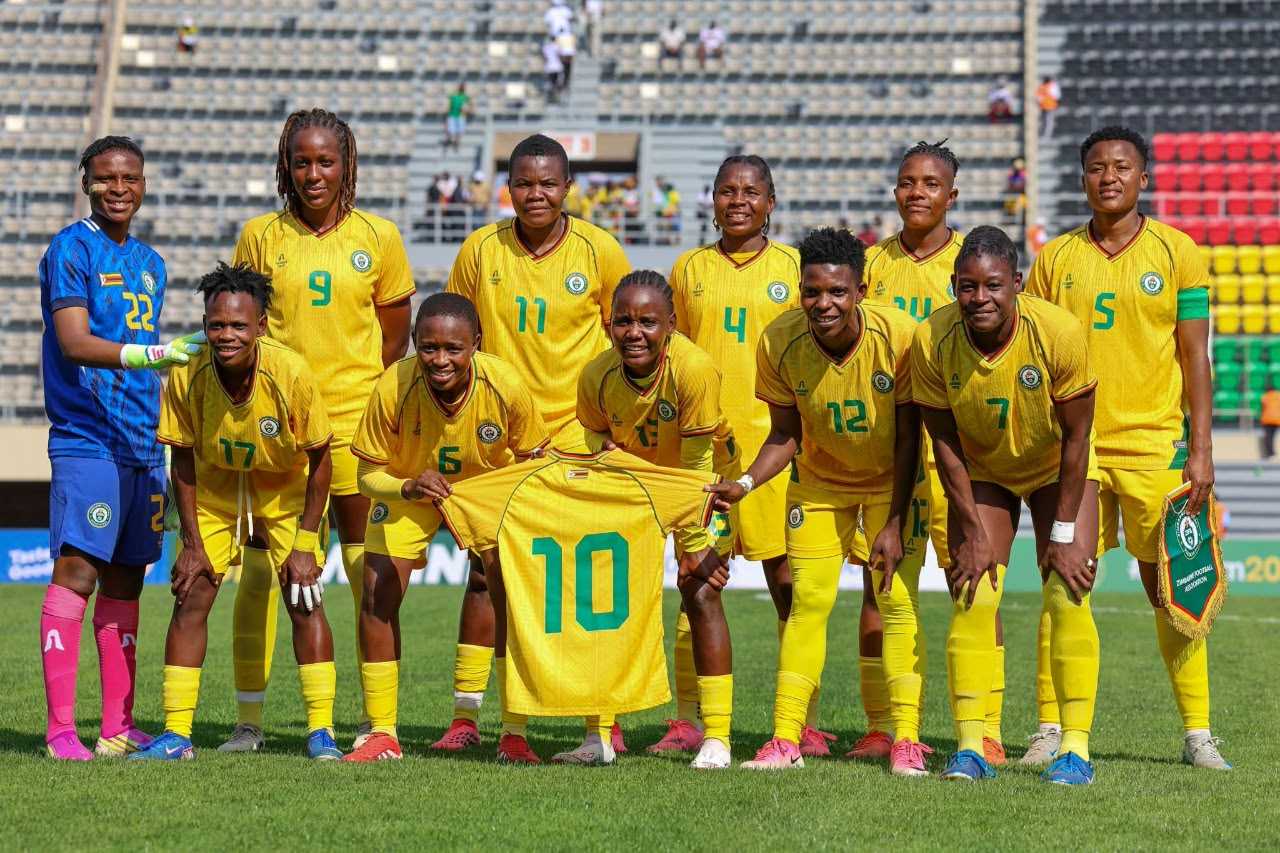
Because while European football has learned to package almost every corner of its product, Zimbabwean football often struggles to make its own stars visible.
A Premier League supporter can access statistics for virtually every player. He can watch interviews, follow training, read analysis, watch highlights, buy a shirt, track transfers and join online communities.
The football club follows him everywhere.
Related Stories
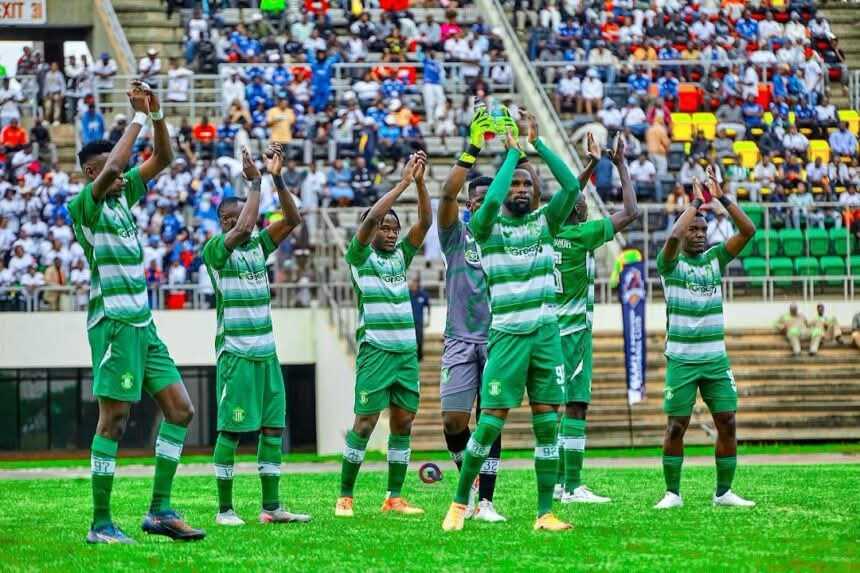
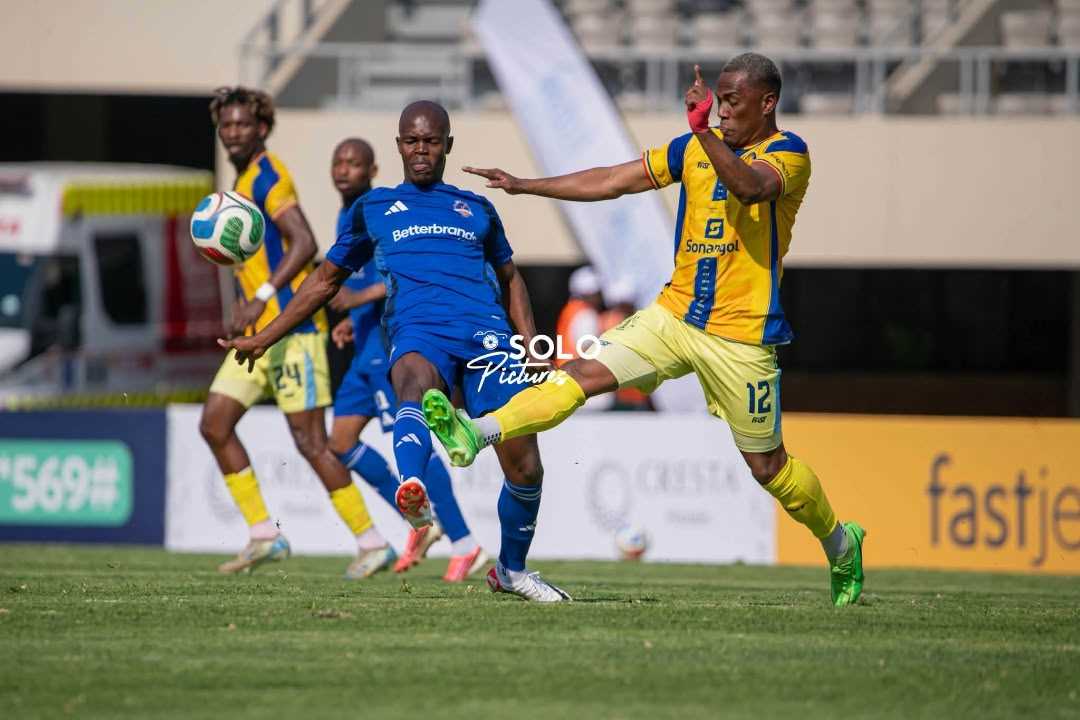
Now consider the Zimbabwean Premier Soccer League where the passion may be there, the rivalry, history and even the talent. It is the ecosystem surrounding the match is often considerably thinner.
Digital content varies from club to club. Statistics are not always readily accessible. Merchandising remains underdeveloped. Broadcast exposure is modest compared with Europe's major leagues.
And the storytelling around players, clubs and competitions rarely matches the relentless content cycle of European football.
The contradiction is therefore profound: Zimbabwe has football supporters in abundance, but too little football product for them to consume.
PSL chairman Rodwell Thabe has acknowledged the commercial challenge and in an interview, said:
"The PSL brand has significant value. Football has passion and reach in this country and there are many opportunities for companies to align themselves with that."
There is the problem — and perhaps the opportunity — in one sentence.
Zimbabwe Football Association president Nqobile Magwizi has repeatedly framed football as a business as well as a sport. In a discussion about the future of Zimbabwean football, he argued that running the game requires "skilled leadership" capable of understanding sponsorship, finance and strategic management.
The same technology that helped Europe capture African attention can help African football reclaim some of it.
A Zimbabwean club does not need a billion-dollar television contract to tell its story. It needs a smartphone in the hands of someone who knows how to use it with consistency and imagination.
A local club can produce player profiles, short documentaries, match-day reels, statistics, podcasts and interviews with former legends.
It can tell the stories behind its supporters. It can sell merchandise online. It can reach Zimbabweans living in Britain, South Africa, Australia, the United States and elsewhere. It can turn local players into personalities. And it can make a match more than 90 minutes.
This is not science fiction because the technology already exists. The question is whether Zimbabwean football has the imagination to use it.
Africa is simultaneously football's producer and consumer.
It produces players whereas Europe develops many of them into global stars. Africa then watches those stars on European television. Mohamed Salah becomes a Liverpool icon. Sadio Mané becomes a global star. Didier Drogba becomes synonymous with Chelsea. Michael Essien becomes a Premier League name. Riyad Mahrez shines in England. Victor Osimhen becomes one of Europe's most coveted strikers.
When an African player succeeds abroad, millions at home celebrate. And rightly so. But the economic irony remains. Africa often exports the talent. European football systems develop and package it.
European broadcasters distribute it. European clubs monetise it. And African audiences consume the finished product.
The question is not whether Europe should stop doing that. It is whether Africa can become better at doing it for itself.
It would be simplistic — and unfair — to blame the Premier League, LaLiga, Serie A or Bundesliga for Africa's domestic football problems.
They have built successful businesses. They have invested in their products. They understand their audiences. They have given supporters reasons to return every week.
The question is therefore not: Why is Europe taking our fans?
The better question is: Why have we allowed somebody else to become better at serving them?
That question belongs to football administrators, clubs, broadcasters, sponsors, governments, entrepreneurs and storytellers.
Imagine waking up on a Sunday morning to a professionally produced documentary about the previous day's biggest PSL fixture.
Imagine every goal available on a phone. Imagine fantasy football built around the domestic league. Imagine children collecting cards bearing the faces of local stars. Imagine authentic club shirts available online and in supermarkets. Imagine Zimbabwean clubs marketing directly to the country's vast diaspora.
Imagine the Harare derby promoted months ahead as a major entertainment event. Imagine a young Zimbabwean footballer becoming a household name before leaving for South Africa or Europe.
The African supporter does not need to be persuaded to love football. He already does.
He will sit through 90 minutes of heat, dust, rain and disappointment for his team, travel, argue, sing spend his last money on a ticket and celebrate a victory as though it were a family wedding.
The passion is not missing, but the infrastructure capable of capturing its value is.
And tomorrow, the boy will still be there.
When the European season reaches its dramatic conclusion, he will probably still know the Manchester United line-up.
He may know the latest European transfer rumour before many adults around him have heard it.
And the cattle will still not care.
But perhaps the question should no longer be why the boy loves Manchester United.
Perhaps we should ask why Zimbabwean football has not given him a reason to know his own champions with the same intimacy.
The boy is not betraying African football.
He is showing us where African football has failed to meet him.
Beneath the shade of that tree, with cattle wandering through golden grass and a European football match flickering on a small screen, lies the challenge.
Don't ask the boy to love football less. Build a football worth loving.
Give him stories about players from his own streets.
Give him heroes whose names he can pronounce, whose journeys he can follow and whose shirts he can wear.
Give him statistics, documentaries, rivalries, drama and dreams that begin at home.
Then give him a reason to look up from his phone and discover that some of the greatest stories in football are not being played thousands of kilometres away.
They are being played on his own soil.
And this time, let Africa keep more of the story — and more of the billions that follow it.






Leave Comments