









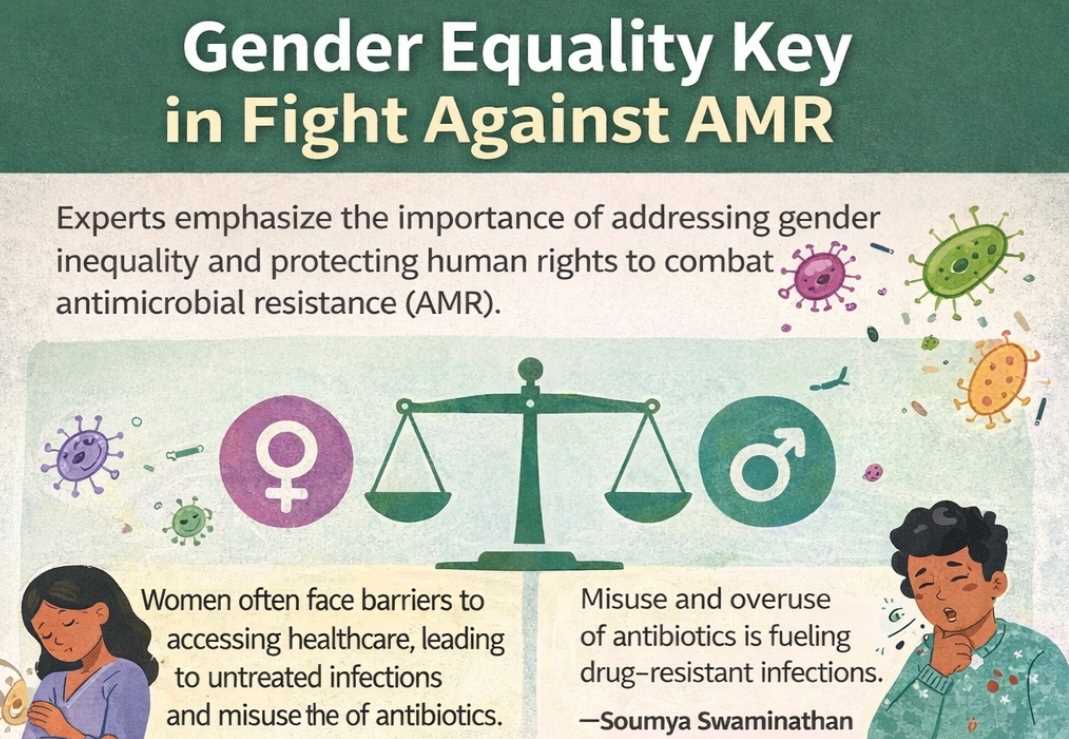
Global health experts have called for stronger action to address gender inequality and human rights barriers as part of efforts to combat antimicrobial resistance, warning that social and gender dynamics play a major role in the spread of drug-resistant infections.
The call comes as governments conclude discussions at the 70th session of the United Nations Commission on the Status of Women, with advocates urging policymakers to integrate gender-responsive strategies into national health policies aimed at tackling AMR.
Shobha Shukla, chairperson of the Global AMR Media Alliance, said gender inequality remains a critical yet often overlooked factor in the global fight against antimicrobial resistance.
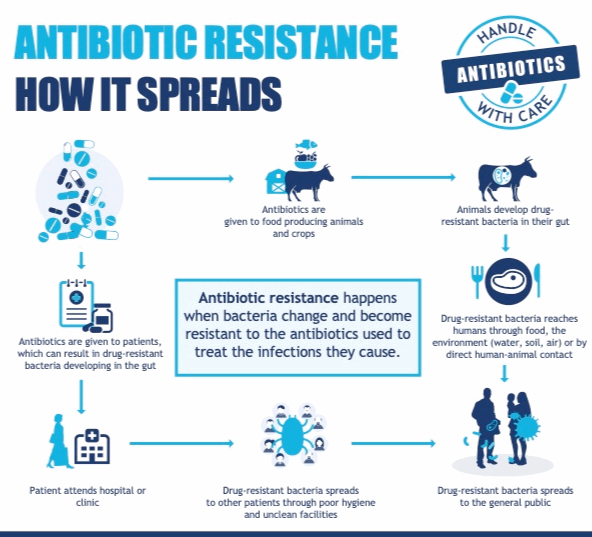
“Antimicrobial resistance or AMR is caused by misuse and overuse of medicines in sectors of human health, livestock health, food and agriculture and it is also polluting our environment,” Shukla said.
“We cannot afford any misuse and overuse of medicines in any sector if we are to deliver on the Sustainable Development Goals. A complex mix of biological, social, cultural and economic factors arising from gender-based inequalities and injustices impact infection prevention and control.”
She warned that deeply rooted gender norms continue to place women and girls at greater risk.
“Gender inequalities, harmful gender norms, stereotypes and tropes have normalised the neglect of well-being of girls and women, making them more vulnerable to AMR,” Shukla added.
Health experts say gender-based violence also plays a significant role in increasing women’s vulnerability to infections and drug-resistant diseases.
According to Soumya Swaminathan, former Deputy Director-General for Programmes and Chief Scientist at the World Health Organization, violence against women can limit their access to timely healthcare, leading to untreated infections and improper antibiotic use.
“Women are at a very high risk of intimate partner violence or domestic violence—physical or sexual. This could lead to more infections,” Swaminathan said.
“Because of their position within the household and the community, they are less likely to seek timely and adequate care for these injuries or infections, which could lead to drug-resistant infections.”
She added that sexual violence can lead to a range of infections requiring antibiotic treatment.
“Whether it is sexually transmitted infections or urinary tract infections, reproductive tract infections or pelvic inflammatory disease, all of these are linked with sexual violence and an increased risk of antibiotic use,” she said.
Stigma surrounding diseases such as tuberculosis and HIV also prevents many women from seeking care early, worsening the spread of drug-resistant infections.
Bhakti Chavan, a survivor of extensively drug-resistant tuberculosis and a member of the WHO Task Force of AMR Survivors, said social stigma often forces women to hide their illness.
“In many communities a woman diagnosed with TB or HIV is judged not only as a patient but as someone who has brought shame to the family,” Chavan said.
“I have seen many women hide their illness because of this stigma. They delay testing, they avoid going to the clinics, some take medicine secretly and others stop treatment early.”
Related Stories
Experts say power dynamics within households and healthcare systems also influence how women access treatment.
Esmita Charani, associate professor at the University of Cape Town, said women often have less decision-making power when it comes to healthcare.
“The burden of disease predominantly remains in populations that have the least access to resources, including antibiotics, to be able to treat infections effectively,” Charani said.
“Women often have the least power in being able to negotiate and advocate for themselves within healthcare settings—whether they are healthcare professionals or patients.”
Researchers also highlight the role of social norms in shaping women’s health outcomes.
Deepshikha Bhateja, a principal research scientist at the Indian School of Business, said cultural expectations surrounding caregiving, menstruation, and financial control often limit women’s access to healthcare and sanitation services.
“These norms lead to reduced access to water, sanitation and hygiene and lower awareness among women, which increases their susceptibility to infections,” Bhateja said.
Experts say tackling AMR therefore requires an intersectional approach that recognises the combined impact of gender, economic status, migration, culture and other social factors.
Salman Khan, a youth engagement consultant with ReAct Asia Pacific, said antimicrobial resistance is not only a scientific challenge but also a social one.
“We often frame AMR as a technical problem where microbes evolve, drugs fail and antimicrobial pipelines dry up,” Khan said.
“But AMR is shaped by those who have power, whose health is prioritised, who control resources and whose voices are ultimately heard in decision-making.”
Advocates also emphasise the role women can play in promoting responsible antibiotic use.
Mayssam Akroush, founding president of the Pan Arab Women Physicians Association, said women often serve as decision-makers within families and communities when it comes to healthcare.
“Women are the head of the pyramid and a very important part of the equation,” Akroush said.
“They are mothers, they are leaders, they are teachers, they are prescribing doctors and they are in the pharmacy who sell the product. So they are at a great position to lead the change on irrational antibiotic use.”
Health advocates say integrating gender considerations into national action plans on antimicrobial resistance is essential to achieving global health targets, including the goal of ending tuberculosis by 2030.
“If we are to end TB, we have to achieve zero drug resistant TB that occurs due to failure of infection prevention and control, or misuse, overuse or underuse of TB medicines,” Shukla said.
Campaigners say the fight against antimicrobial resistance will require coordinated action across health systems, communities and policy frameworks to ensure equitable access to treatment and prevention.
They warn that without addressing gender inequality and other social barriers, progress against drug-resistant infections will remain slow and uneven.









Leave Comments