








Experts from Zimbabwe, China and across the Global South have called for stronger cooperation in technology transfer, capacity building and inclusive development as countries seek sustainable solutions to poverty reduction.
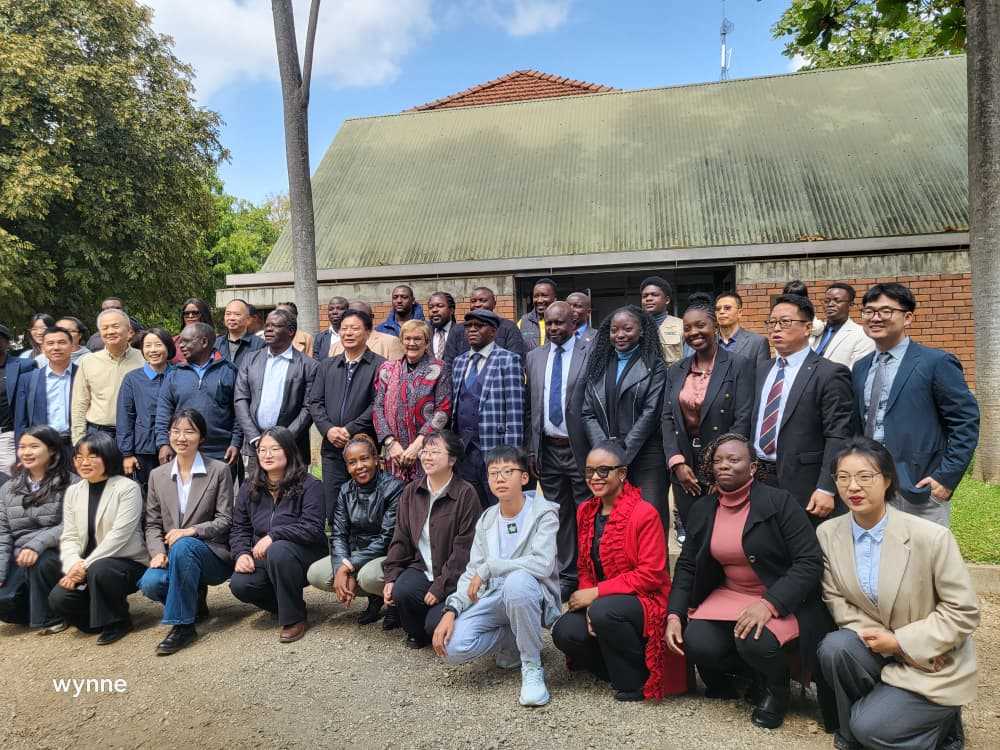
The call was made during the 3rd Harare Forum for Africa Expert Seminar held on Friday at the Southern African Research and Documentation Centre in Harare under the theme, “Technological Transformation and Global South Modernisation: Technology Transfer, Capacity Building and China-Africa Development Cooperation.”
The forum brought together academics, researchers, policymakers and development practitioners to discuss sustainable development, digital transformation, agricultural innovation and cooperation between Africa and China.
Opening the seminar, Harare Forum for Africa Chair Professor Yuezhi Zhao said the platform had become a bridge for China-Africa dialogue, knowledge exchange and development cooperation.
“True technology transfer and capacity-building cannot succeed without mutual understanding, mutual respect and mutual trust between our peoples,” Professor Zhao said.
Dr Dunny Derera, Director of Research at the Chitepo School of Ideology, examined Zimbabwe’s pathway towards poverty alleviation and eradication under Vision 2030, focusing on the principle of “leaving no one and no place behind”.
He said poverty had both social and geographical dimensions, requiring targeted interventions for vulnerable groups and communities facing historical and economic disadvantages.
Related Stories
“Economic independence remains an unfinished journey,” Dr Derera said, describing Vision 2030 as part of Zimbabwe’s efforts towards economic emancipation.
The seminar also explored agricultural transformation, with Jie Chen from the Sichuan Academy of Social Sciences highlighting the China-FAO-Uganda South-South Cooperation Project as an example of how technology transfer and training can improve agricultural productivity and rural livelihoods.
Professor Liu Liyun shared Sichuan’s experience in sustainable ecotourism development, highlighting the importance of balancing environmental protection with economic growth.
Gender inclusion in technology was also discussed, with experts calling for digital empowerment that enables women to access skills, finance and markets.
“The objective is not simply to transfer technology to Africa, but to build African capabilities to use, adapt, create, own, and lead,” the gender digital divide presentation noted.
Discussions on land inequality and rural transformation further examined how historical patterns of land ownership continue to influence access to agricultural resources, finance and markets.
SARDC Executive Director Joseph Ngwawi, who provided expert commentary during the seminar and delivered the closing remarks, said continued engagement between African and Chinese institutions remained important in building knowledge-based partnerships for sustainable development.
The seminar concluded with calls for development approaches that combine technology, local knowledge, inclusive participation and practical cooperation to address challenges facing communities across the Global South.






Leave Comments