








Zimbabwe’s long-awaited transition from waste disposal to energy generation has moved closer to implementation after Geo Pomona Waste Management and China’s Zhejiang Weiming Environment Protection Company signed an Engineering, Procurement and Construction (EPC) contract for the Pomona Waste-to-Energy project.
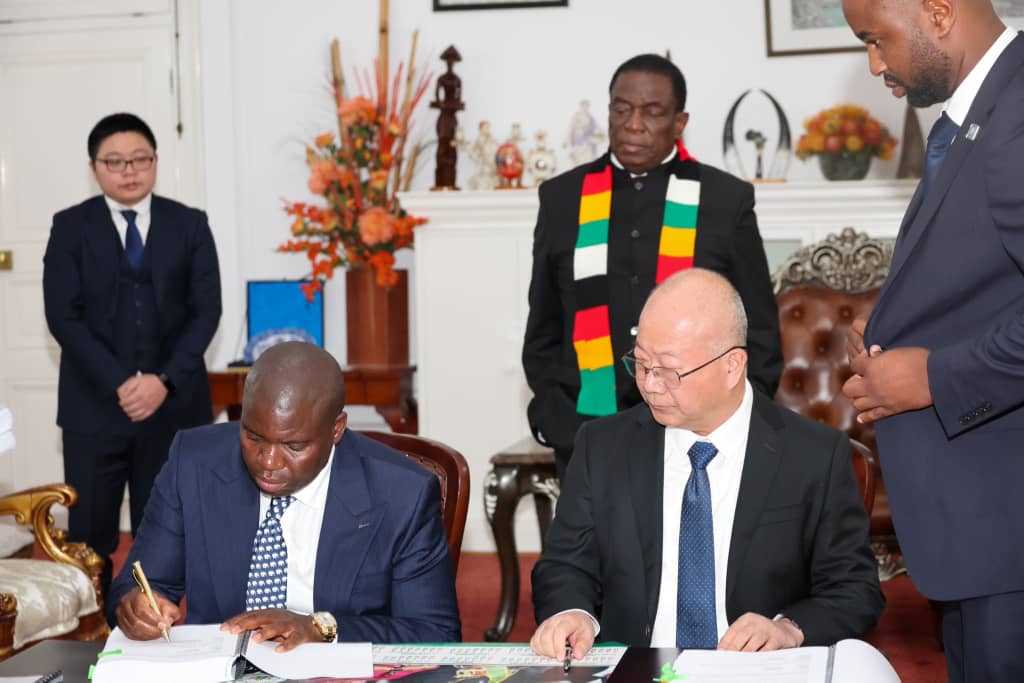
The agreement was signed at State House in Harare by Geo Pomona CEO and Executive Chairman Dilesh Nguwaya and Zhejiang Weiming Environment Protection Company Chairman Chen Ge, in a ceremony witnessed by President Emmerson Mnangagwa.
Government spokesperson Nick Mangwana said the agreement marked the final phase of the wider Geo Pomona project, which has been developed around an integrated waste-management system.
“The signing marks the final phase of the Geo Pomona Project,” Mangwana said.
The broader project incorporates refuse collection, construction of a sorting plant, encapsulation of waste that cannot be recovered for energy, development of engineered landfills and a water-treatment plant, with these components feeding into the central waste-to-energy facility.
The planned plant is designed to process about 1,000 tonnes of municipal waste a day and generate between 16MW and 22MW of electricity for the national grid. Geo Pomona says the facility will use non-recyclable combustible waste after sorting, while recyclable materials such as plastics, metals, bottles and cans will be recovered separately.
Mangwana said the project is expected to address several problems simultaneously, including mounting pressure on landfill space, electricity shortages, unemployment and poor urban environmental conditions.
Related Stories
“The Waste-to-Energy Plant is expected to reduce landfill pressure, generate clean electricity, and create jobs, while promoting a cleaner and healthier Harare,” he said.
The project is also being positioned by the Government as part of its wider economic-development agenda, with Mangwana saying it supports objectives related to sustainable urban development, environmental management and energy security.
Zimbabwe’s NDS2 specifically identifies the Geo Pomona plant as a waste-to-energy intervention, noting that the facility is designed to process approximately 1,000 tonnes of waste daily and generate between 16MW and 22MW for the national grid. It also frames improved waste management as a potential economic value chain rather than simply a municipal cost.
The EPC agreement is significant because the Pomona project has been under development for several years. The original project was reported as a roughly US$310 million investment involving the transformation of the former Pomona dumpsite into an integrated waste-management and electricity-generation facility.
Geo Pomona says substantial preparatory infrastructure is already being developed, including sorting facilities, hazardous-waste landfills, water-treatment infrastructure and site preparation for the power plant.
The company says the sorting plant will be central to the system, separating recyclable material from combustible waste before the latter is sent to the power-generation facility.
The World Bank’s Zimbabwe National Energy Compact also identifies the project as an important component of the country’s efforts to turn waste into an energy resource. It says approximately 12% of the electricity generated would be consumed by the plant itself, with the remainder supplied to the national grid.
Geo Pomona says its longer-term ambition is to replicate the model in other Zimbabwean cities, potentially allowing municipalities to convert their own waste streams into electricity.







Leave Comments