









Government says it has implemented 70% of its programme to reduce regulatory fees and licensing costs, but one of the reforms most visible to ordinary Zimbabweans—the reduction of urban parking fees—remains stalled months after being gazetted, exposing the difficulties of translating policy announcements into practical relief.
While reforms to lower licensing costs in sectors such as industrial hemp and medicinal cannabis have progressed, motorists in Harare continue paying US$1 per hour instead of the gazetted US$0.50, while clamping fees remain above the revised levels announced earlier this year.
The delay has become a test of Government's ease-of-doing-business agenda, raising questions about whether reforms can succeed when implementation depends on local authorities operating under existing contractual arrangements.
Speaking on the progress of the reforms, Finance Minister Mthuli Ncube said Government had already implemented about 70% of the measures aimed at reducing the cost of doing business and improving Zimbabwe's competitiveness.
He said the reforms had already lowered fees in strategic sectors and had been well received by investors.
"There are some that are still outstanding. The issue of parking fees in local authorities is still outstanding, as is the 50% reduction cap on some local authority fees. This also includes penalties and clamping fees," Ncube said.
Rather than ordering immediate compliance, he said Government was pursuing negotiations because existing service contracts could not simply be overridden.
"We don't want to make abrupt decisions. We also respect contracts to ensure that the service providers are on board," he said.
The explanation addresses months of public frustration after Government gazetted lower parking tariffs, but motorists continued paying the old rates.
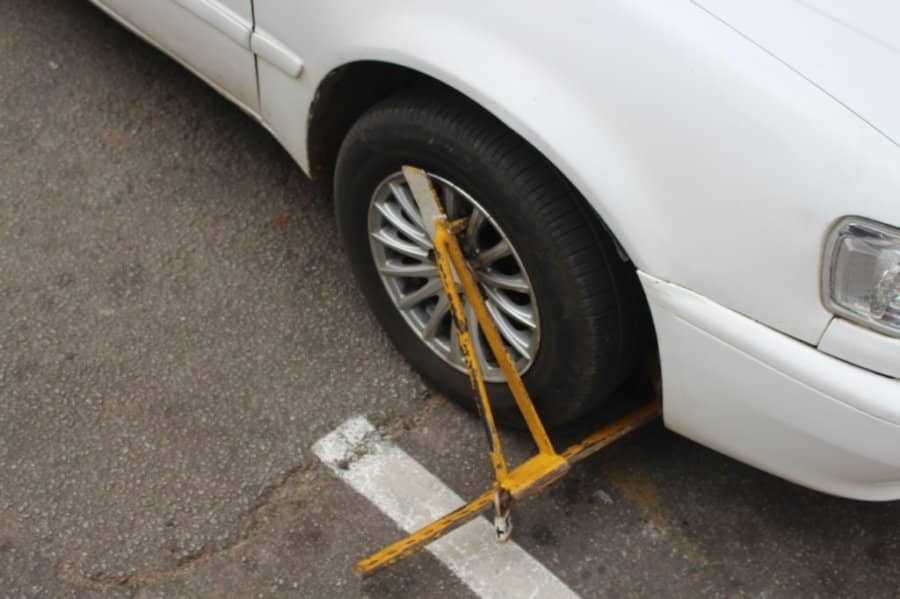
Under the revised regulations, CBD parking charges were reduced from US$1 to US$0.50 per hour, while vehicle clamping fees were cut from US$60 to US$20.
However, City Parking, a subsidiary of the City of Harare, has continued charging the previous tariffs.
For motorists, the policy exists largely on paper.
Bulelani Muchina said he had never seen the lower tariffs being applied.
"Nothing has changed since the announcement. We are still paying the same amount we have always paid."
Another motorist, Tapiwa Makomo, questioned the value of announcing reforms that are not implemented.
"They should not just love announcing things without putting them into practice. Words should be acted upon, not just announced."
Related Stories
The dispute also exposes a governance challenge that extends beyond parking fees.
Government can gazette national regulations, but implementation often depends on local authorities whose by-laws, contracts and revenue models may not immediately align with central Government policy. In this case, contractual obligations between councils and service providers have effectively delayed a nationally announced reform.
For councils, parking fees represent an important source of revenue used to fund municipal services. Reducing tariffs without identifying alternative revenue streams could weaken already strained local authority finances.
That has fuelled debate over whether cheaper parking would necessarily benefit cities.
Harare Residents' Trust director Precious Shumba argued that maintaining the current tariff helps manage congestion.
"The dollar-per-hour charge is ideal because parking fees restrict the number of vehicles remaining parked in the busy central business district."
He warned that halving parking charges could increase traffic congestion and undermine urban traffic management, while also calling for greater transparency over how parking revenue is spent.
"Residents want to know how much City Parking generates every month, how much is remitted to the City of Harare, and how that money is being used to improve road and parking infrastructure."
The Combined Harare Residents Association believes the impasse reflects institutional conflict rather than financial constraints.
CHRA director David Pasipanodya said the delay stemmed from disagreements between central Government and the City of Harare over the legal process required to implement the new tariffs.
"It is unfortunate that motorists continue to be shortchanged by paying one dollar per hour instead of the gazetted 50 cents."
He added that motorists continue to complain about aggressive clamping practices and high towing charges while the revised penalties remain unenforced.
The significance extends beyond parking charges.
Government has prioritised reducing statutory fees, licences and permits to improve Zimbabwe's business environment, attract investment and lower operating costs. Ncube said reforms in sectors such as industrial hemp and medicinal cannabis have already reduced barriers to investment, employment creation and exports.
However, the parking fee dispute illustrates that announcing reforms is only one stage of implementation. Where reforms intersect with municipal by-laws, contractual obligations and local revenue systems, execution becomes considerably more complex.
The unresolved dispute also highlights a broader policy challenge: the effectiveness of economic reforms is ultimately measured not by the number of regulations issued or policies announced, but by whether citizens actually experience the intended benefits.










Leave Comments